

Specialist · Spider Mites
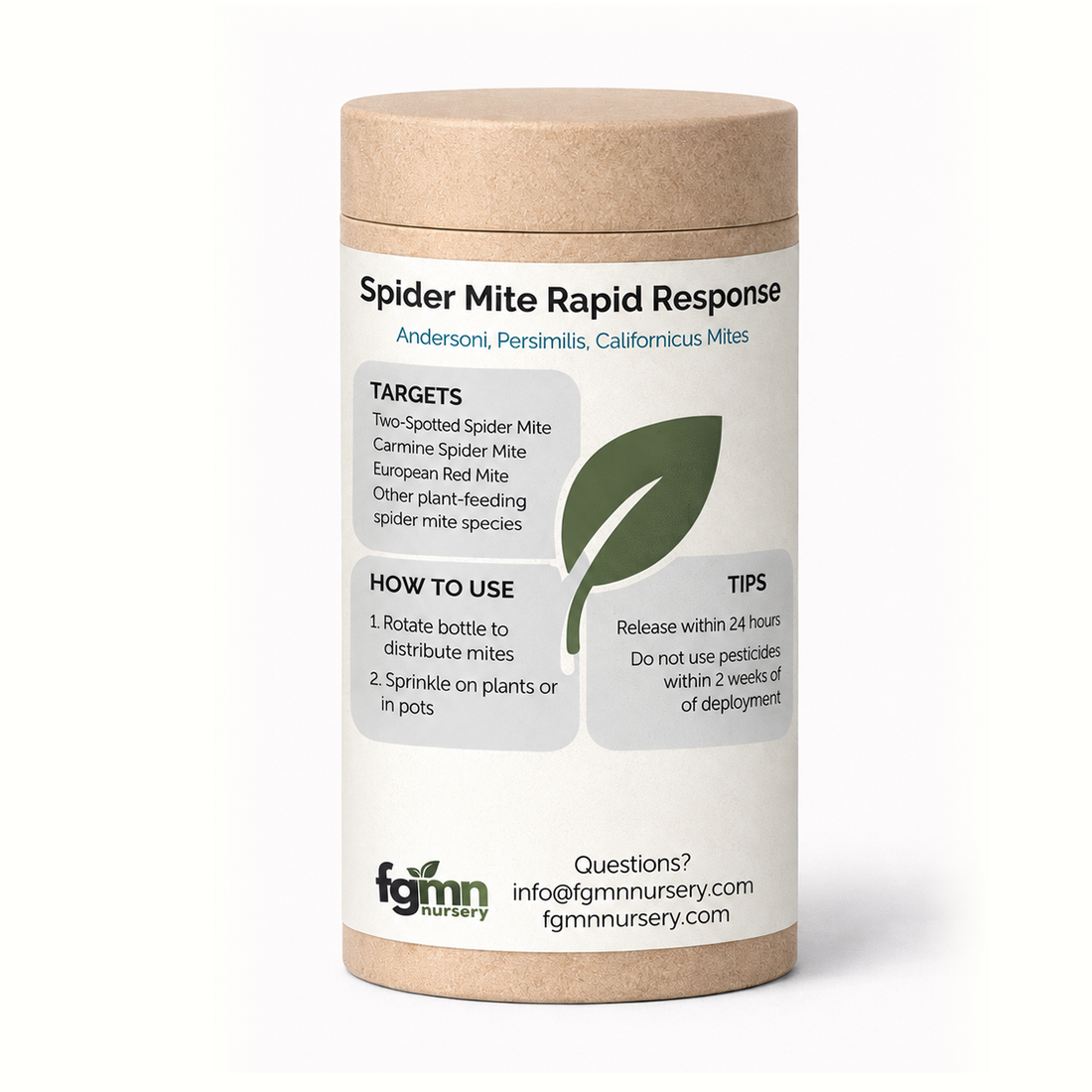
Spider Mite Rapid Response
Two species, adults only, built for the moment webbing appears — persimilis crashes the population and californicus holds the plant as prey thins.
$100.00
Free Shipping for all orders over $30
If something's wrong when it arrives, file a report within 72 hours of delivery for a replacement or store credit.
By placing your order you agree to our Shipping Policy and Live Delivery Guarantee.

How much, and how often
Two questions — how bad it is, and how many plants. You get a size and the dates to put it out.
How bad is it?
Pick the one that sounds like your room. If you are between two, take the higher.
How many plants?
Six-inch pots. Count a large specimen with a dense canopy as three or four.
Your size and schedule
More about this dose
The three things people ask once they have their size. Open any of them.
Am I light, moderate or heavy?
Light
- You had to turn a leaf over to find it — a few pale specks that read as dust.
- No webbing anywhere, at any angle to the light.
- New growth is coming in clean.
- One or two plants. The rest of the shelf is fine.
Moderate
- You notice the stippling walking past, without stopping to inspect.
- Fine webbing where a leaf meets the stem, or between two leaf tips.
- Undersides show live mites when you tap a leaf over white paper.
- A few plants in the same area have it.
Heavy
- You saw it from across the room — whole leaves gone pale or bronze.
- Webbing strung between leaves and running up the growing tips.
- Tapping a leaf over white paper drops mites you can watch move.
- It has reached plants that were never touching.
Overshooting costs you very little — californicus switches to pollen and stays on once the spider mites are gone. Under-dosing costs you the round, because this pairing works on ratio.
Spider mites are built to be underestimated:
- Damage is a record, not a reading. Stippling is scar tissue. It stays on the leaf long after every mite that made it is dead.
- They feed underneath. By the time the top of the leaf looks wrong, the colony on the other side has been there a while.
- Webbing means it has already moved. Plants touching an obviously bad one are usually already carrying it.
Why more than one round?
Putting it out
- Rotate, don't shake. End over end, gently, so both species stay evenly spread through the carrier as you work down the row.
- Into the webbing. Persimilis works from inside a web. Hot spots get the heaviest dose; clean plants get none.
- Then the mid-canopy. Spread the rest across leaves showing stippling, at several points on a dense plant rather than one central pile.
- Undersides. This is where spider mites live, and where most releases are wasted by dusting the top of the leaf instead.
Everything else is optional. Get these four and the release has done what it can.
A cleaner way
On a display plant, tip small piles into bio-boxes or paper cups hung in the branches instead of dusting the foliage. Same dose, nothing visible on the leaf.
The failure is forgetting. Very few programs fail because the mite underperformed. They fail in week five, when the plants look fine, the reorder does not happen, and the population holding the line ages out with nothing behind it.
A schedule is the same decision, made once. A bottle when it looks bad, then another when it looks bad again, is already a rhythm — just one you have to remember at the exact moment the plants look fine.
Change the size or the frequency, skip a box, pause or cancel from your account at any time.
Is this the right beneficial for your problem?
Five questions, in the order a grower actually asks them: what have you got, is this the answer to it, what will it eat, how does it do the killing, and will it survive your room.
Is this your pest?
Rapid Response treats one pest, hard. It is for the point where you can already see webbing.
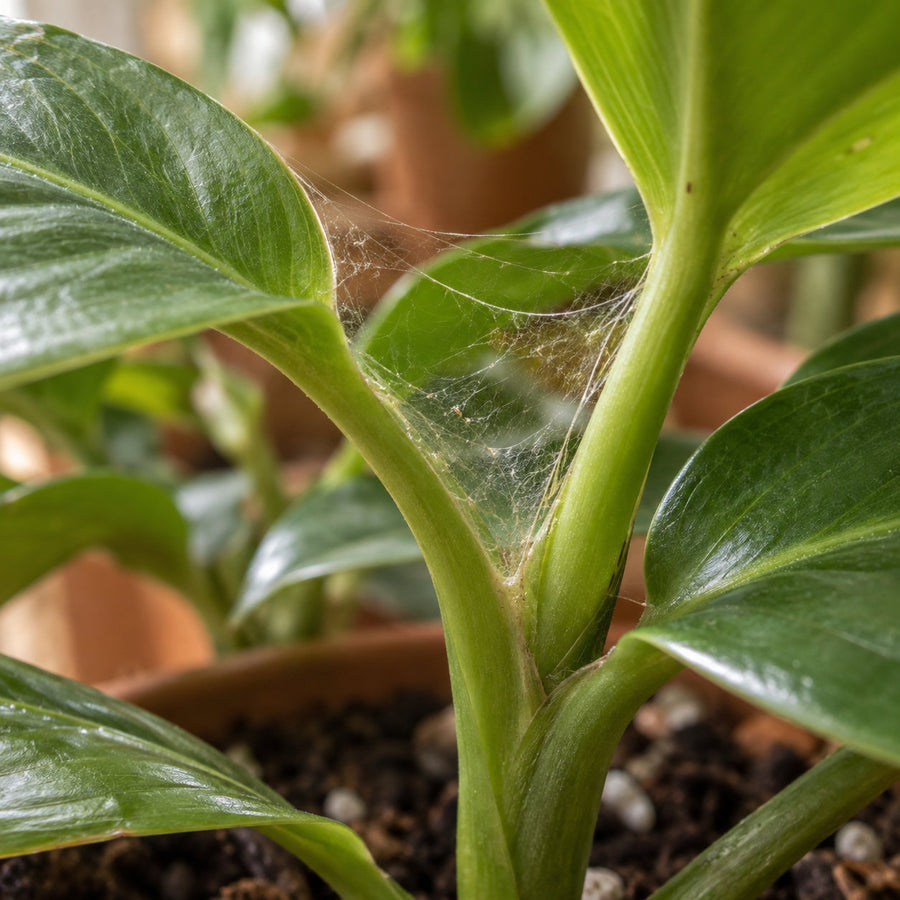
Fine webbing strung between leaf edges and growing tips, stippling that has gone bronze, and mites visible on the undersides when you turn a leaf over. This is an outbreak that is already spreading rather than one you are getting ahead of.
Two species against two-spotted spider mite — including the red or carmine form once sold as a separate species, which is the same animal in a different colour — and other Tetranychus mites. Phytoseiulus persimilis crashes the population; Neoseiulus californicus holds the plant as prey thins and takes the mites persimilis will not. Neither covers that spread alone.
Then: is Rapid Response the right answer to it?
Choose this if
Choose it when spider mites are visible and actively spreading and you want speed without betting everything on one specialist. Persimilis is the fastest thing in the catalogue against Tetranychus, and californicus is the insurance: it tolerates a dry room, it keeps working at low prey density, and it stays on the plant after persimilis has starved out.
Choose something else if
If you are certain it is two-spotted spider mite and your room holds 60% humidity, persimilis alone is cheaper and just as fast. If your space runs hot or dry, californicus alone is the forgiving choice. And if the pressure is mixed rather than clearly spider mites, Ultimate Control is built for breadth instead of intensity.
What it kills, and what it won't
Not European red mite or spruce spider mite. Those are Panonychus and Oligonychus — different genera and a different predator. In the one study that put it to the test, persimilis did not even respond to the scent of a European-red-mite-infested leaf. Orchard and conifer mites are somebody else's job, and we would rather say so than take the order.
How it works
What it does to the pest, what it does on the plant, and what that leaves you looking at.
One goes into the web
Spider mite webbing is a defence that traps most predators at the edge of a colony. Persimilis navigates it and hunts from inside, which is why it is the fast half of this bottle. It is a predator — no residue, no re-entry interval, and nothing a spider mite can develop resistance to.
The other stays behind
Persimilis eats spider mites and nothing else, so when the colony collapses it starves. Californicus switches to pollen and other small arthropods and stays on the plant — which is what stops the rebound three weeks later. It also carries a dry room, so the blend still works at humidity that would stall persimilis, just at a gentler pace.
Pest numbers, not mites
You will rarely watch this happen, though persimilis is orange and occasionally visible. Judge it the way a grower does — webbing that stops expanding, then counts falling when you tap a leaf over white paper — rather than by trying to count predators.
Book the second round now. An established mite population outruns a single release; two or three rounds is the normal shape of clearing one, not a sign the first failed.
Will it work in your room?
If what you have is European red mite or spruce spider mite — orchard and conifer pests — nothing in this bottle will help. And if your plants are clean, persimilis will starve within days: this is a treatment, not prevention.
About the blend
Two predatory mites in one bottle, adults only, built for the moment webbing appears. Both hunt on leaves and have no interest in your plant or in you.
New to beneficials?
Five things that catch almost everyone the first time.
After you release it
What actually changes, how fast, and the three things this one does not reach.
How you'll know it's working
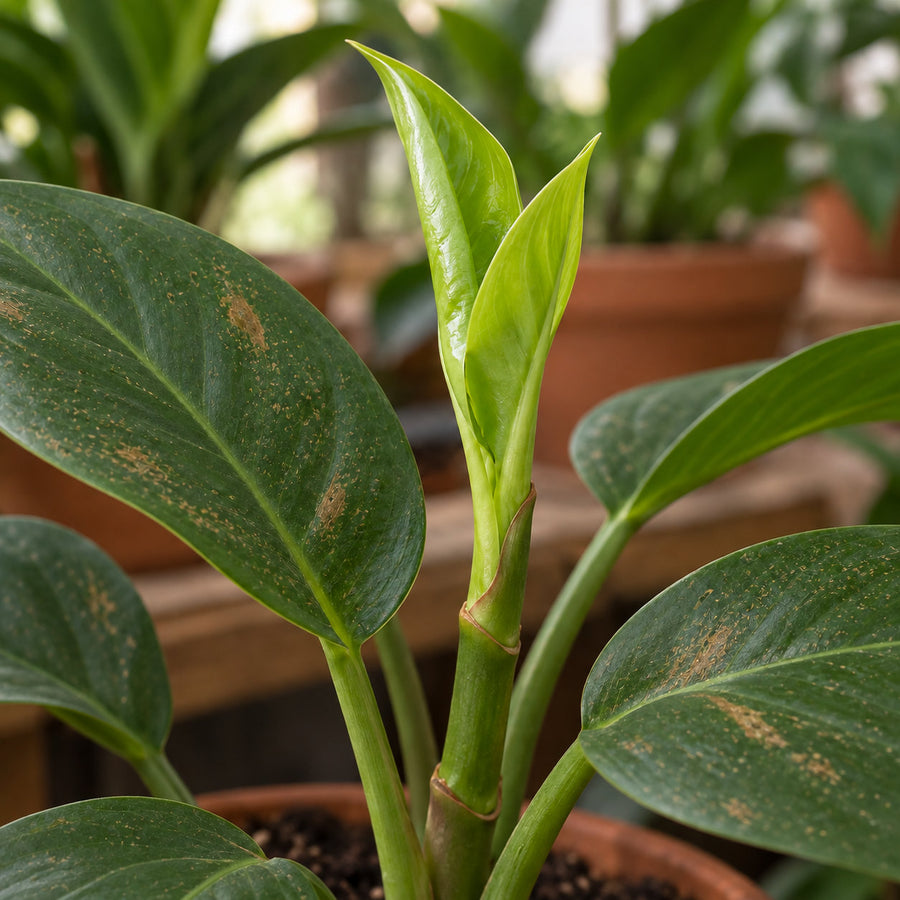
Existing damage does not heal. A leaf that was stippled stays stippled after every spider mite on it is dead, because that is scar tissue and not an active infestation.
So judge by three things instead, in this order: webbing stops expanding, then live counts drop when you tap a leaf over white paper, then new leaves come in clean.
Expect persimilis to vanish. When prey runs out it dies or leaves, and californicus switches to pollen and stays. That is the job finishing, not failing.
Getting it to you
What is in the bottle, how it travels, and what happens if it arrives wrong.
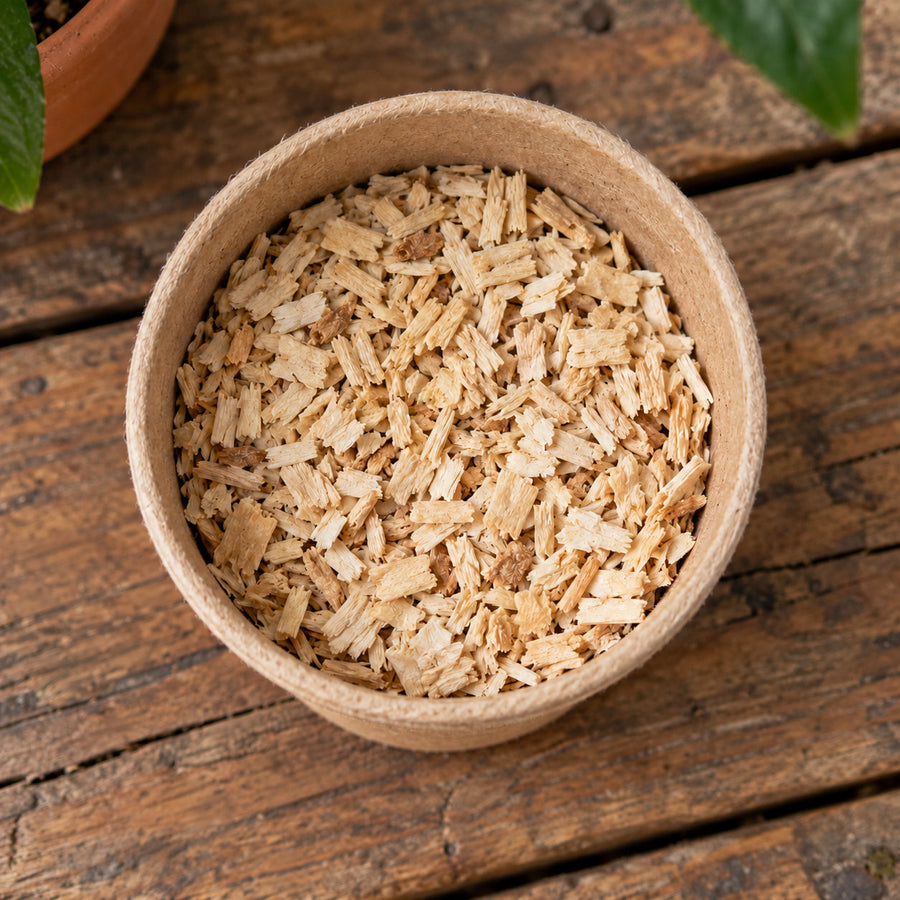
What arrives
Adult mites in carrier — one bottle, two species. Everything in it is meant to end up on the foliage.
Persimilis is the orange one if you can see anything at all, which mostly you cannot.
Release on arrival. There is no holding option for loose mites — open the bottle the day it lands.
When it ships, and when it lands
Shipping
We ship when they're ready to travel. Live orders go out Monday to Thursday. If a colony needs a beat to peak, or we're propagating a fresh batch, yours might hold up to a week. All mites and insects ship 2-day or Overnight depending on what's best for them.
When it lands
Open it that day. Aim into the webbing — hot spots get the heaviest dose, clean plants get none — and tip the carrier onto the leaf undersides, where spider mites live and where most releases are wasted by dusting the top of the leaf instead.
About the ones that don't make it
Some of them die on the way. That is why we send more than you paid for.
A predatory mite is the size of a grain of table salt. It ships in a bottle, in a van, for two days.
Roughly 15% will not survive that. We cannot prevent it, so we price it in: the number on the label gets counted out, and then the cushion goes in on top of it.
Your 3,000-mite bottle leaves here holding more than 3,000. The dead ones are already paid for.
If you can see them
Ladybugs, lacewing larvae, Orius — the minute pirate bug — and the beetles. Tip a few onto white paper and give them twenty minutes at room temperature before you judge anybody.
Cold insects are genuinely good at playing dead. The deceased have been known to get up and walk off the counter.
Still more than about one in seven not moving? Photograph them and file a report.
The photo is not us doubting you. It is how we tell a bad batch from a bad courier day from a mailbox that hit 104°F.
If you can't see them
Mites, nematodes, eggs — most of what we sell, this one included. A bottle of carrier looks the same whether it holds 500 live mites or none, and no photograph settles that. So we don't ask you to take one.
You file the report and our entomologist takes you through the diagnostic instead — the tap test on dark paper, where the box sat, what your room was doing, and then what the pest is doing about ten days later.
Seventy-two hours from delivery, either way, with your order number. Replacement or store credit, your pick.
What it does not reach
Three gaps this page has already named, and the beneficial that closes each one.
Special Blend sachets
Both species in this bottle are adults, released all at once. Slow-release sachets put a small mixed population on the same plants for weeks afterwards, which is what stops the next outbreak starting from the plant you just cleared.
Ultimate Control Predatory Mite Mix
This bottle is built for Tetranychus spider mites and aimed narrowly on purpose. If thrips or broad mites are in the picture too, the three-species blend is structured for that breadth instead of for maximum intensity against one pest.
Amblyseius andersoni
Russet and rust mites are eriophyids — a different family, and neither species in this bottle takes them. If bronzed rough leaves and twisting new growth turn out to be the real problem, andersoni is the predator for it, and almost nothing else is.
Two cheap things that make the rest work harder. Blue cards give you the dated count this page keeps asking you to read. Breeder's Blend is pollen and Artemia; it keeps the population fed through the lull when prey gets scarce.
Questions
Will I see the predatory mites after I apply them?
Probably not. Predatory mites are extremely small and tend to stay along leaf veins and undersides where spider mites feed. Even at intervention rates, they are difficult to spot without magnification. Lack of visible movement does not mean they are inactive.
How quickly will I see results?
Spider mite feeding damage does not reverse, so existing stippling will remain. What you’re watching for is stabilization: reduced webbing, no new leaf damage, and fewer visible spider mites. How long that takes depends entirely on how heavy the infestation is — a light, early problem turns around faster than one that has been building, and under real pressure it can be weeks before the numbers noticeably drop.
Can I use this alongside other treatments?
It should not be used with active pesticide or miticide residues. Many chemical products, even if labeled “plant safe,” can reduce predator survival. If you’ve recently sprayed, allow sufficient time for residues to break down before releasing mites.
What happens once the spider mites are gone?
As prey levels decline, persimilis populations naturally decrease. Californicus may persist longer, but overall predator numbers will taper off without food. This is expected and part of the biological cycle.
Can these mites spread to other plants in my home?
Yes. Predatory mites will naturally disperse between plants if foliage touches or plants are grouped closely. This can be beneficial in clustered collections, as it allows coverage beyond the original application point.
Is this safe for pets and people?
Yes. Predatory mites are plant-feeding mite specialists and do not bite humans or pets. They are commonly used in greenhouse and agricultural biological control programs.
Didn’t work. Treatment didn’t knock them out completely. Sachets didn’t keep them under control. Lost half the treated plants and still see mites on the ones that are still going.
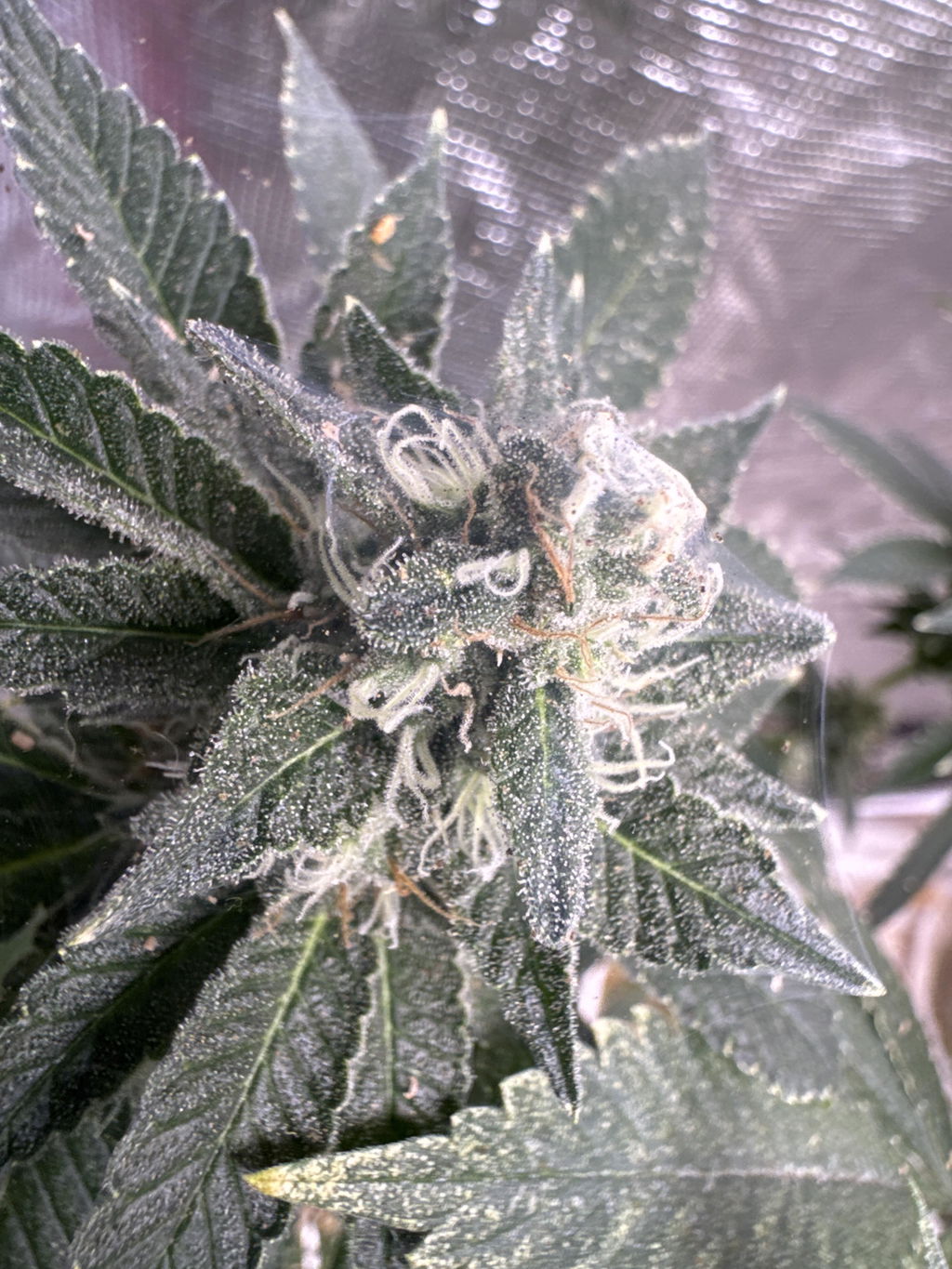
Hi Jared, I’m so sorry to hear that. It didn’t knock things out completely. It does sound like you had quite an extensive infestation, and very rarely will any predatory mite knock that out in one round. You will almost always have to bring in some support troops. As for the sachets, it sounds like you may have been using them a little bit too early. They are purely for prevention, and are not super helpful when fighting an active situation. They’re almost entirely eggs and larva, and the very few adults that they deploy per day is perfect when removing very low level pests — As in the first few that enter your collection — but never enough to mount any defense against a serious infestation. Of course, if you believe there’s something else going on, please feel free to reach out to our customer service team and they’ll be happy to diagnose that with you and provide a solution if required. You can talk to them at info@fgmnnursery.com
Just released them, so no results as of yet but that’s expected
These are amazing. Company is amazing. Love not using chemicals.
I had a pretty bad infestation of spider mites and other pesties unknown in our outdoor milkweed and pollinator garden. The new homies arrived on a Thursday and I disbursed them that evening. By the end of the weekend, the spider mite webbing activity had largely stopped. I'm back to order some followup friends to keep it under control as it's my first season using predatory mites and I probably didn't order enough for the space I need them in, but I'm a big fan and will be adding preventive sachets to my spring planning for the future.
Quick arrival and easy instructions! Seems to be working.
Rapid response
The shipping was delayed a bit, unsure why, but the package came and was packaged well. The directions were easy. I'm hoping the delay didn't hurt the bugs & they take care of the spider mites!