

Aphid Cleanup Crew
By FGMN Nursery
The pairing pros use for aphids in a comfortable, humid room: a wasp for the scattered aphids, a midge for the crowded stems.
- Ships Monday to Thursday2-day or overnight. A fresh batch can take up to a week.
- Live arrival, guaranteedTell us within 72 hours.
How it works →
Complete the plan
Other finds
-
-
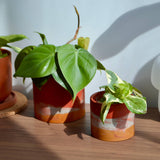
Rust & Orange Watercolor PlanterHandmade by Linda. Your plant stays in its nursery pot and slips inside.From $20
-
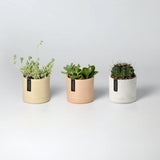
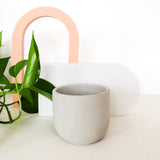
3.5" Earth Tone Mini PlanterA little pot with a hole, plug and saucer, for a 2-inch succulent or a fresh cutting.From $7
-
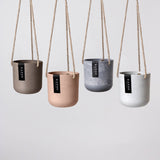
4" Signature Stone Hanging Planter PotA small stone-look pot that hangs, for the plant that ran out of shelf.From $26
-
-
-
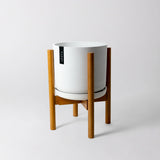
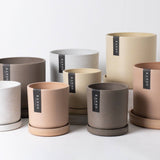
7" & 4" Signature Planters & SaucerTwo matching pots with saucers: one for the plant, one for the cutting you took.From $40
-
Cube Ceramic Pot & SaucerA little square pot with a hole and a matching saucer, for one succulent or a fresh cutting.From $16
-
Minute Glazed Ceramic Pot & SaucerA glazed ceramic pot with a hole and a saucer, in colors that look like weather.From $15
-
Hexi Hexagon Porcelain Pot & SaucerA six-sided porcelain pot with a hole and a hexagon saucer. Lines up nicely on a shelf.From $16
-
Devo Two-Tone Porcelain Planter & SaucerA two-tone porcelain planter with a hole and a saucer, sized for a desk plant.$23
-
Dojo Porcelain Pot & SaucerA small matte porcelain pot with a hole and saucer, for cuttings and young cacti.From $17
-
Crystal Faceted Glass TerrariumA faceted glass ball for an air plant, or a vase for one good flower.$25
-
Bobbin Porcelain Hanging PlanterA porcelain hanging planter with no hole, so nothing drips on the floor.From $26
-
Koski Ceramic Air Plant HolderA little ceramic cup for one air plant. No soil, no hole, no fuss.From $12
-
Minute Glazed Ceramic Pot & SaucerA 5 inch glazed pot with a hole and saucer, sized for a 4 inch nursery plant.From $27
-
-
-
-
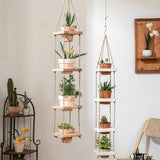
Hanging Plant Shelf, Wood and RopeA wooden shelf on hemp rope, for when the windowsill is full.From $41
-
-
-
-
-
-
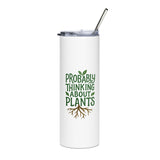
Probably Thinking About Plants - Stainless Steel Tumbler20 oz stainless tumbler with lid and straw$29
-
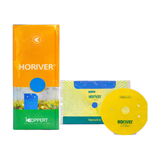
Horiver Professional Sticky TrapsThrips and fungus gnats often show up on a card before a leaf.From $11
-
Arber Sticky Traps for Plant PestsYellow stakes that catch winged pests and show you whether it's getting better.$11
-
-
-
-
-
-
Arber Organic Soil & Root Boost 4 ozLiving helpers for the root zone, worked into the top of the soil once a month.$20
-
-
Tiny Terracotta Grow KitDaisy or poppy seed in a tiny terracotta pot with a water reservoir.From $15
-
-
-
-
-
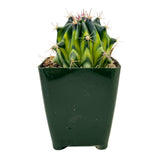
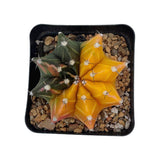
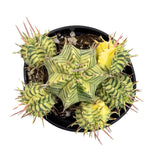
Variegated Fire Barrel CactusRed spines tipped in yellow, on a variegated barrel. A free prevention sachet comes with it.$37
-
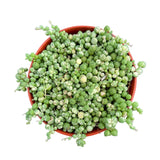
Variegated String of PearlsGreen-and-cream pearls with a clear window that lets light inside the leaf.$25
-
Variegated Corn Cob CactusStacked cream-and-green stems, like a corn cob that went to art school.$17.50
-
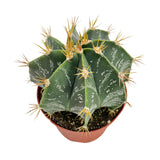
Star Barrel CactusThe easiest of the star cacti, and the one that can one day reach about 5 feet.$55
-
Organic Pink Oyster Mushroom Spray & Grow KitPink, and in a hurry. First harvest in as little as a week.$35
-
Verte Rx Organic Funky Fish Plant FoodConcentrated fish food for big-leaved plants. Smells like a dock for an hour.$16
-
Verte Rx Organic Houseplant Food 1-2-4A concentrated 1-2-4 feed of guano, kelp and worm castings. A little goes a long way.$16
-
Verte Rx Organic Plant SuperfoodPure seaweed extract, misted on every few weeks, for a plant getting over a move.$16
-
Premium Long Fiber Sphagnum MossDried long-fiber moss for orchids, cuttings and moss poles. Soak it and it's ready.$19
-
Bendable Moss PoleA thin moss pole with a steel core, so it bends to follow a pothos or small philodendron.From $11
-
Reusable Plant TapeTen feet of soft green tape that sticks to itself, for holding stems to a pole.$5
-
Leaf Shining Microfiber GlovesMicrofiber gloves that dust both sides of a leaf at once. Faster than a cloth.From $8
-
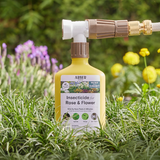
Arber Organic Insecticide for Rose & Flower 16 ozKills surface pests in minutes on rose and flower beds. Clips to the hose.$25
-
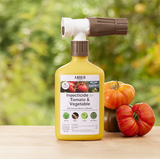
Arber Organic Insecticide for Tomato & Vegetable 16 ozKills surface pests in minutes on vegetable beds. Clips to the hose.$25
-
Arber Organic Bio Fungicide 8 ozControls mildew and leaf spot on pots and beds, indoors or out. Mix in a sprayer.$20
-
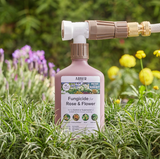
Arber Organic Fungicide for Rose & Flower 16 ozControls black spot and mildew on rose beds. Clips to the hose.$25
-
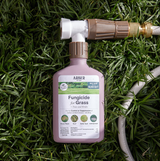
Arber Organic Fungicide for Grass, Trees & Shrubs 16 ozControls brown patch, dollar spot and rust. Clips to the hose.$25
-
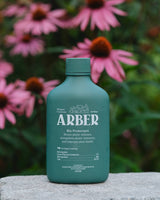
Arber Organic Bio Protectant 8 ozPrevention, not a cure: the plant thickens its own defenses. Mix in a sprayer.$20
-
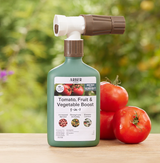
Arber Organic Tomato, Fruit & Vegetable Boost 16 ozStrengthens vegetables' own defenses. Clips to the hose. Not a feed.$25
-
Arber Organic Plant Food 8 ozA gentle 3-2-1 feed, watered in every 10 to 14 days. Made from unsold produce.$20
-
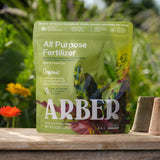
Arber Organic All Purpose Fertilizer 3 lbSlow granular feed of compost and biochar, mixed into the soil once a month.$15
-
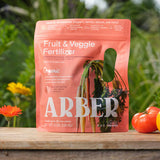
Arber Organic Fruit & Veggie Fertilizer 3 lbA 4-3-2 granular feed with calcium, worked into the top few inches of soil.$15
-
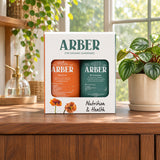
Arber Organic Nutrition & Health Starter SetPlant Food plus Bio Protectant. Best for patios, pots outside and beds.$30























Ordering with friends? Pool one order and save up to 40%.
Own a shop? Wholesale orders start at $500. Ask about wholesale
What it treats
Small and mixed aphids
What it eats
- Green peach aphidWhat eats them →
- Melon and cotton aphidWhat eats them →
- Mixed or unknown aphidsWhat eats them →


Best on early and spreading colonies.

When something else fits better
- Colonies on plant after plantFull Shift →
- Mostly big potato or foxglove aphidsErvi →
Where they thrive

- Temperature
- 60–90°F
- Humidity
- Humid air for the midgesThe wasps are fine in ordinary room air. The midges love humid air, about 60% or more, and damp soil under their container.
- Light
- Light, then darkWasps need daylight to search. Midges need real darkness at night; in a warm room, a dim night light (not red) prevents it.
- In the box
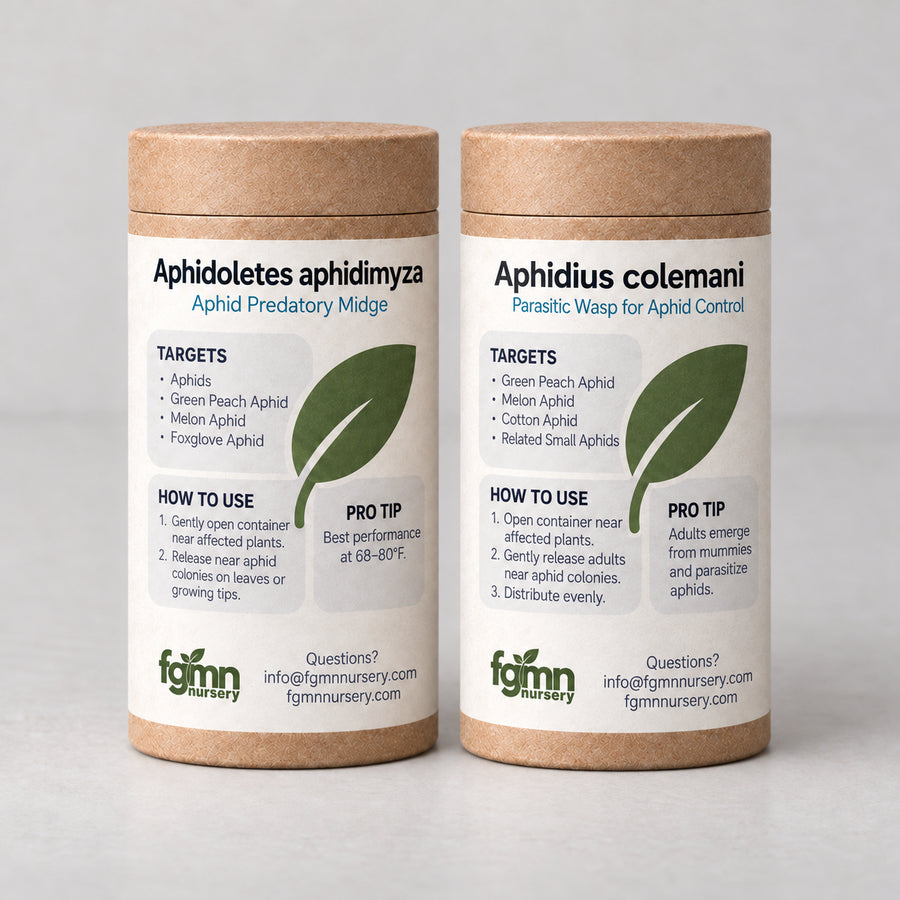
- Aphidius colemani mummies and Aphidoletes pupae
Why these matter
- Temperature
- Happiest in a comfortable room. A cool night or a hot afternoon won't hurt them.
- Humidity
- The wasps are fine in ordinary room air. The midges love humid air, about 60% or more, and damp soil under their container.
- Light
- Wasps need daylight to search. Midges need real darkness at night; in a warm room, a dim night light (not red) prevents it.
Meet the beneficial
Clears aphid colonies and the stragglers
Aphidius colemani · Aphidoletes aphidimyza
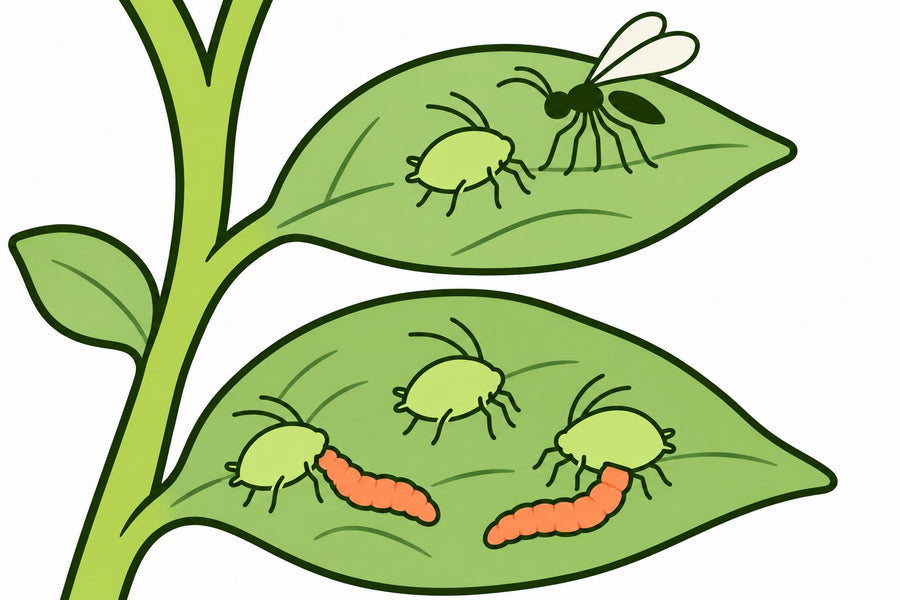
Mom does the finding and the kids do the rest
Each half answers a different question: where are the stragglers, and where are the crowds?
The wasp finds the stragglers
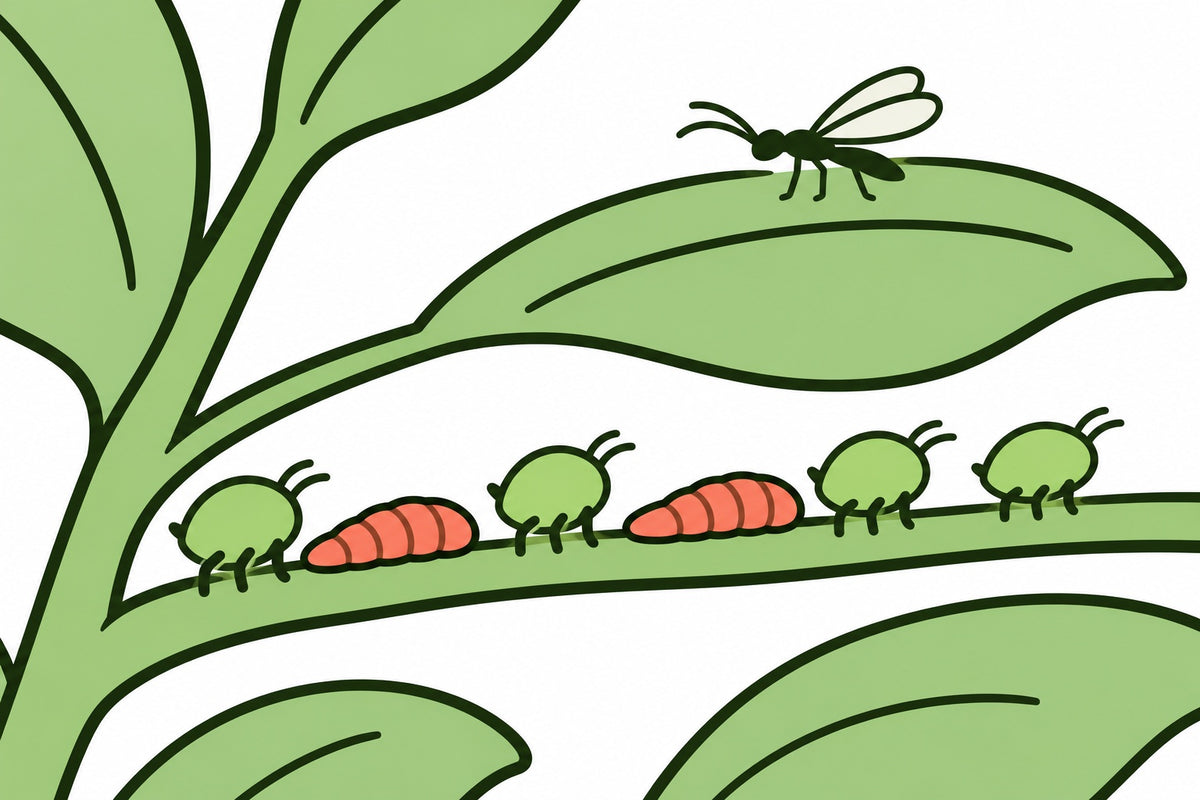
It grows inside an aphid, which swells, hardens and turns bronze. Those mummies are how you know it's working.
The midge finds the crowds
The mother flies at night and lays her eggs right among the aphids, more where the colony is bigger.
The midge gets around
Its eggs have turned up about 150 feet from where the midges were let go.
Just a few scattered aphids? Aphidius colemani on its own is the usual first pick.
How to release
Who's in the box

Aphidius colemani
A tiny stingless wasp that finds scattered aphids and turns each into a mummy that hatches another wasp.

Aphidoletes aphidimyza
A midge whose orange larvae clear dense colonies, over 60 kinds of aphid.


Release the Cleanup Crew in three steps
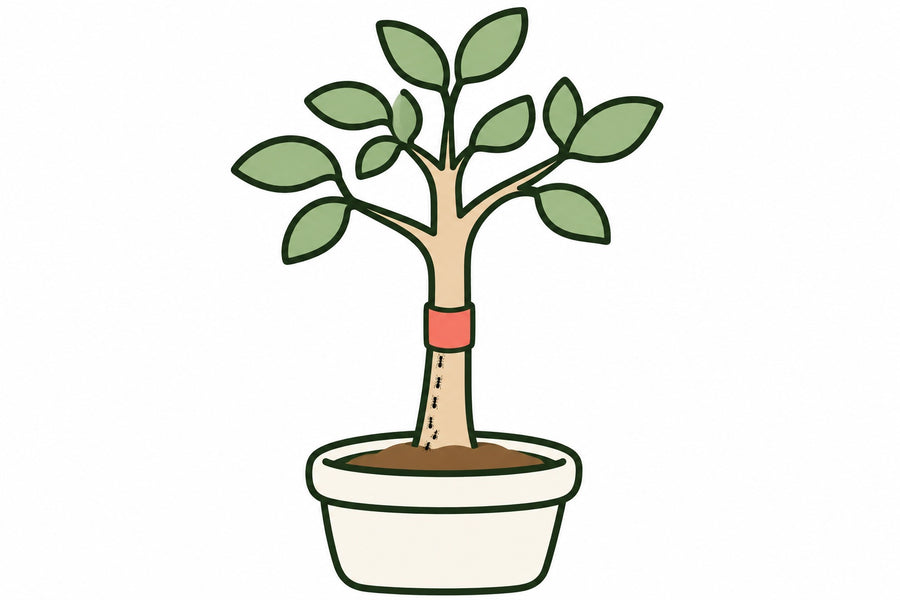
Ants and yellow cards first
A sticky band or diatomaceous earth around each stem stops ants. Take yellow cards down for a few days.

Wasps up high, midges down low
The day the box arrives: wasps open in the canopy near the aphids, midge container on damp, shaded soil.

Leave them be
Keep the wasp material dry and the soil under the midges damp. Leave the mummies where they land.


What you'll see
Quiet, then mummies
Not much to see at first
Wasps hatch out over the next days. The midges emerge on their own and do their flying at night.
 The midge's life, from leaf to soil
Mummies a week or two in
Puffy tan shells on the leaves: each one a new wasp on the way. Leave them be.
Colonies dry up
Aphids go gray and shriveled, fresh honeydew stops, new growth comes in clean. Curled leaves stay curled; judge the new ones.
 The midge's life, from leaf to soil
Often more than one round
There are often more pests than you can see, so plan on a second round. Let the new leaves decide.
- ReleaseSpread them across every plant with damage
- Watch the new leavesFewer pests, clean new growth
- Still there? Go againA new round every 2 to 4 weeks while aphids are active
- Clean? You're doneNew growth stays clean two weeks running: stop
Scattered aphids and crowded stems are two different problems. A wasp and a midge take one each.
Write to info@fgmnnursery.com or ask Toby in the chat.
Cleanup Crew, asked and answered
When does it ship, and how does it arrive?
Wasp mummies and midge pupae. Neither will look like much, and that's normal: they hatch out over the following days. Live orders ship Monday to Thursday, 2-day or overnight, whichever suits them best. Orders over $40 ship free.
What if something's wrong when it arrives?
Our Live Delivery Guarantee covers it. Email info@fgmnnursery.com with your order number: within 72 hours of delivery. Full terms are on the Live Delivery Guarantee page.
Do I need to know which aphid I have?
No. The midges take over 60 kinds of aphid. If most of yours are big potato or foxglove aphids, add Aphidius ervi for the wasp half.
Why both halves?
The wasps are best at finding scattered aphids early. The midge larvae clear crowded stems. Professional growers use them together for that reason.
Does it work on root aphids?
No. Everything in this kit hunts on the leaves. For aphids on the roots, Stratiolaelaps is worth trying, not a cure, and isolating new plants is the best-supported thing you can do.