



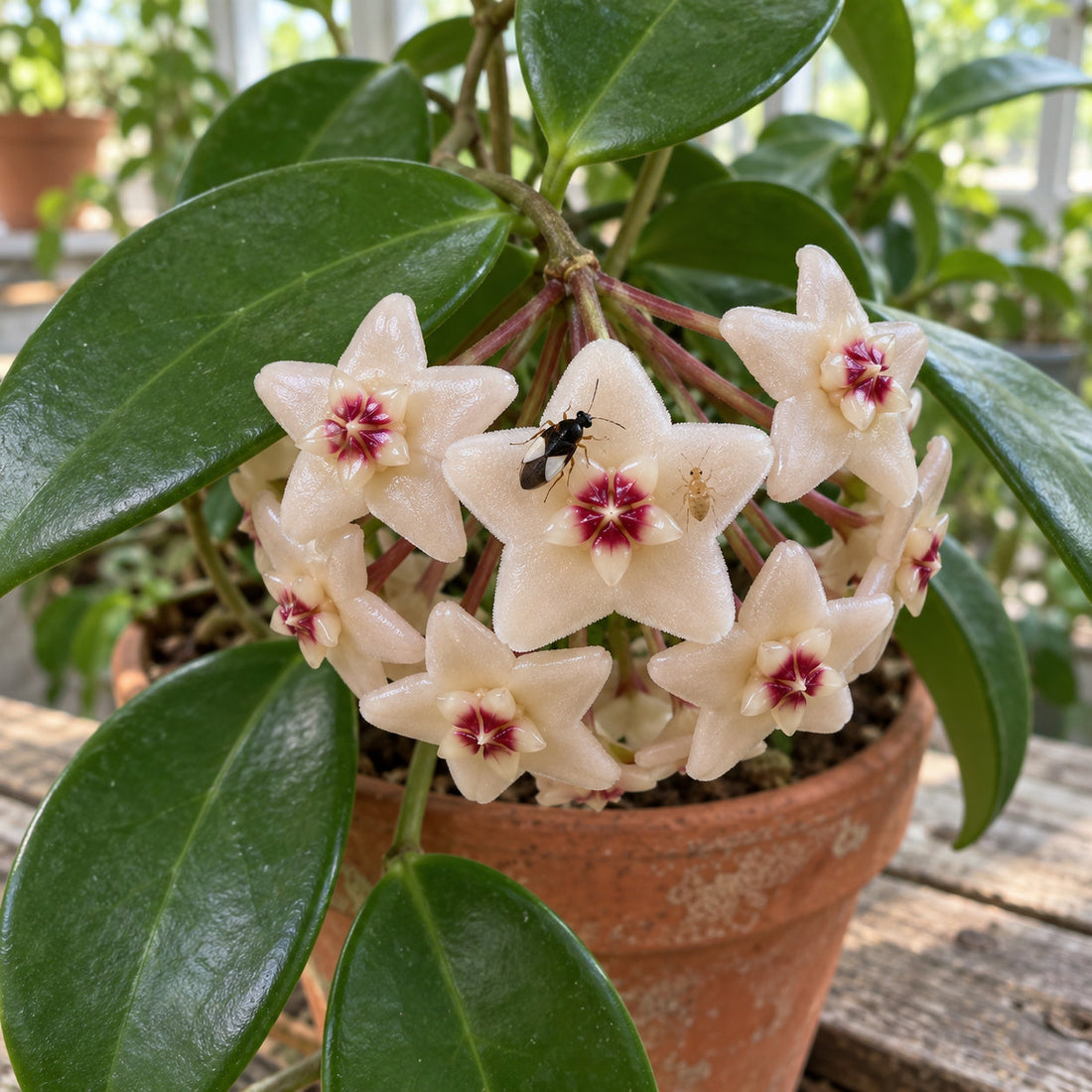
Orius insidiosus (Minute Pirate Bugs) for Thrips Control
Minute pirate bug · Orius insidiosus
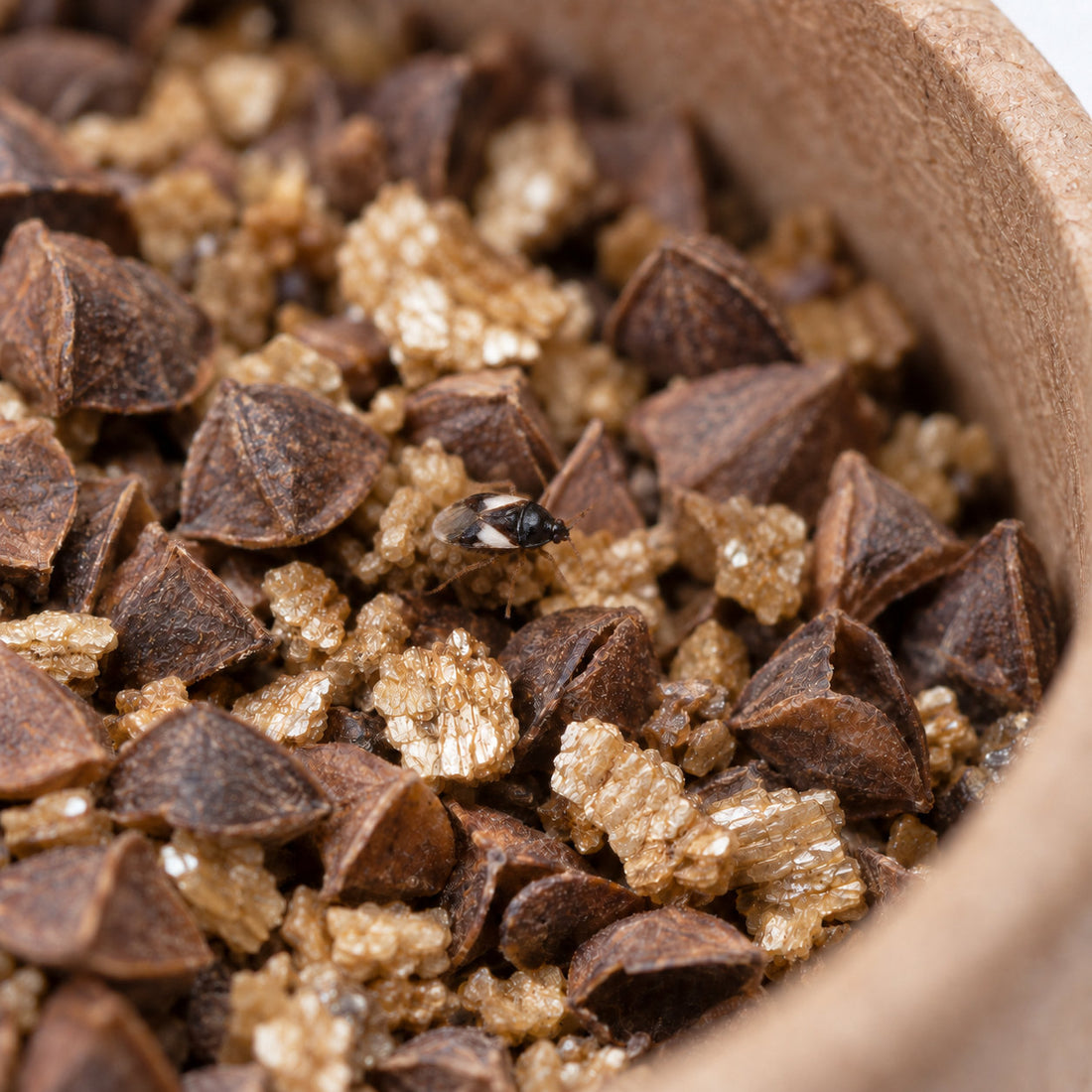
3.9 · 11 reviewsLive minute pirate bugs, adults and nymphs in a carrier of buckwheat hulls and vermiculite, tipped onto foliage and flowers at dusk. Orius hunts adult thrips, the stage predatory mites can't catch, and takes the larvae too. It needs at least 12 hours of light a day and a warm room, and it doesn't reach the pupae in the soil.
- Best for
- Thrips
- Conditions
- 70–90°F, Above 50% RH
- Good to know
- Busy at first. Expect movement when you open the bottle. Over the first few hours they spread into flowers and new growth and get harder to spot. What to expect
When to choose something else
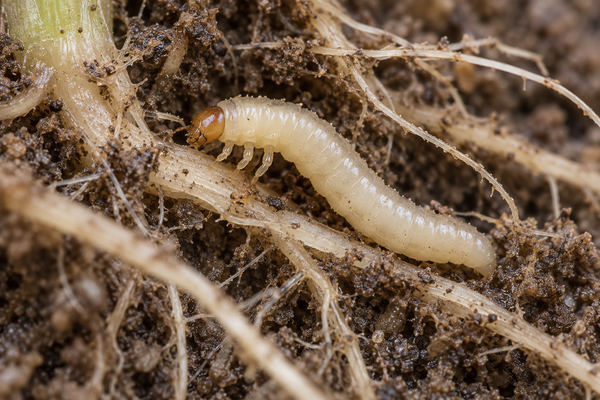
Not for thrips pupae in the soil.
Shipping details
Shipping
| Est. ships | Est. arrives | |
|---|---|---|
| Standard | ||
| Overnight |
Raising a fresh batch for you? Add up to 7 days to both dates.
Estimates. Overnight speeds up the trip, not the packing: its one day on the truck starts once it ships.
- Monday to Thursday only. Nobody spends the weekend in a warehouse.
- Check your address at checkout. Bugs are brilliant at finding aphids and hopeless at finding a new front door.
Ordering with friends? Get group pricing
Everyone picks their own. It ships to you in one box.
Buying for a greenhouse, farm or shop? Ask about wholesale
Right for you?
Your pest, your growing space, how many you need
What orius treat, and what else they eat
The main use is thrips. They also eat aphids and spider mites and more when they come across them, but don't count on that for control.
| Pest | Treats or prevents | Why |
|---|---|---|
| Thrips | Treats | Main prey. It goes looking for these first. |
| Aphids | Prevents | Also eaten along the way, which helps keep them from taking hold. A side benefit, not dependable control on its own. |
| Spider mites | Prevents | Also eaten along the way, which helps keep them from taking hold. A side benefit, not dependable control on its own. |
| Whiteflies | Prevents | Also eaten along the way, which helps keep them from taking hold. A side benefit, not dependable control on its own. |
| Moth eggs | Prevents | Also eaten along the way, which helps keep them from taking hold. A side benefit, not dependable control on its own. |
Not for thrips pupae in the soil.
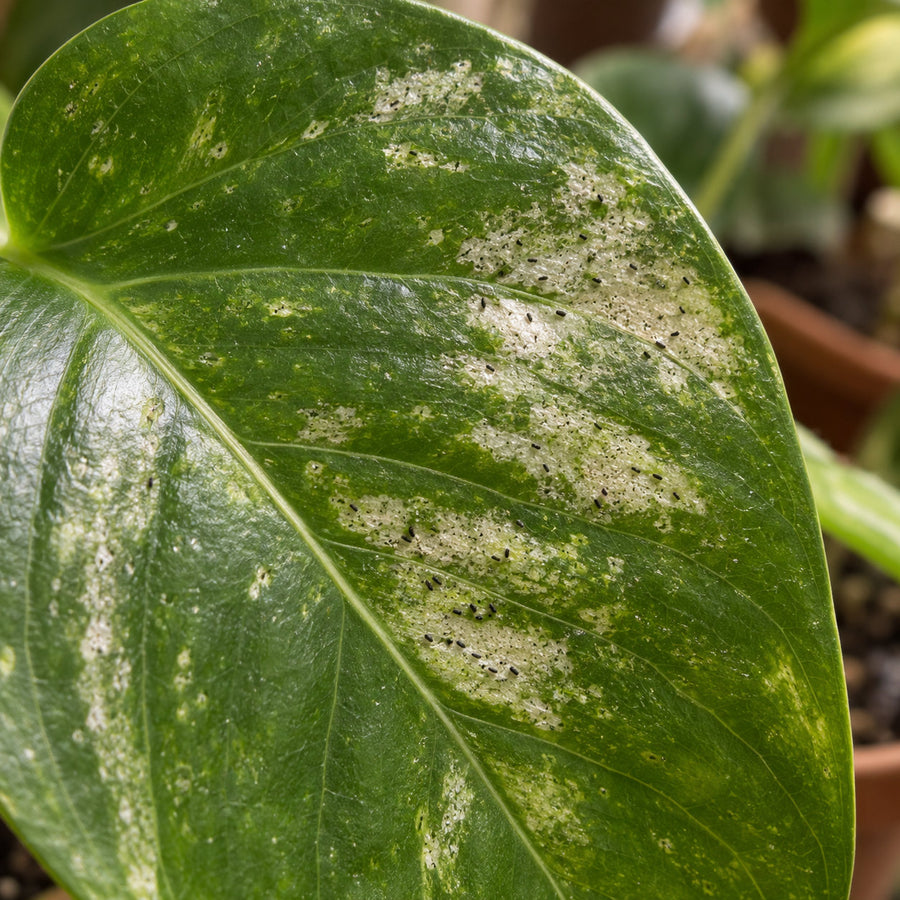
How many orius do I need?
Count the plants you want to cover.
Size guide
| Size | In the bottle | Covers |
|---|---|---|
| X-Small | Up to 5 Plants | 100 Orius |
| Small | Up to 15 plants | 200 Orius |
| Medium | Up to 40 Plants | 500 Orius |
| Large | Up to 80 Plants | 1000 Orius |
| X-Large | Up to 150 Plants | 2000 Orius |
- Each size is one release. The treatment plan below says when to check again.
- Count the plants you want to cover.
- Heavy pressure, go one size up; light, one size down. A large plant with a dense canopy counts as three or four plants.
Conditions for releasing orius
Orius work best when the growing space stays 70–90°F, Above 50% RH. These are preferred conditions, not hard limits.
Best temperature70–90°F
Best between 70°F and 90°F. They work best above 60°F, so this is a warm greenhouse and grow-tent predator rather than a cool-room one.
Best humidityAbove 50% RH
Moderate to high humidity — comfortable in the same air a tropical collection already wants.
RefrigerateBest not
If you need to wait: bottle on its side in a cool dark spot at 50–60°F, released within about twelve hours. Best not refrigerated.
Releasing
What to do, and what you'll see
What to expect
- Busy at first. Expect movement when you open the bottle. Over the first few hours they spread into flowers and new growth and get harder to spot.
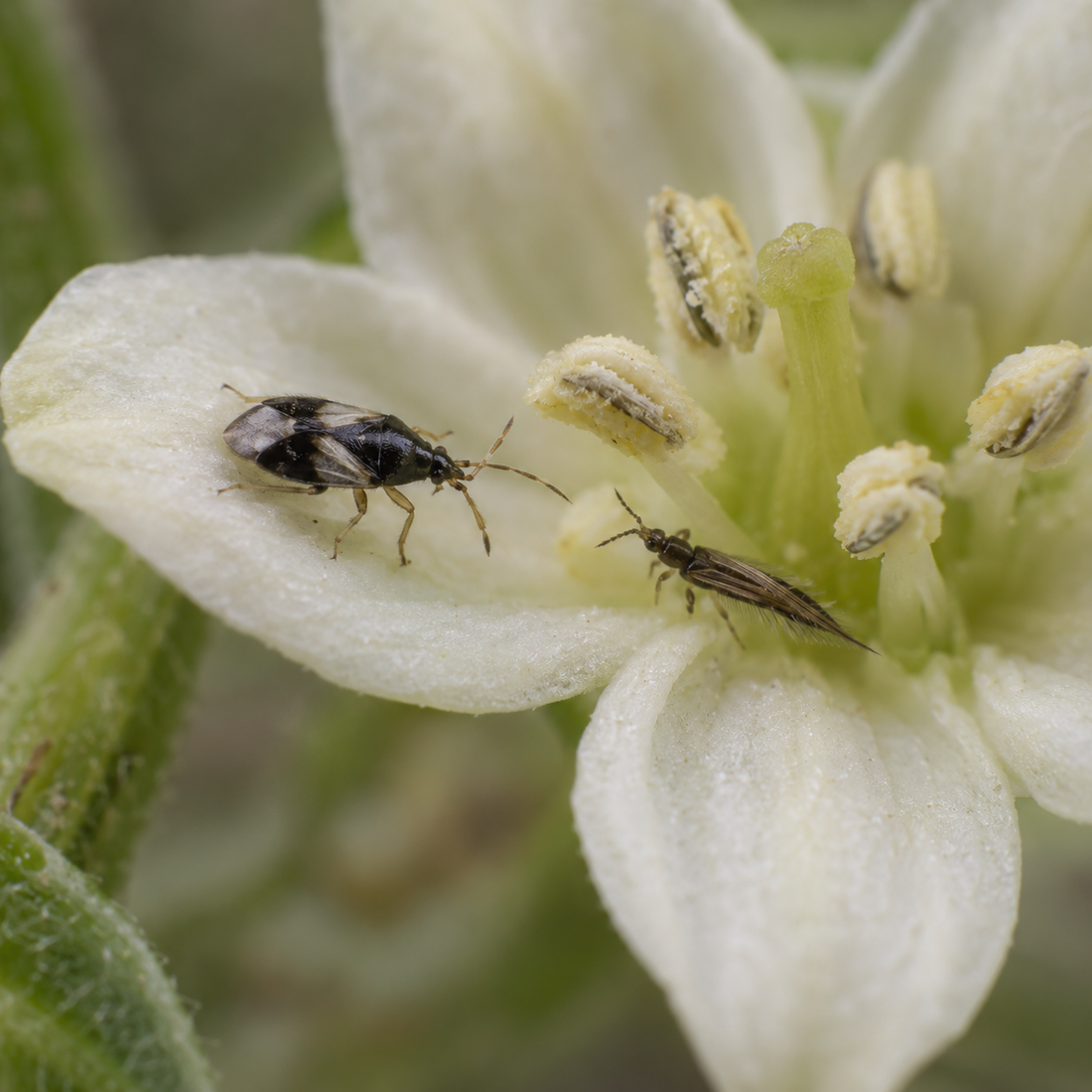
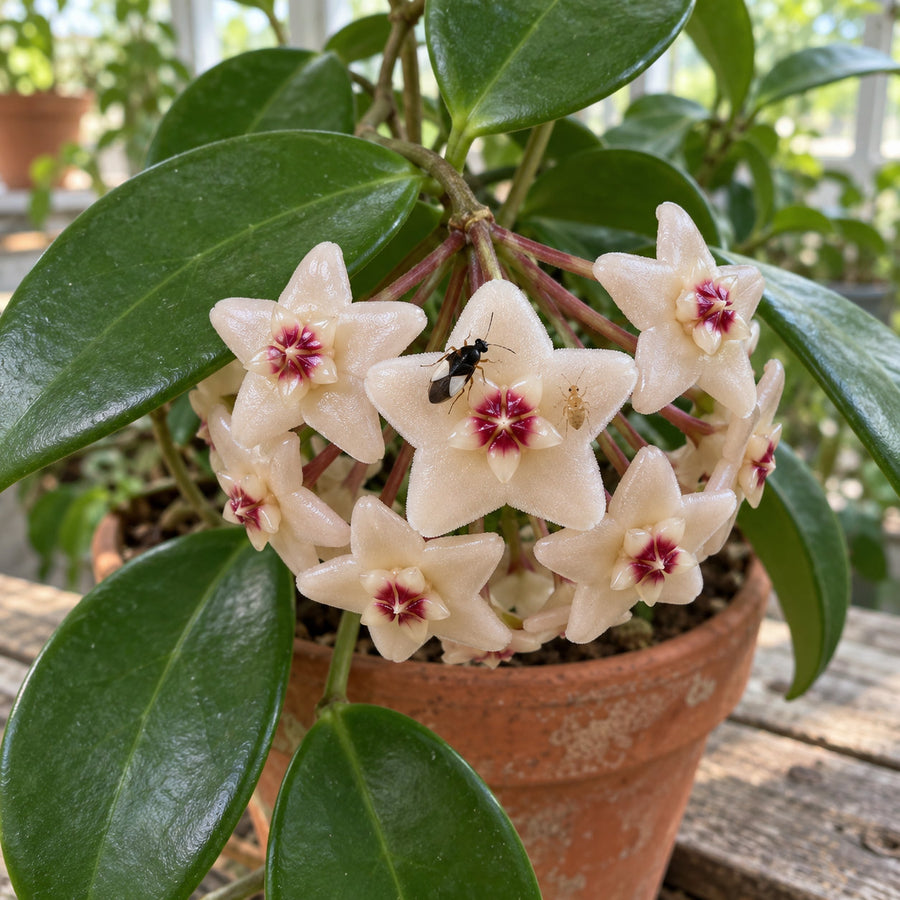
- That's them working. You may catch a small dark bug in a bloom now and then. Seeing few is normal; they're out hunting thrips.
- They might nip. One may land on your hand and give a tiny test nip. Startling, not serious.
- How to tell. Fewer adult thrips on your blue cards once they go back up, and new leaves coming in clean.
How to release orius
You may need to retreat
Eggs and young pests you can't see yet keep hatching after the first release. A second round catches that next wave.
You're done when you're seeing fewer pests and new growth comes in clean. Still seeing them, or fresh damage on new growth, at the check? That's your cue for another round.
Put it on a schedule and the next bottle arrives on its own, 10% off the first and 15% off every one after. If it turns out you don't need it, pause or cancel anytime from your account.
Reviews
What growers say
What people say
3.9 out of 5, from 11 reviews.
I have shopped with yall before, i wen my to spread them out, and noticed everything single big is dead,would like a return , would rather just get an order back i can send video?
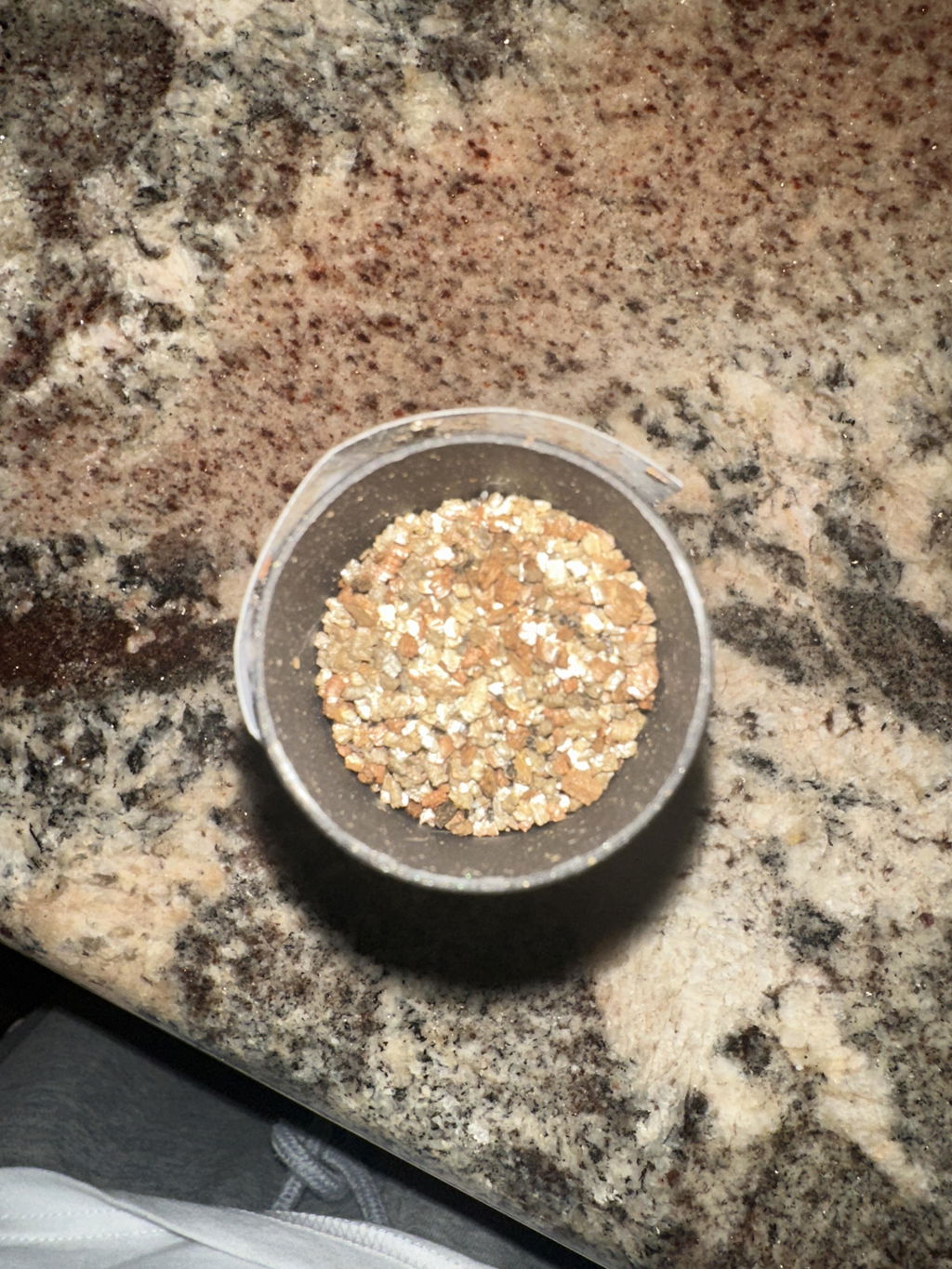
Hi Sonny,
I'm so sorry to hear they arrived dead! The live guarantee would be absolutely come into play here. To make that happen, can you please email the Customer Service team at info@fgmnnursery.com this picture and they'll be happy to issue a store credit or replacement order. Thank you!
This seemed to take care of 90% of my bugs super fast and with zero work from my part.. only ordering of course. But I never had any issues in my grow cabinets until now.. I didn’t sprinkle any in there and it seems all the pests have now found their way in them and are destroying my most prized plants!!! I will be ordering again just for my cabinets.. sad day.
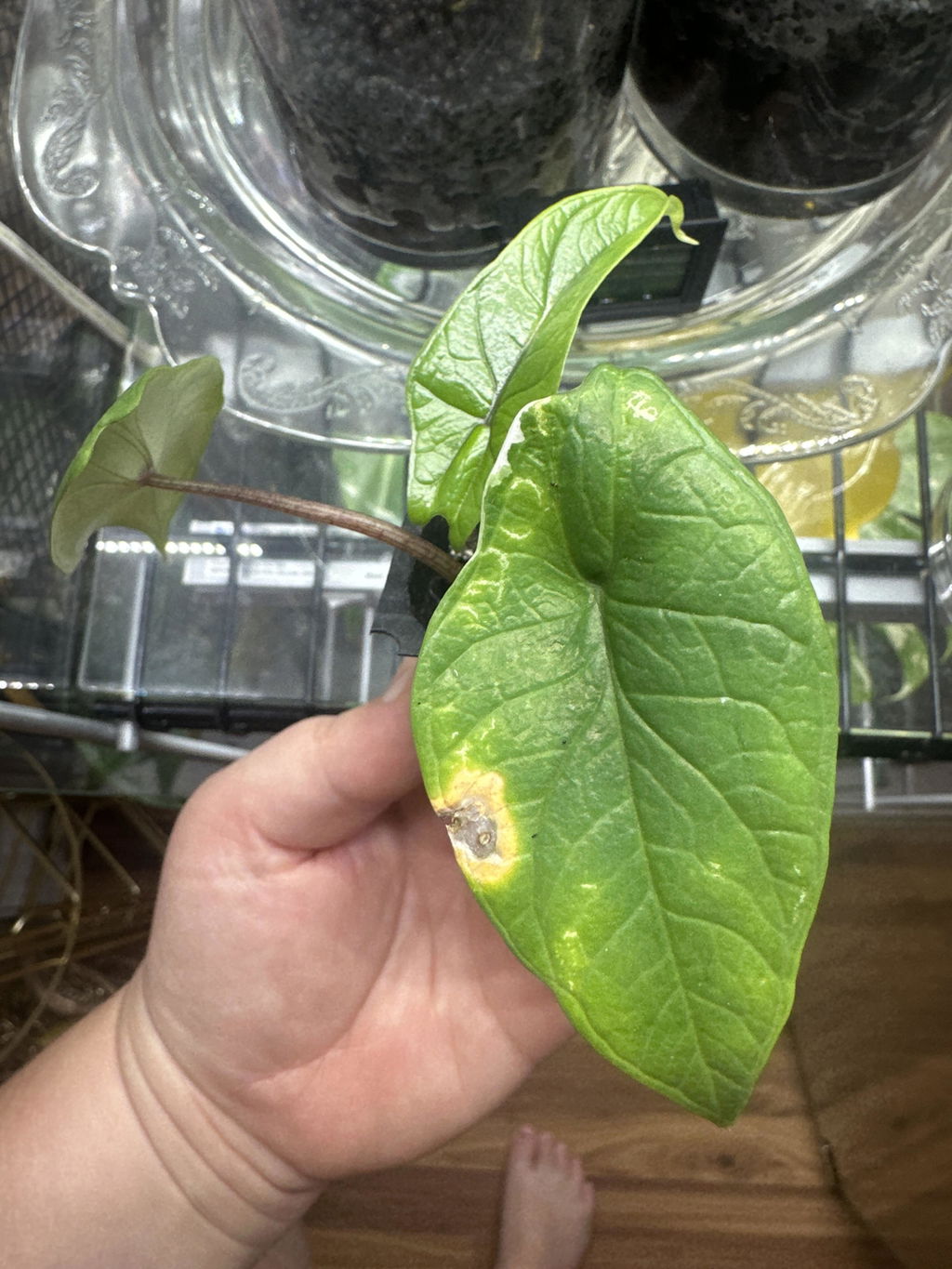
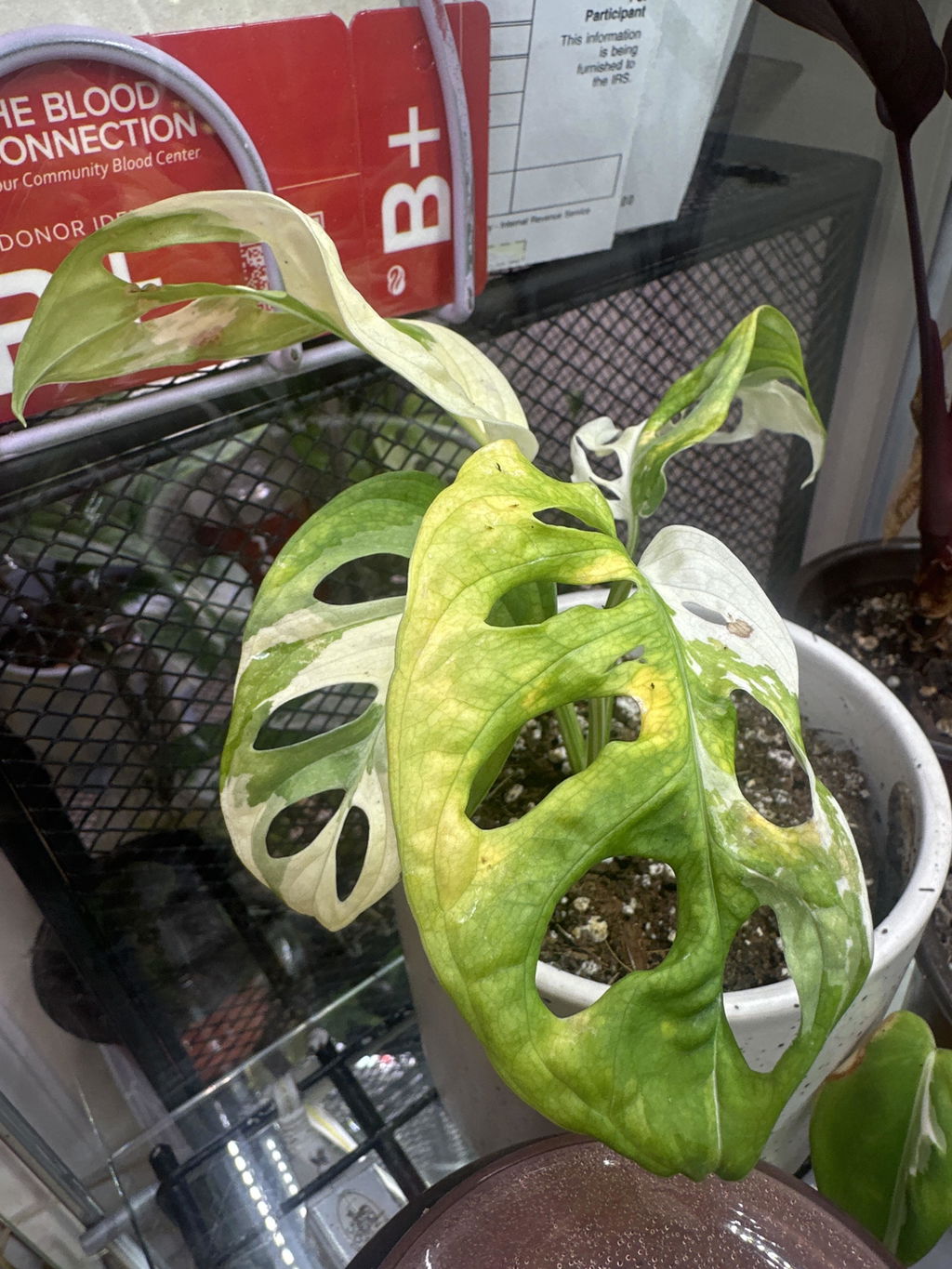
Looooove
I received my package, I think the day after I ordered it.
My ice pack was warm, which the directions said was how it was supposed to be. I opened the container a few hours after getting it onto the bush I was treating for thrips. I did not see any Orius in the tube or as I was rotating it onto the shrub. The next day, there were just as many thrips as before, but then the day after that, the thrip count went down quite a bit. Hopefully some were alive in the tube & took care of the thrips.
Hi there, thank you for sharing your experience. We're glad to hear the thrips count decreased, and hope the Orius are working well for you. If you have any further questions or need assistance, feel free to reach out!
No live critters in tube. Report dismissed by reviewer.
Hi Lewis, thank you for sharing your feedback. We understand it can be startling when you don’t see movement immediately! Orius insidiosus (Minute Pirate Bugs) are incredibly small—about the size of a gnat—and are expert hiders.
As Karen mentioned in her email, these beneficial insects are highly active. Once the tube is opened or they are distributed, they often fly off instantly to find shade and prey. Because they are smaller than the carrier material they ship in, they are nearly impossible to spot once they’re on the move. The fact that you didn't see any 'expired' bugs in the media is actually the best indicator that they arrived healthy and dispersed quickly into your garden to start hunting thrips!
Seem to be very helpful
Very lively bugs and they get to work right away!!! They’ve worked really well at getting rid of the thrips problem I have!
Excellent
Great little guys and I will keep ordering
I received my order quickly after ordering, and the little 'buggers' were ready to come out of the bottle as soon as I opened it - before I could even begin shaking it they were crawling out. I'm confident theyre making a difference in my and my neighbor's yards and I've noticed a marked decline in thrip damage on my plants.
These guys definitely killed all the thrips!
I have shopped with yall before, i wen my to spread them out, and noticed everything single big is dead,would like a return , would rather just get an order back i can send video?
Hi Sonny,
I'm so sorry to hear they arrived dead! The live guarantee would be absolutely come into play here. To make that happen, can you please email the Customer Service team at info@fgmnnursery.com this picture and they'll be happy to issue a store credit or replacement order. Thank you!
This seemed to take care of 90% of my bugs super fast and with zero work from my part.. only ordering of course. But I never had any issues in my grow cabinets until now.. I didn’t sprinkle any in there and it seems all the pests have now found their way in them and are destroying my most prized plants!!! I will be ordering again just for my cabinets.. sad day.
Looooove
I received my package, I think the day after I ordered it.
My ice pack was warm, which the directions said was how it was supposed to be. I opened the container a few hours after getting it onto the bush I was treating for thrips. I did not see any Orius in the tube or as I was rotating it onto the shrub. The next day, there were just as many thrips as before, but then the day after that, the thrip count went down quite a bit. Hopefully some were alive in the tube & took care of the thrips.
Hi there, thank you for sharing your experience. We're glad to hear the thrips count decreased, and hope the Orius are working well for you. If you have any further questions or need assistance, feel free to reach out!
No live critters in tube. Report dismissed by reviewer.
Hi Lewis, thank you for sharing your feedback. We understand it can be startling when you don’t see movement immediately! Orius insidiosus (Minute Pirate Bugs) are incredibly small—about the size of a gnat—and are expert hiders.
As Karen mentioned in her email, these beneficial insects are highly active. Once the tube is opened or they are distributed, they often fly off instantly to find shade and prey. Because they are smaller than the carrier material they ship in, they are nearly impossible to spot once they’re on the move. The fact that you didn't see any 'expired' bugs in the media is actually the best indicator that they arrived healthy and dispersed quickly into your garden to start hunting thrips!
Seem to be very helpful
Very lively bugs and they get to work right away!!! They’ve worked really well at getting rid of the thrips problem I have!
Excellent
Great little guys and I will keep ordering
I received my order quickly after ordering, and the little 'buggers' were ready to come out of the bottle as soon as I opened it - before I could even begin shaking it they were crawling out. I'm confident theyre making a difference in my and my neighbor's yards and I've noticed a marked decline in thrip damage on my plants.
These guys definitely killed all the thrips!
Pairs well with
Small things that help them work
-
Add alongside
Amblyseius swirskii
The larvae on the leaves.
from $65
-
Add alongside
Sf Nematodes
The pupae in the soil.
from $15
-
Add alongside
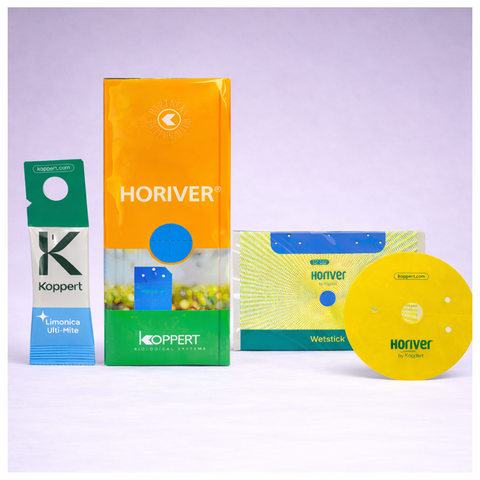
Horiver Professional Sticky Traps
How you'll measure it.
from $11
-
Add alongside
Root Network
For the roots: mycorrhizae and microbes that help roots take up water and nutrients. Use at repotting, then a monthly drench.
from $15



More to know
Ways to buy, questions and reading
Ways to buy
Once, on a schedule, with friends, or mixed with other predators.
- One time
- A single bottle, this once. Free shipping on orders of $30 or more, $15 under that.
- On a schedule
- 10% off your first box, 15% off every box after. Skip, move, pause or cancel from your account.
- Group order
- Friends each pick what they want, and it ships to you in one box.
- Mix and match
- Buy several predators together and they get cheaper.
For the curious
Everything else we know about them. Tap a topic to open it.
Is this your pest?
Orius takes one pest above all others, and it takes the stage nothing else in the catalog reaches. If adult thrips are not what you are looking at, the product you want is a different one.
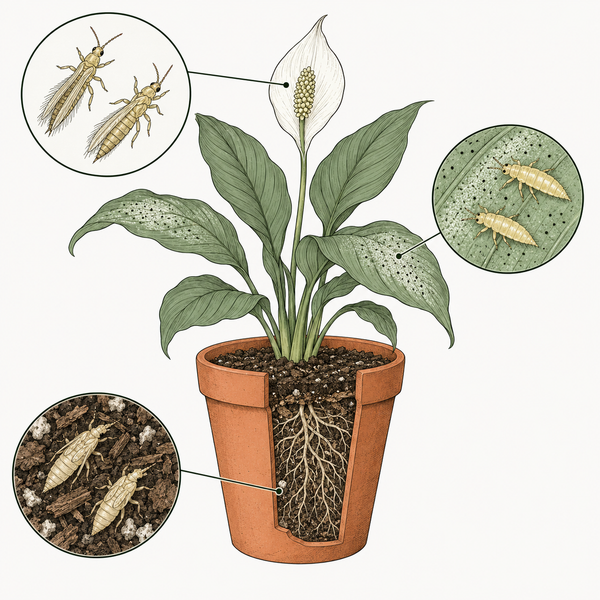
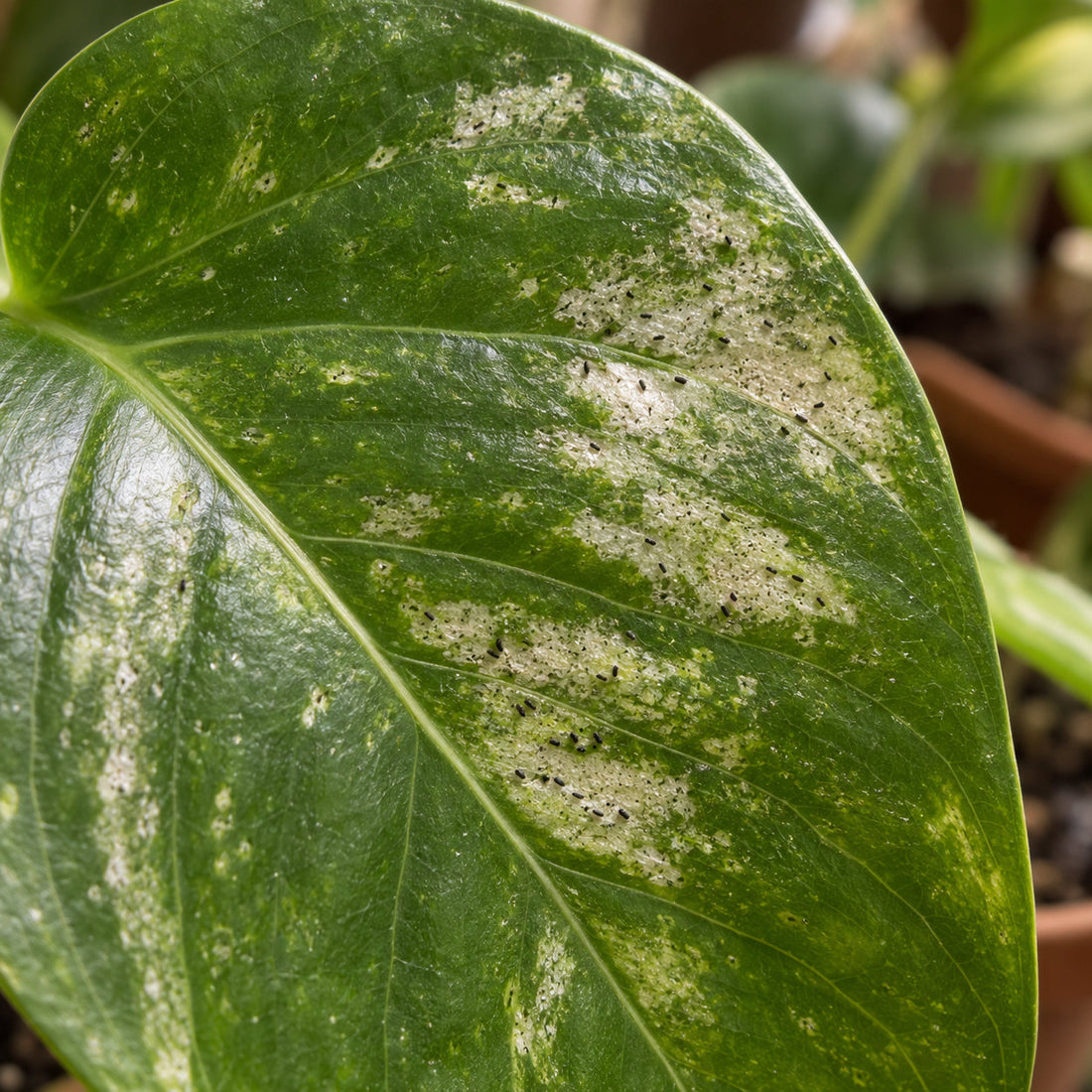
Thrips rasp the leaf surface and leave silvery scarring with black frass specks, worst on the newest tissue. The adults are the stage doing the flying, the feeding and the egg-laying — small, quick, and gone the moment you lean in. If something has ever lifted off a flower when you moved, that was an adult thrips.
Orius takes adult thrips, and the larvae too, but the adults are the point — that is the stage a predatory mite cannot catch. It does not reach the pupae in the soil: that is Sf nematodes. It also takes aphids, spider mites, whiteflies and moth eggs when it finds them.
Then: is Orius the right answer to it?
Choose this if
Choose Orius when you can see adult thrips, when the scarring is spreading faster than a mite release is closing it down, or when the plants are large and dense. Because it flies, it searches the whole grow space instead of waiting on one leaf — it reaches hot spots a crawling mite may never cross. A single one routinely kills more thrips than it actually eats. Nothing to mix, nothing to spray, no residue and no re-entry interval.
Choose something else if
It wants long days and a warm room: at least 12 to 14 hours of light, and 70 to 90°F. Under short winter daylengths it may enter diapause and stop hunting, and it works best above 60°F. If the thrips you have are all soil-stage pupae, nematodes are what that needs instead.
What it kills, and what it won't
It also feeds on pollen, which is not a pest — it is how the population holds on a clean plant instead of leaving. Flowering plants keep Orius in the room when pest numbers are low.
How it works
What it does to the pest, what it does on the plant, and what that leaves you looking at.
It hunts, and it flies
Orius is a predator — no poison, no residue on the leaves, no re-entry interval. It finds an adult thrips and drains it. Because it flies rather than crawls, it searches the whole grow space: the top of a tall plant, the far side of a dense one, the hot spot you have not found yet. And thrips cannot develop resistance to being hunted.
It stays while there is food
It feeds on pollen as well as prey, so a flowering plant holds the population between outbreaks rather than starving it out. Long days keep it active and breeding — twelve to fourteen hours or more. With the pests gone and nothing in flower, it may move on to find food elsewhere.
The one you might notice
About 3mm, dark, shield-shaped and fast. That is large enough to see with the naked eye, which almost nothing else in this catalog is. There is no need to go looking for them, though: watch the thrips instead.
It does not reach the soil. Most thrips drop down to pupate, and that stage is out of reach. Orius on the adults in the canopy, a predatory mite on the larvae on the leaves, nematodes on the pupae in the soil — pair them rather than substitute.
About Orius
A 3mm predatory bug — the minute pirate bug, which is a good name for something that size that hunts down flying adult thrips and drains them. It has no interest in your plants and none in you. It eats other arthropods, and pollen when there are none.
New to beneficials?
Five things that catch almost everyone the first time.
What arrives
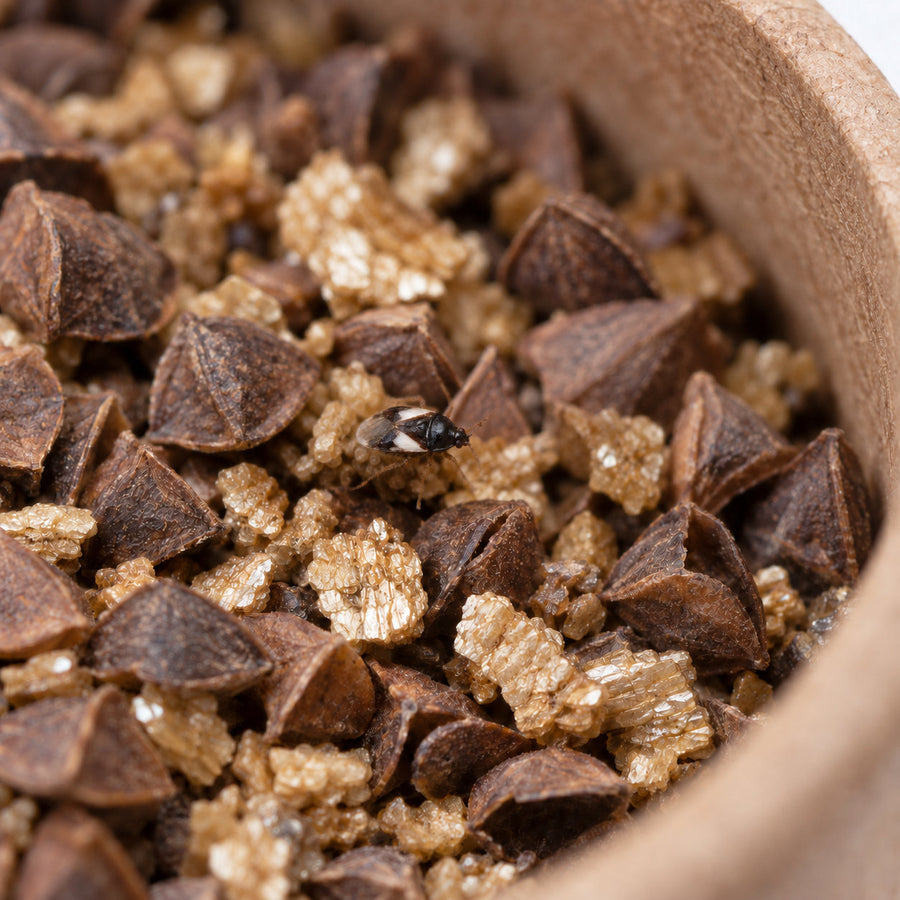
A bottle of live adults and nymphs in a carrier of buckwheat hulls and vermiculite, with a food source packed in to keep them fed on the way.
Expect movement when you open it, and expect some carrier to come out with them. Both are normal.
Release the day they arrive. Orius has a high metabolism and does best released rather than stored. Release late evening or just before lights-out — under high light they fly toward the lamps and the windows instead of settling on the plants.
When it ships, and when it lands
Shipping
We ship when they're ready to travel. Live orders go out Monday to Thursday. If a colony needs a beat to peak, or we're propagating a fresh batch, yours might hold up to a week. All mites and insects ship 2-day or Overnight depending on what's best for them.
When it lands
Open it that day. Pull your yellow and blue cards first. Rotate the bottle gently to mix the bugs through the carrier, then tip them onto foliage and into flowers, about a dozen per plant — flowers first, because that is where the adult thrips are.
Why we pack extra
Two days in a van is a long trip for something this small, so we send more than you paid for.
A 3mm insect with a high metabolism ships in a bottle, in a van, for two days, with food packed in beside it.
A trip like that is hard on anything this small, so we price it in: the number on the label gets counted out, and then roughly 15% more goes in on top as a cushion.
Your 500-Orius bottle leaves here holding more than 500. The cushion is on us.
If you can see them
Ladybugs, lacewing larvae, Orius — the minute pirate bug — and the beetles. These are the ones big enough to see.
Cold insects are very good at sitting still. That's normal. Release them as this page says, and watch the pest instead.
Something look wrong? Email info@fgmnnursery.com with your order number.
If you can't see them
Mites, nematodes and eggs — most of what we sell. Not this one: Orius is 3mm and dark, big enough to see, so the section above applies to you.
Email info@fgmnnursery.com and our entomologist takes you through the diagnostic instead — where the box sat, what your room was doing, and then what the pest is doing about ten days later.
We spell the other half out here so you can see the policy is the same either way.
Seventy-two hours from delivery, either way, with your order number. Replacement or store credit, your pick.
Questions about orius
Will I have bugs flying around my house?
Not so you'd notice. You may see them on the first day; then they scatter to hunt, and you're unlikely to spot them again. They stay where the pests are.
How many thrips can one Orius kill?
A single Orius is a voracious feeder and routinely kills more thrips than it actually eats, which is a big part of why they are so useful against thrips.
Will they stay in my grow room?
Orius will stay as long as there is food (thrips, mites, aphids) or pollen. If the pests are gone and your plants aren't flowering, they may fly away to find a new food source.
What environmental conditions do they need?
They perform best between 70°F and 90°F with at least 12–14 hours of light. In winter months with short days, they may stop breeding and go dormant.
Can I use Orius with other beneficials?
Yes. To cover every stage, we recommend a "Triple Threat" approach:
- Orius for the adults in the canopy.
- Swirskii Mites for the larvae on the leaves.
- SF Nematodes for the pupae in the soil.
Will I see them when they arrive?
You may see a few. Orius are roughly 3mm and dark, one of the few beneficials big enough to spot. You don't need to check, though. Release them the day they arrive, and watch the thrips instead: fewer of them week on week, and clean new growth.
Do Orius bugs bite humans?
Orius are "Pirate Bugs," and while they are completely harmless to humans and pets, they can occasionally give a tiny "test nip" if they land on your skin. It feels like a small pinprick and does not cause lasting irritation or inject any venom.
Can I release them after spraying?
It depends on what you sprayed. Insecticidal soap, horticultural oil and neem oil work on contact and leave little behind once dry, so they are the easiest to release after. Many other products stay active on the leaf for much longer, so there is no one waiting period that fits everything: check the label of what you used, and if you are not sure, email info@fgmnnursery.com with the product name before you release the Orius.
How many Orius do I need?
Size it by plant count. The sizes are built at about a dozen Orius a plant:
- Count the plants in the space and pick the size whose plant count covers them. The X-Small Hot Spot size is for concentrating on a few plants.
- Heavy pressure (scarring on most of the new growth, adults lifting off in numbers): go one size up.
- Light pressure (a few silvery specks, one or two thrips a week on a card): one size down.
- One bottle is one release. Tip it all out at dusk or just before lights-out, the day it arrives, with sticky cards down for about a week.
- Repeat every 2–4 weeks while adult thrips are around. Check at about 14 days: fewer adults on your blue cards once they go back up, and new leaves coming in clean.
Keep reading
Field Notes from the FGMN Nursery team.
 Orius Takes on Adult Thrips
Why Orius can prey on adult thrips, how that differs from larval predation, and what flowers and plant…
Orius Takes on Adult Thrips
Why Orius can prey on adult thrips, how that differs from larval predation, and what flowers and plant…
 How to Treat Thrips (And Why It's Harder Than Everyone Says)
Thrips are one of the most frustrating pests in cultivation — not because they're invincible, but because most…
How to Treat Thrips (And Why It's Harder Than Everyone Says)
Thrips are one of the most frustrating pests in cultivation — not because they're invincible, but because most…
 Thrips Have Their Own House Rules
Thrips species do not all live the same way. Learn why their pupation sites and responses to predators…
Thrips Have Their Own House Rules
Thrips species do not all live the same way. Learn why their pupation sites and responses to predators…
Sources
Published guidance from university extension services. The release tips on this page also draw on what we see shipping these every week.
- Biological Control of Western Flower Thrips (UConn Extension IPM)
- Using Biocontrol Organisms for Managing Thrips and Mites in Greenhouse Vegetables (University of Maryland Extension)
- Photoperiodic effect on diapause in Orius insidiosus (Ruberson et al. 1991, Environmental Entomology)
- Thrips, Pest Notes 7429 (UC IPM)