





Table of contents
Pest management in cannabis cultivation becomes particularly nuanced during the flowering phase, a critical stage when quality control directly impacts the final product's purity and potency. Among various pest management strategies, the application of predatory mites raises important questions regarding their safety, effectiveness, and compatibility with the flowering stage.
The Rationale for Predatory Mites in Advanced Cannabis Cultivation
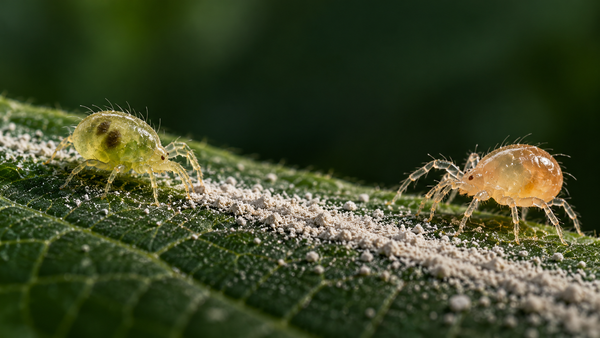
In integrated pest management (IPM) programs, predatory mites serve as targeted biological controls, efficiently eliminating harmful pests like spider mites, broad mites, thrips, and russet mites. Unlike chemical treatments, these biological agents pose no risk of residue contamination, making them ideal for use when plants are flowering and buds are particularly susceptible to quality degradation.
Is Flowering Too Late for Predatory Mites?
Not at all. Predatory mites are specifically advantageous during flowering, precisely because this stage limits chemical interventions due to residue concerns. These beneficial mites leave no chemical trace, preserving the integrity and marketability of harvested buds, aligning perfectly with regulatory and consumer demands for clean, pesticide-free cannabis.
Strategic Selection of Predatory Mites for Flowering Cannabis
1. Phytoseiulus persimilis
Primary Target: Spider mites (Tetranychus urticae).
Optimal Application: Immediate introduction upon early pest detection during flowering.
Preferred Conditions: Moderate humidity (60–80%), suitable for controlled indoor environments.
2. Neoseiulus californicus
Targets: Versatile control for spider mites, broad mites, and russet mites.
Environmental Adaptation: Robust in warmer temperatures and lower humidity, common in indoor grow rooms.
Strategic Advantage: Ideal for continuous pest management, ensuring stability throughout the flowering period.
3. Amblyseius swirskii
Targets: Broad mites, thrips larvae, whiteflies, and spider mite eggs.
Best Environment: Thrives in warmer, humid conditions commonly found in greenhouse settings.
Expert Recommendations for Predatory Mite Deployment
Use Controlled-Release Sachets: Sachets deliver sustained protection, steadily releasing mites across their various life stages. This method is essential for preventing sudden pest population spikes during flowering.
Fine-Tune Environmental Parameters: Carefully manage humidity and temperature settings tailored to the chosen mite species to maximize their effectiveness.
Implement Chemical-Free Buffer Periods: Refrain from pesticide use at least two weeks before introducing predatory mites and throughout flowering to avoid compromising mite efficacy.
Results and Expectations
Predatory mites typically deliver measurable pest reduction within 3–7 days post-release, achieving substantial control within 2–4 weeks, depending on initial infestation severity.
Maintaining Effective Long-term Control
Consistent monitoring combined with strategic, supplemental releases of predatory mites throughout the flowering phase establishes sustainable pest management. Coupling this with meticulous environmental management ensures ongoing effectiveness and quality assurance.
Concluding Insights
Adopting predatory mites as part of your integrated pest management strategy during flowering not only safeguards cannabis crop integrity but also meets the rigorous demands of modern, high-quality cultivation. This approach ensures your final product remains free of chemical residues, positioning your harvest as both premium quality and consumer-safe.


