



Amblydromalus limonicus Sachets for Thrips and Whitefly Prevention
Limonicus mite · Amblydromalus limonicus
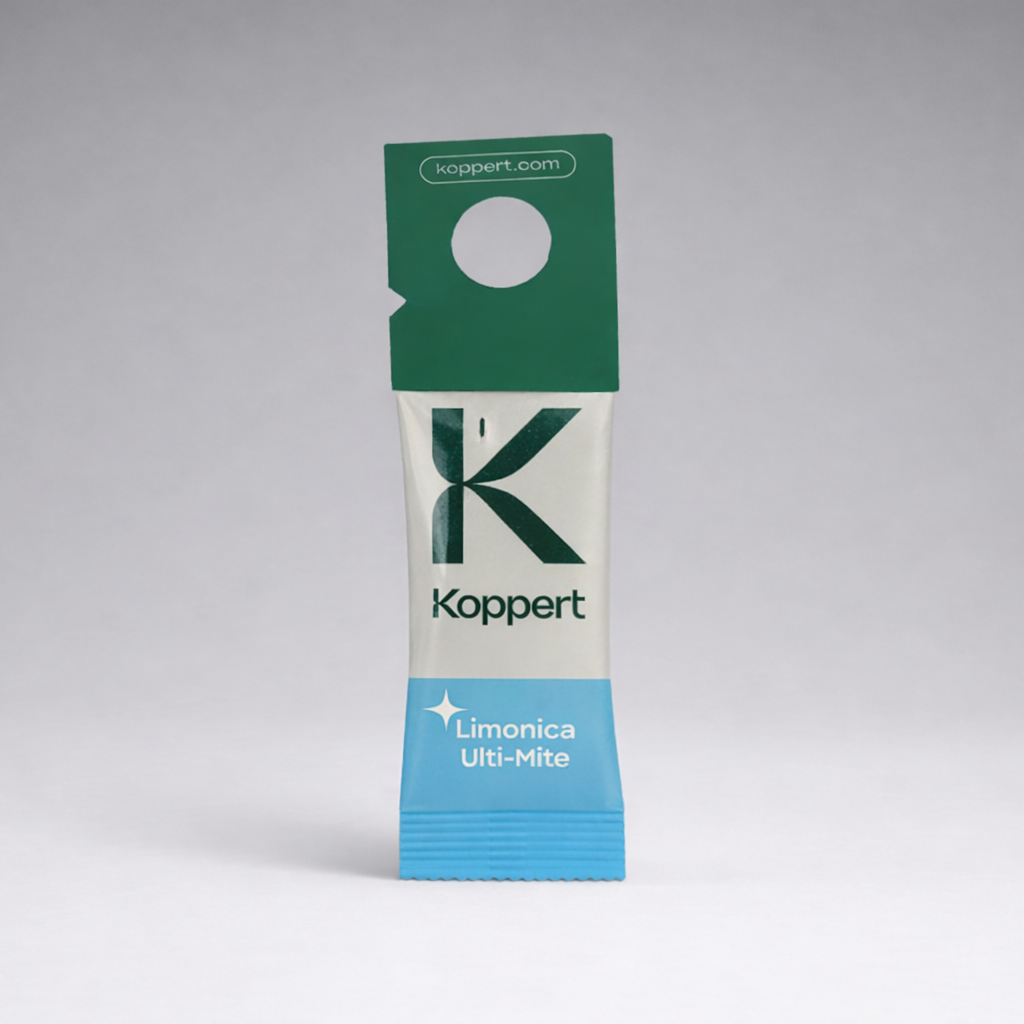
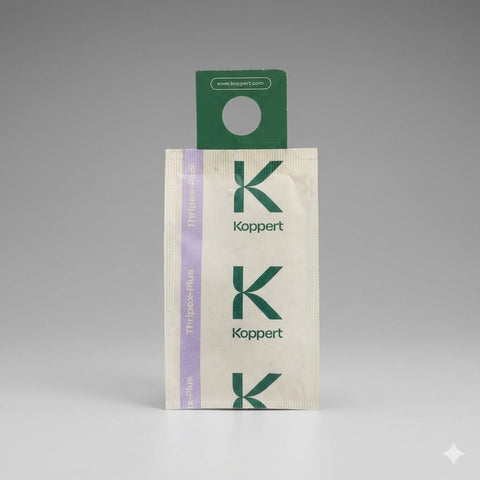
Slow-release paper sachets, each a breeding colony of Amblydromalus limonicus predatory mites with food mites on a bran medium, releasing predators for four to six weeks. Hang one every three to five linear feet to guard against thrips larvae and whitefly eggs and young nymphs. It needs a humid room, 70% RH or more, and it's prevention for clean plants, not a rescue.
- Conditions
- 60–85°F, 70% RH or higher
- Good to know
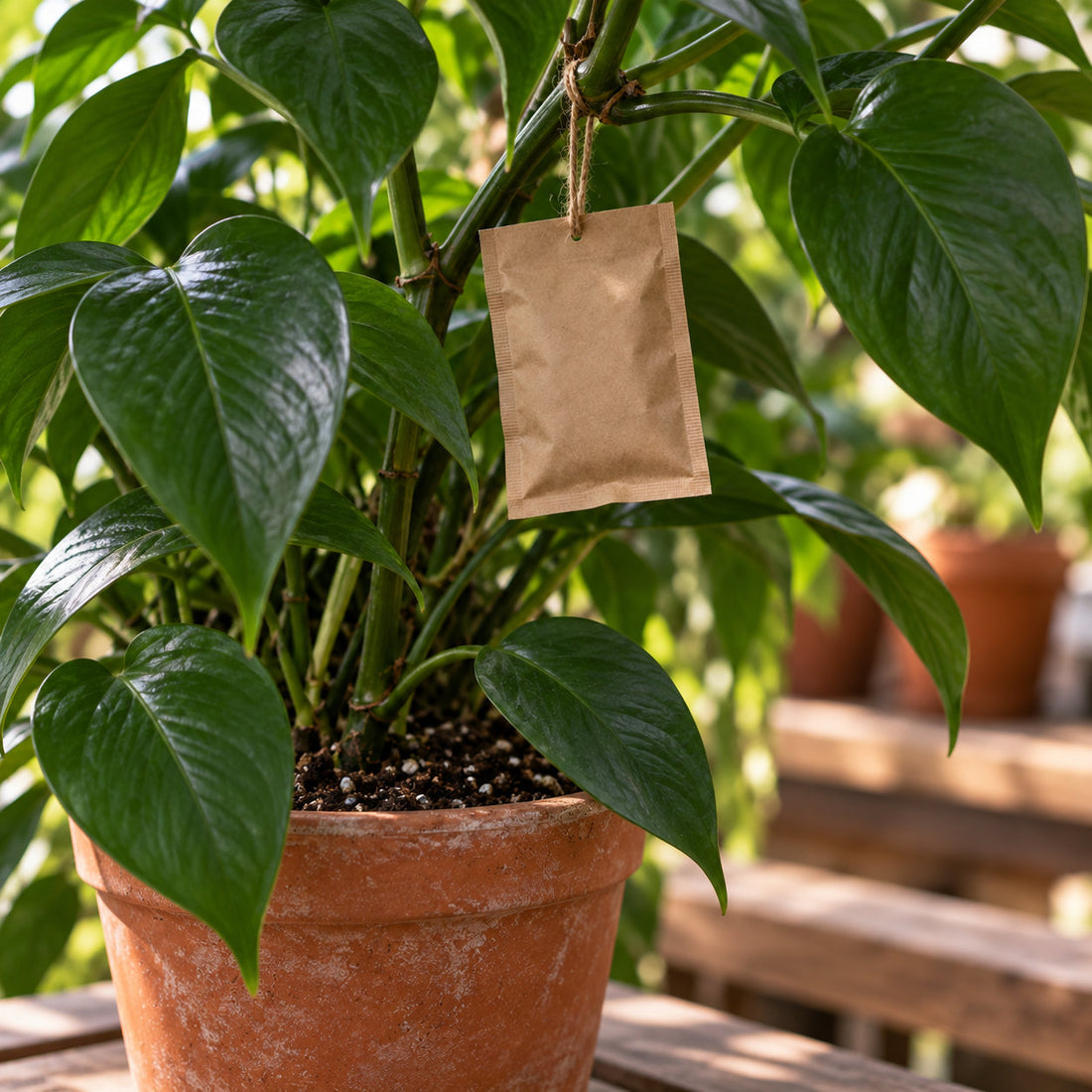
- The sachet looks like nothing. It gives no outward sign at all. The mites stroll out of a small hole in the seam, a few each day, for four to six weeks. What to expect
When to choose something else
Not for adult thrips, broad mites, russet & rust mites.
Shipping details
Shipping
| Est. ships | Est. arrives | |
|---|---|---|
| Standard | ||
| Overnight |
Raising a fresh batch for you? Add up to 7 days to both dates.
Estimates. Overnight speeds up the trip, not the packing: its one day on the truck starts once it ships.
- Monday to Thursday only. Nobody spends the weekend in a warehouse.
- Check your address at checkout. Bugs are brilliant at finding aphids and hopeless at finding a new front door.
Ordering with friends? Get group pricing
Everyone picks their own. It ships to you in one box.
Buying for a greenhouse, farm or shop? Ask about wholesale
Right for you?
Your pest, your growing space, how many you need
What it prevents
Prevention. Put it out on clean plants, before thrips and whiteflies show up.
| Pest | Treats or prevents | Why |
|---|---|---|
| Thrips | Prevents | Put out on clean plants, it's already there when they arrive, so they have a harder time building up. |
| Whiteflies | Prevents | Put out on clean plants, it's already there when they arrive, so they have a harder time building up. |
Start with a treatment instead:
Not for adult thrips, broad mites, russet & rust mites.
Or choose instead
When one of these fits your situation better than amblydromalus limonicus slow-release prevention sachets.
-
Choose this instead
Amblydromalus limonicus
If it is already running.
from $90
-
Choose this instead
Neoseiulus cucumeris Slow-Release Prevention Sachets
If it is broad or cyclamen mites.
$2.25
-
Choose this instead
Amblyseius swirskii Slow-Release Prevention Sachets
If the room runs genuinely hot.
$4.75

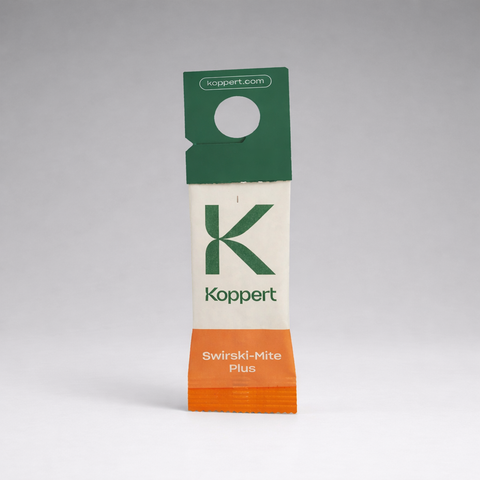
Conditions for releasing amblydromalus limonicus slow-release prevention sachets
Amblydromalus limonicus slow-release prevention sachets work best when the growing space stays 60–85°F, 70% RH or higher. These are preferred conditions, not hard limits.
Best temperature60–85°F
Highly active through moderate temperatures, which is exactly what a standard indoor grow room actually runs at — and it keeps going through spring and autumn where the warm-weather mites are already slowing.
Best humidity70% RH or higher
The one condition that really decides this. A humid canopy is what keeps the colony producing and the eggs hatching — this is not a dry-room mite at any temperature.
CoverageOne per 3–5 linear feet
Size by the length of the shelf, row or bench, not the number of plants. A large plant can have one of its own. Two or three on a big specimen, hung at different heights.
Sachet life4–6 weeks
At the long end of what a sachet manages. Then replace it — an empty sachet is paper, and the plant is unguarded from that point on.
RefrigerateBest not
They do best kept out of a kitchen fridge, where the air is too dry. If you need to wait, they're best kept cool, dark and not bone dry at 55–60°F — but they would always rather be hanging on a plant.
Releasing
What to do, and what you'll see
What to expect
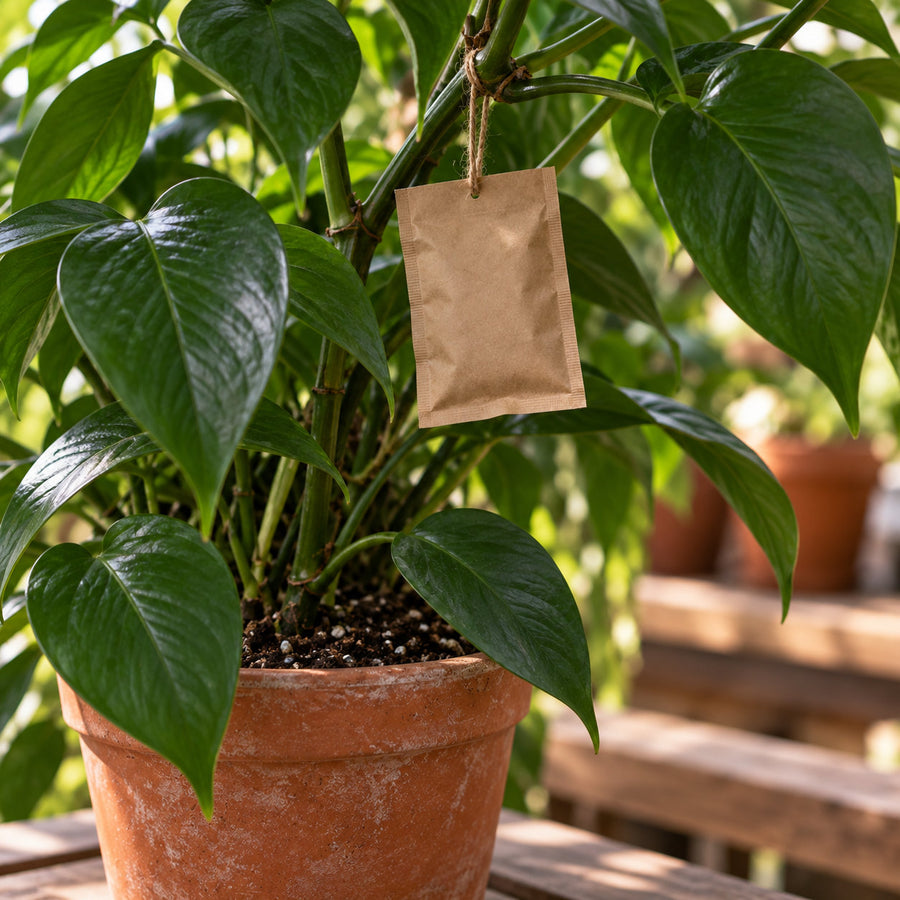
- The sachet looks like nothing. It gives no outward sign at all. The mites stroll out of a small hole in the seam, a few each day, for four to six weeks.
- Quiet is the goal. They scatter under the leaves straight away and live on pollen when pests are scarce, so even a clean plant has guards on it.
- Six quiet weeks. No new silvering, no twisted new growth, and no whitefly cloud when you brush a plant. Keep the air humid and swap sachets on schedule.
The mites you can see are most likely feeder mites
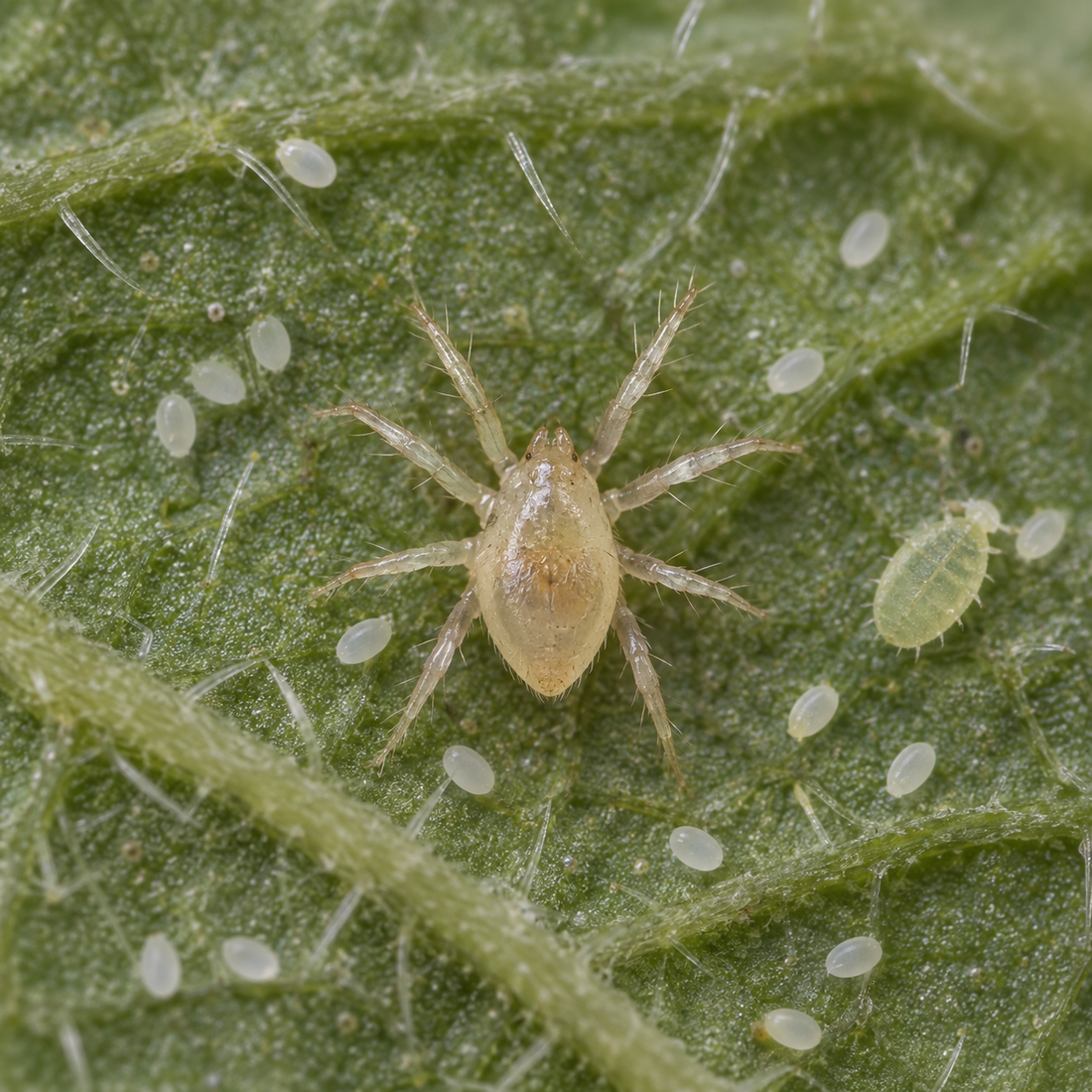
Each sachet holds feeder mites alongside your predatory mites. They're food that keeps the colony breeding. Feeder mites are quite a bit bigger than predatory mites and much easier to see, so any mites you notice on or around the sachet, moving or still, are most likely feeder mites, not your predators.
Your predatory mites are far harder to spot, and that's normal. Fewer pests and clean new growth are how you know they're working.
How to release amblydromalus limonicus slow-release prevention sachets
When to put out more
Each one works for a set time, then it's spent. A fresh one keeps the guard up.
Go by the calendar, not the plant: swap it on time, even when everything looks clean.
Put it on a schedule and the next sachet arrives on its own, 10% off the first and 50% off every one after. If it turns out you don't need it, pause or cancel anytime from your account.
Reviews
What growers say
Pairs well with
Small things that help them work
-
Add alongside
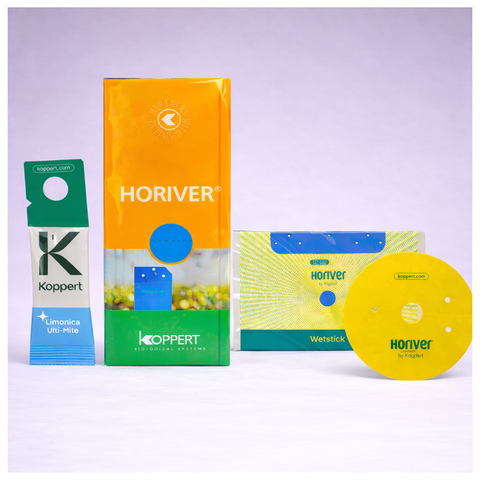
Horiver Professional Sticky Traps
Most pest problems are found on a card a week or two before they are found on a leaf.
from $11
-
Add alongside
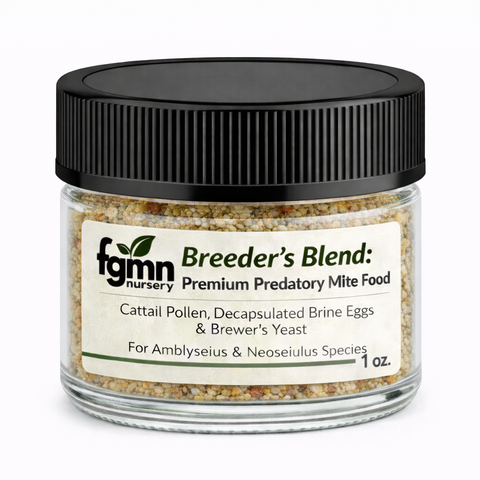
Breeder’s Blend
Keeps the population fed through the lull when prey gets scarce.
from $10
-
Add alongside
Root Network
For the roots: mycorrhizae and microbes that help roots take up water and nutrients. Use at repotting, then a monthly drench.
from $15

More to know
Ways to buy, questions and reading
Ways to buy
Once, on a schedule, with friends, or mixed with other predators.
- One time
- A single sachet, this once. Free shipping on orders of $30 or more, $15 under that.
- On a schedule
- 10% off your first box, 50% off every box after. Skip, move, pause or cancel from your account.
- Group order
- Friends each pick what they want, and it ships to you in one box.
- Mix and match
- Buy several predators together and they get cheaper.
For the curious
Everything else we know about them. Tap a topic to open it.
Is this your pest?
A sachet is prevention, so the honest question is what you are guarding against. Limonicus is the heavy-duty answer to two things: thrips and whitefly, in a room that is not especially hot.
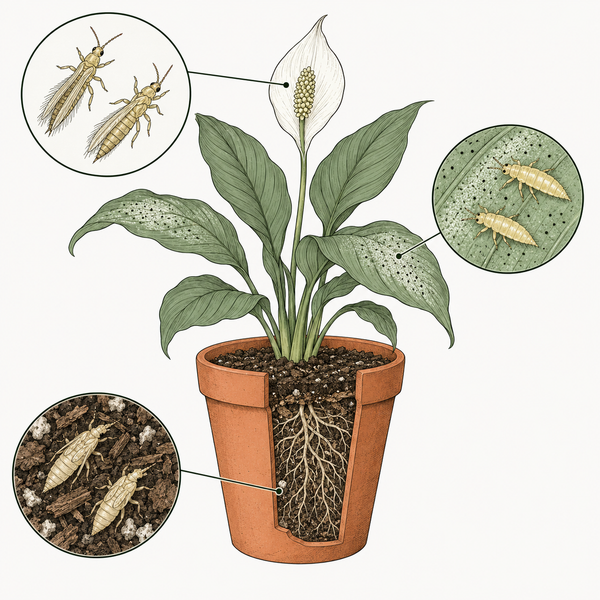
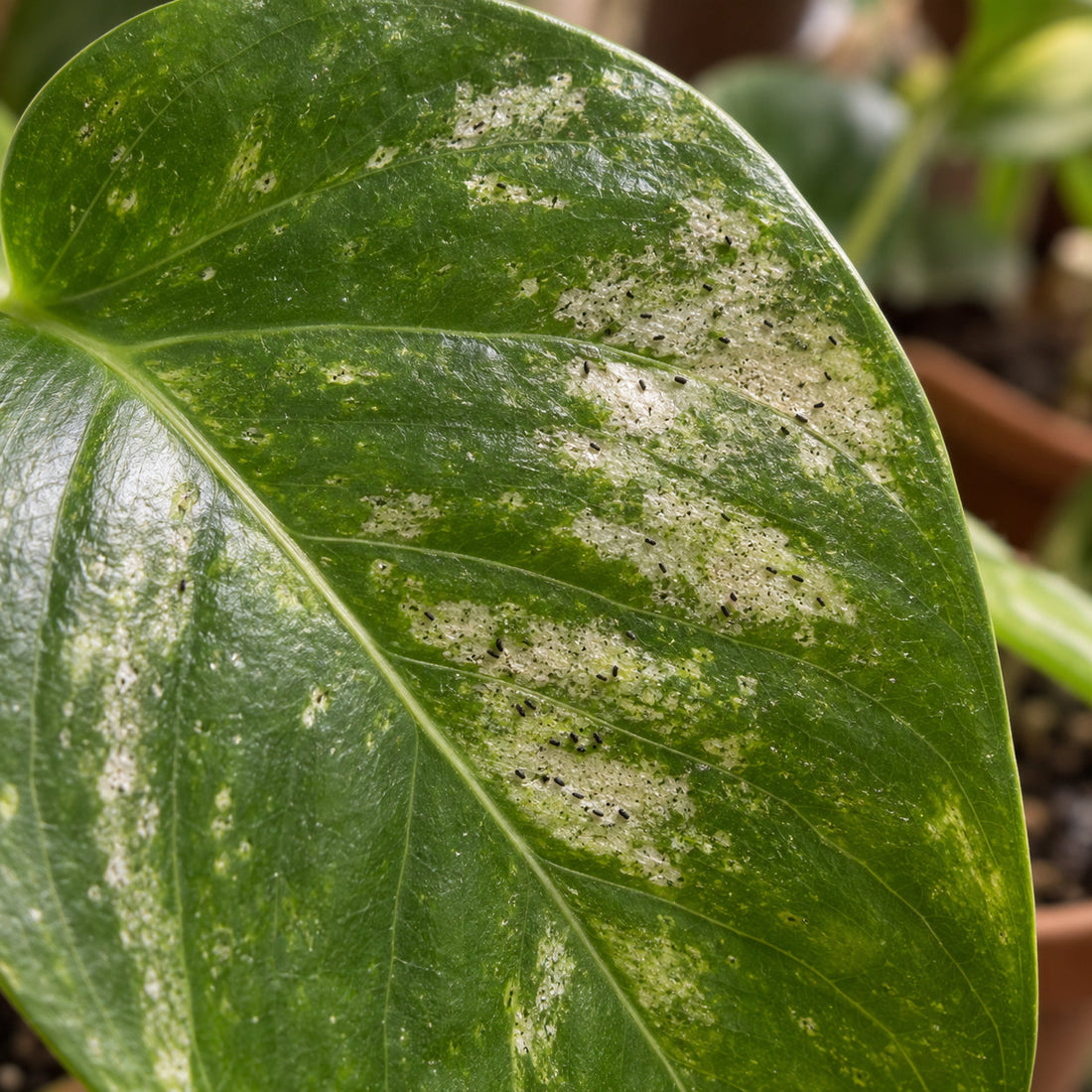
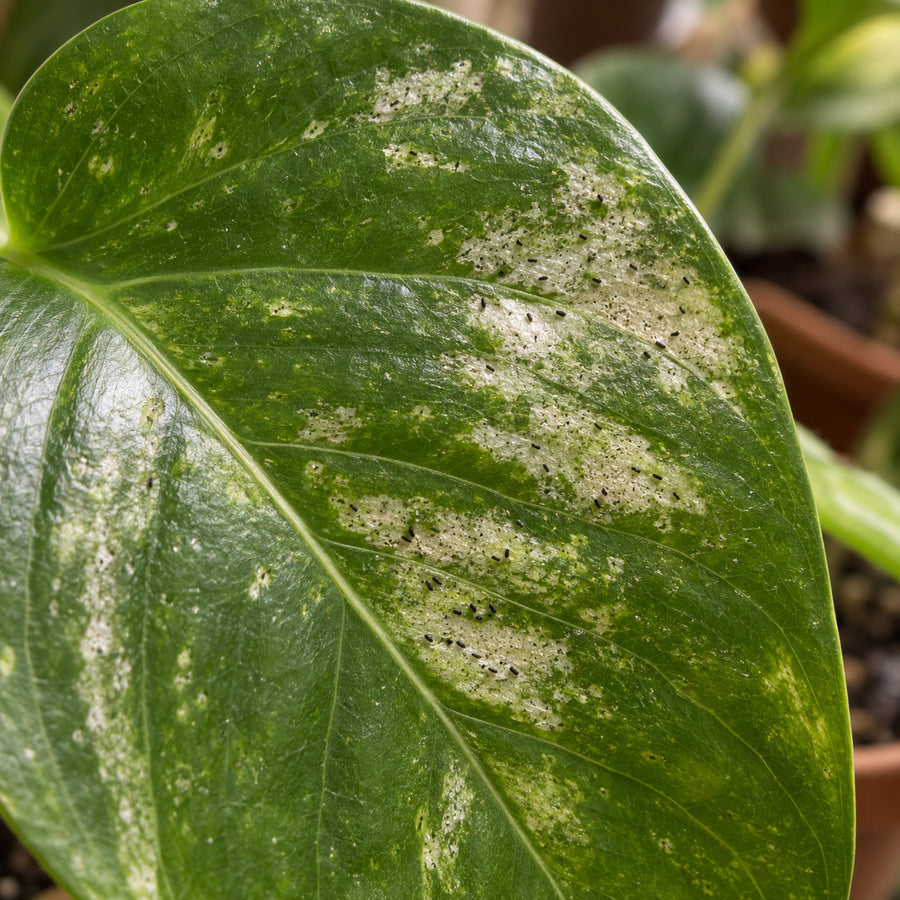
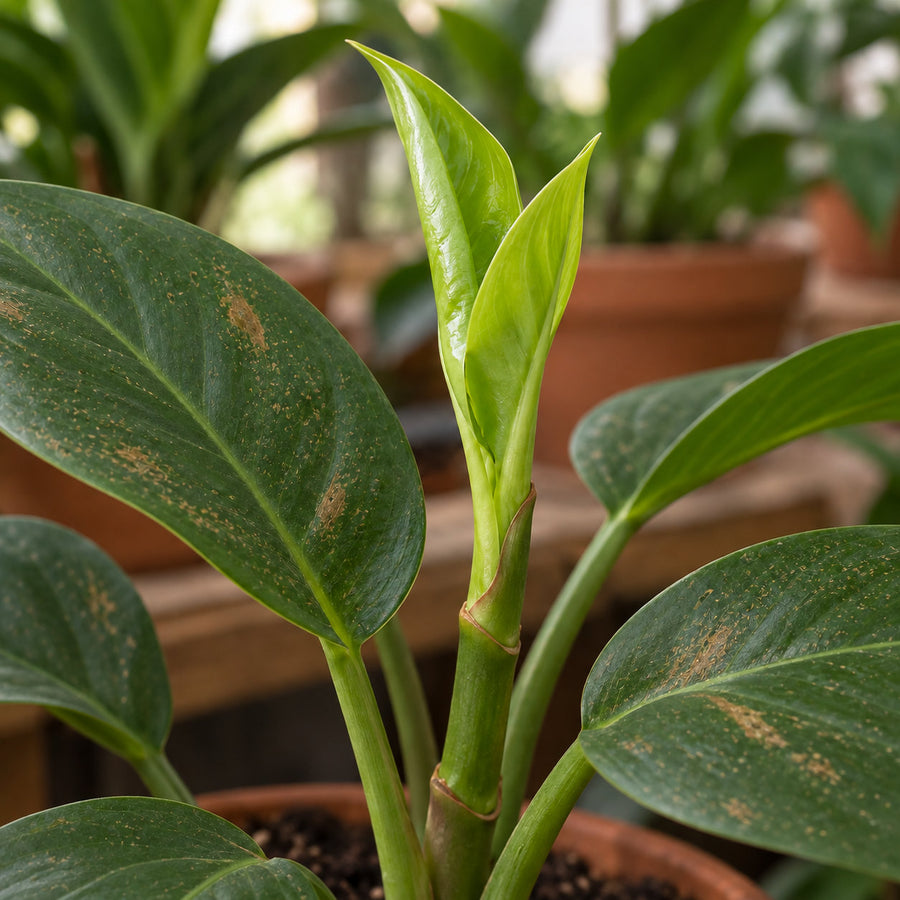
Thrips rasp the leaf and leave silvery scarring with black frass specks on the newest tissue. Whitefly leave sticky honeydew and a cloud of small white adults when you disturb a plant, with the eggs and crawlers on the leaf undersides. Both build quietly for weeks before anyone notices, which is the case a sachet is for.
Limonicus takes thrips larvae as they hatch, and it is unusually good on whitefly: in a greenhouse strawberry trial it controlled whitefly significantly better than swirskii. Adult thrips are out of reach of any predatory mite. Broad and russet mites are not its job either — survival and egg-laying on broad mite are both very low, and on russet mite it cannot control the pest on an intact plant. Cucumeris sachets are the ones with the record there.
Then: is a limonicus sachet the right answer to it?
Choose this if
Choose limonicus when the room sits in the moderate band — roughly 60 to 80°F — and thrips and whitefly are both on the list. It takes first- and second-stage thrips larvae as well as whitefly eggs and crawlers, and it comes from cooler climates than swirskii, so it keeps working at ordinary indoor temperatures. It holds on pollen when pressure is low, it runs four to six weeks per sachet, and it leaves no carrier on your leaves at all.
Choose something else if
Humidity is the one real condition — this is not a dry-room mite at any temperature. In genuinely hot rooms swirskii is the stronger pick. Broad and russet mites belong to cucumeris and andersoni respectively. It works alongside cucumeris, too, so you can run both.
What it kills, and what it won't
Limonicus can survive and reproduce on plant pollen, so the sachet holds a guard force even when thrips pressure is low. That persistence is the whole reason a preventative sachet works rather than starving out on a clean plant.
How a sachet works
What is actually inside it, how the mites get out, and what that buys you over a bottle.
A breeding colony, not packaging
The sachet is a nursery. Inside is a bran medium, a founding population of predators and a food source that keeps them laying for weeks. It is not a bag of mites waiting to be tipped out, which is why the one instruction that matters is do not open it.
Through a vent already built in
Every sachet has an exit hole in the seam. The mites leave through it at their own pace, a few at a time, day after day. That trickle is the whole point: a bottle gives you one wave and a sachet gives you a standing population.
A clean leaf, and nothing else
Because the mites walk out and the medium stays in the paper, there is no bran or vermiculite left on your foliage or in your flowers. If you have ever picked carrier out of a leaf sheath, that difference is worth something on its own.
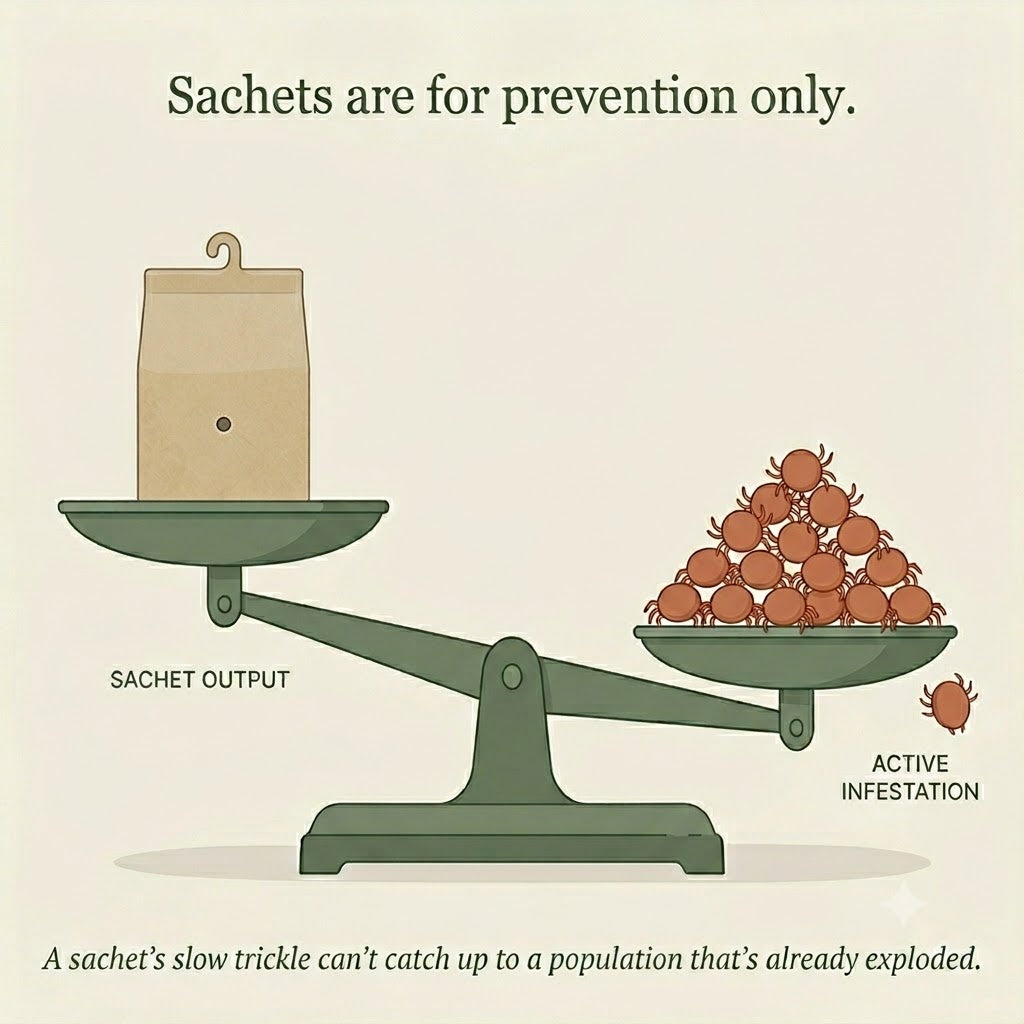
Prevention, not rescue. A sachet releases over weeks, which is exactly the wrong speed for an infestation that is already running. Bottles are the knockdown; sachets are what holds the line afterwards.
About limonicus sachets
The heavy-duty generalist as a standing population. Limonicus is a hungry predatory mite that takes thrips larvae and whitefly eggs and young nymphs.
New to sachets?
Five things that catch almost everyone the first time.
What arrives
Sachets of paper, each one a live breeding colony on a bran medium with a food source sealed in beside it.
Nothing about the outside tells you anything. There is no window, no movement to look for, and no test you can run — the mites are half a millimeter and they are inside.
Hang them the day they arrive. These are living colonies rather than shelf stock, and every day in the box is a day off the release window you paid for.
When it ships, and when it lands
Shipping
We ship when they're ready to travel. Live orders go out Monday to Thursday. If a colony needs a beat to peak, or we're propagating a fresh batch, yours might hold up to a week. All mites and insects ship 2-day or Overnight depending on what's best for them.
When it lands
Unpack and hang the same day. One every three to five linear feet. On a stem in the middle of the foliage, in shade, above the soil line — not in a hot spot of direct light, and not where watering will soak it. Then leave it alone for four to six weeks.
Why we pack extra
Two days in a van is a long trip for something this small, so we send more than you paid for.
A predatory mite is the size of a grain of table salt, and a sachet is a breeding colony in a paper packet, in a van, for two days.
A trip like that is hard on anything this small, so we price it in: the founding population gets counted out, and then roughly 15% more goes in on top as a cushion.
Your sachet leaves here holding more than the label says — and unlike a bottle, the mites in a sachet keep breeding, so the number that matters is the one a week from now.
If you can see them
Ladybugs, lacewing larvae, Orius — the minute pirate bug — and the beetles. These are the ones big enough to see.
Cold insects are very good at sitting still. That's normal. Release them as this page says, and watch the pest instead.
Something look wrong? Email info@fgmnnursery.com with your order number.
If you can't see them
Mites, nematodes, eggs — and sachets more than any of them. A sealed paper packet looks identical whether the colony inside is thriving or gone, and no photograph settles that. So we don't ask you to take one.
Email info@fgmnnursery.com and our entomologist takes you through the diagnostic instead — where the box sat, what your room was doing, whether the paper arrived damp, and then what the pest is doing about ten days later.
Please do not open a sachet to check. It is the one thing that guarantees the outcome you were worried about, and we cannot replace it afterwards.
Seventy-two hours from delivery, either way, with your order number. Replacement or store credit, your pick.
Questions about amblydromalus limonicus slow-release prevention sachets
Will I have bugs flying around my house?
No. They stay on the plants, where their food is.
Why is Limonicus better for Thrips?
They take both first- and second-stage thrips larvae, where Cucumeris takes only the first, and they add whitefly eggs and young nymphs. As a sachet, it is still prevention rather than a rescue.
Can I get the sachets wet?
Rain is fine — the paper sheds it, and sachets hung outdoors keep working through it. What ends a colony is water with nowhere to go: a sachet lying on wet soil, sitting under an emitter, or caught by a foliar spray aimed at the leaves. The medium inside stays damp and the colony stops producing. Hang it rather than lay it, water at the soil line, and mist the leaves rather than the paper.
Will the mites stay on the plant?
Yes, as long as there is food (thrips or pollen).
Is it safe for my pets?
Yes. These mites are harmless to humans, dogs, cats, and other animals.
Can I use them with other beneficials?
Absolutely. They are the perfect base layer for an IPM program that includes Orius or Nematodes.
When should I start using them?
Start as soon as your plants have enough foliage to support a sachet.
How many limonicus sachets do I need?
Size sachets by length, not by plant count:
- Measure the shelf, bench or row and hang one sachet every three to five linear feet, shaded, in the canopy and away from irrigation.
- Big plants: a large plant can have one of its own, and a big specimen can take two or three, hung at different heights.
- More pressure expected (plants that have had thrips or whitefly before): use the closer, three-foot spacing. Less: the five-foot end.
- Clean plants only. If damage is already spreading, run limonicus bottles first and hang the sachets behind them.
- Each sachet releases for four to six weeks. Replace on that four-to-six-week schedule, and check the plants from about four weeks on.
Keep reading
Field Notes from the FGMN Nursery team.
 Limonicus Was Worth the Wait
Most predatory mites do one thing well. Limonicus hunts thrips, whitefly, and spider mites — and survives on…
 What’s Really Inside a Predatory Mite Sachet?
Predatory mite sachets may look empty at first glance, but inside is a carefully balanced ecosystem of carrier…
 Whitefly Treatment That Doesn't Wear Off
Spraying whiteflies knocks back the adults you can see. It doesn't touch the eggs. The eggs hatch, the…
Sources
Published guidance from university extension services. The release tips on this page also draw on what we see shipping these every week.