




You release cucumeris, inspect the plant, and find a perfectly alive adult thrips. You inspect again. Still employed, apparently.
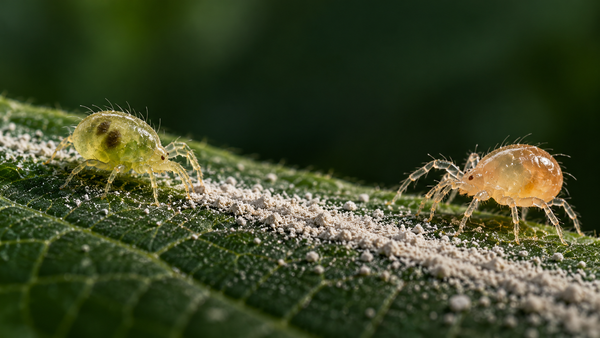
The frustrating part is that you may be looking at an insect the mite was never well equipped to catch. Cucumeris does its most useful thrips hunting among young larvae. To understand what that means for your treatment, follow one of those larvae instead of starting with the adult.
There is a window while the thrips is small
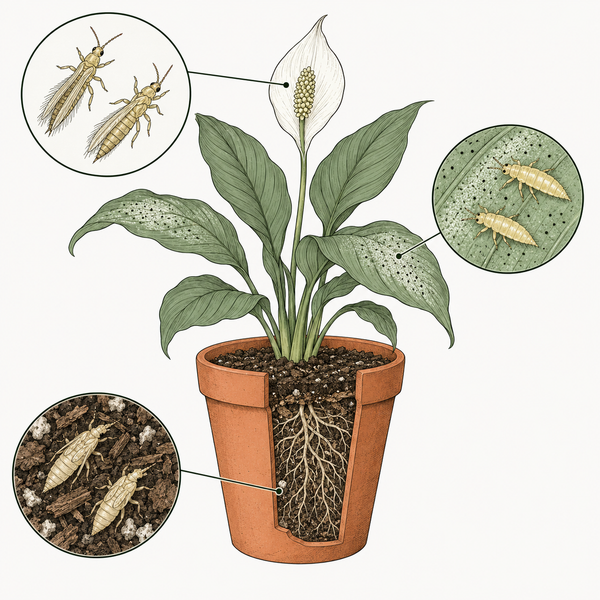
A western flower thrips hatches from an egg inside plant tissue and passes through two feeding larval stages. The first is called the first instar. After the second come the prepupal and pupal stages, then adulthood.1
Cucumeris can intercept a thrips early in that journey. The insect it eats will never reach adulthood or produce offspring. But the larva does not remain an equally manageable meal as it grows.
In a study of onion thrips, researchers watched cucumeris and another predatory mite encounter young and older larvae. Older larvae were harder to capture, even when the predators were hungry. The thrips jerked their abdomens and produced a sticky defensive droplet; mites that contacted it could withdraw and clean themselves.2
The prey is participating in this arrangement. Enthusiastically.
That is why “eats thrips” needs a little more explanation. It tells you the pest group, but not which members of the population are vulnerable. A plant carrying many thrips does not necessarily offer the mite many easy meals.

Now follow the insects that were already older
Picture the day you release the mites. Some thrips are young larvae, some have grown beyond that stage, and others are already adults. Eggs are also waiting to hatch. The infestation does not begin its life cycle when you begin treatment.
While mites catch susceptible larvae, older insects can continue through development. With western flower thrips, pupation often occurs in the growing medium, although some individuals stay on the plant.1 Adults appearing afterward may therefore have passed the young-larval stage before the release.
Our interpretation of that biology is straightforward: fewer larvae surviving today can mean fewer adults later. It does not require the adults already present to disappear first. This explains a possible lag; it does not establish that every rising count means treatment is working.

During inspections, note young larvae and adults separately when you can distinguish them. Return to comparable parts of the same plants. The treatment-progress guide explains how to turn those observations into a useful trend, including when to reassess and how to plan repeat releases.
The next stage may need a different encounter
Once a thrips moves away from the foliage to pupate, the question changes from whether cucumeris can overpower it to whether the two will meet at all. A foliage predator cannot be expected to patrol every part of the pot.
Researchers have tested combinations that put mites on the foliage and insect-killing nematodes in the growing medium. In one greenhouse study, the combination reduced western flower thrips more than either agent alone.3 That supplies a practical reason to think about complementary roles: the second organism reaches a different part of the infestation.
It is not a rule that every extra organism improves every program. Start with the stage and location you need to address. The species lesson explains why a thrips that remains on the plant changes the soil-treatment question. For adults on the foliage, Orius has a different hunting role.
A different mite still needs the right job
At this point it is tempting to replace cucumeris with something described as stronger. But another mite's advantage may be how well it establishes on your plants, rather than simply catching larger thrips.
A pepper study illustrates the distinction. Cucumeris and swirskii consumed similar numbers of chilli thrips larvae in leaf-disc tests, yet swirskii provided better suppression on the plants.4 The predator comparison follows that difference through the choice of species and conditions.
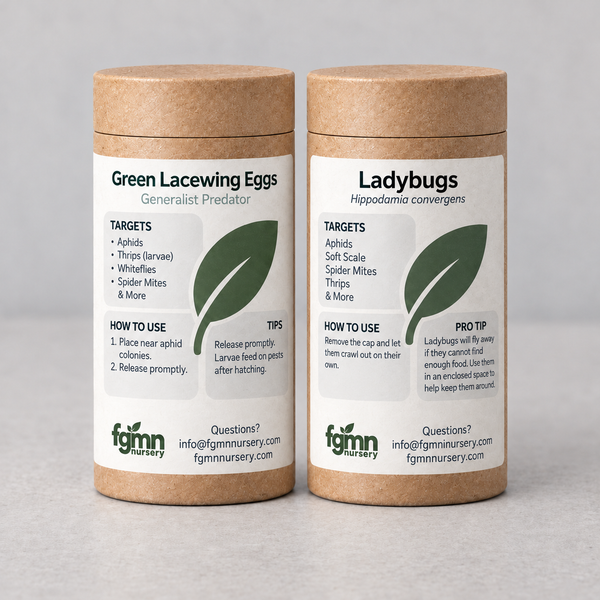
Knowing the target also explains why having predators present early can be useful: they can encounter young larvae as those larvae appear. When you already have an infestation, bottles are for treatment and sachets are for prevention. They can be used together, but a prevention sachet does not replace a treatment release.
So return to the adult you found at the beginning. Record it. Keep following the larvae, the adults, and the new growth over repeated checks. If the plan is falling behind, use those observations to adjust it rather than asking one adult to explain the entire population.
The adult is unlikely to cooperate with the interview anyway.
Sources and further reading
- Reitz, S. R. (2009). Biology and ecology of the western flower thrips: The making of a pest. Florida Entomologist, 92, 7–13.
- Bakker, F. M., & Sabelis, M. W. (1989). How larvae of Thrips tabaci reduce the attack success of phytoseiid predators. Entomologia Experimentalis et Applicata, 50, 47–51. Author-repository copy.
- Ebssa, L., Borgemeister, C., & Poehling, H.-M. (2006). Simultaneous application of entomopathogenic nematodes and predatory mites to control western flower thrips Frankliniella occidentalis. Biological Control, 39, 66–74.
- Arthurs, S., et al. (2009). Evaluation of Neoseiulus cucumeris and Amblyseius swirskii as biological control agents of chilli thrips, Scirtothrips dorsalis, on pepper. Biological Control, 49, 91–96.
