




You release cucumeris for thrips, then find an adult thrips walking across a leaf as though nothing has happened. It is tempting to conclude the mites missed their assignment.
The assignment is smaller than that insect. Cucumeris is a tiny predatory mite whose useful role in thrips control is catching young larvae. Understanding that role makes its results much easier to read.
Meet the predator behind the name
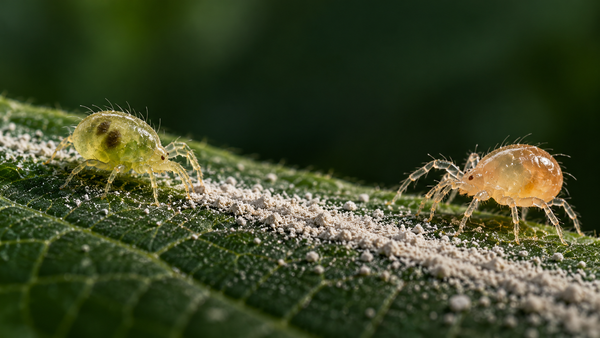
You may see it called Amblyseius cucumeris or Neoseiulus cucumeris. Those names refer to the same species. It lives on plant surfaces and feeds on small prey; it can also use suitable pollen.
The word “predator” can make this sound more dramatic than it looks. You are unlikely to witness a chase. What matters is whether fewer young pests survive to join the next generation.
Young thrips are a different meal
A young thrips larva is small and vulnerable. As it grows, capturing it becomes harder. Experiments observing cucumeris attacks found that prey size and larval defenses changed the predator's success. The older insect you can easily spot is not interchangeable with the newly hatched larva the mite is better equipped to catch.
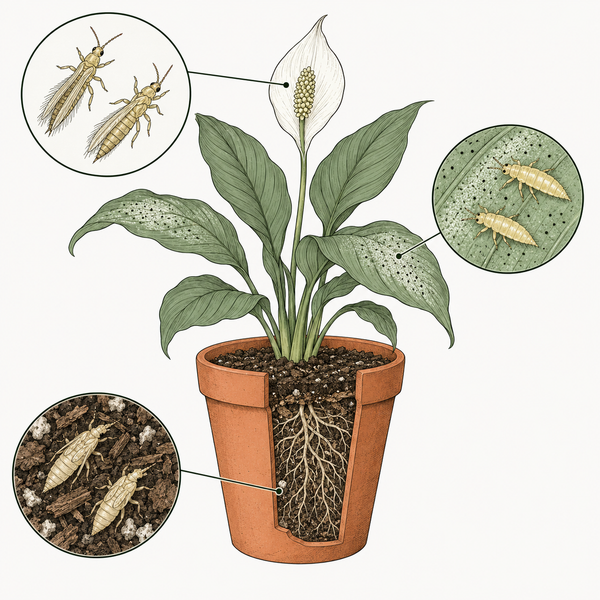
Cucumeris Catches Thrips Young shows that target window through the life cycle. The practical consequence belongs here: releasing cucumeris does not make every thrips stage disappear together. Eggs and older survivors can continue producing visible insects after a release.
Plan for repeat treatment and watch the trend in live pests and new growth. One weekend is early. A sustained rise is a reason to review the plan; one adult is not a complete performance review.

Give it the job it can do
Use bottles for treatment and sachets for prevention. The bottle distributes mites onto the plants you are treating. The intact sachet houses a colony that supplies predators over time. They can be used together without asking prevention to substitute for treatment.

Placement matters because these mites must reach the leaves. Put treatment material across the affected plants according to its directions, and hang prevention sachets within sheltered foliage. Cucumeris Sachets Need a Good Address explains why that location changes what a packet can deliver.
The room matters too. Conditions that suit a living adult may be less suitable for its eggs or for sustained reproduction. Check the environment around the plants and review any sprays used before release. Compatibility depends on the product and its residual effects, so a generic waiting period cannot answer that question.
One useful predator is not a whole life cycle
Cucumeris can be part of a thrips program without being responsible for every insect in it. Some thrips stages occur away from feeding leaves; some species follow a different route altogether. The species lesson explains why those differences change treatment coverage.
Choosing another foliage mite is also more involved than finding a bigger appetite. In a chilli-thrips study, cucumeris and swirskii had similar laboratory feeding rates but different results on pepper plants. The four-mite comparison follows what that means for predator choice.
For now, judge cucumeris by the work you released it to do: are repeated inspections finding less live pest pressure, and is healthier growth following? If not, work through the release conditions and coverage before repeating the same setup.
Cucumeris can interrupt the next generation. It has not agreed to evict every adult personally.
Sources and further reading
- Bakker, F. M., & Sabelis, M. W. (1989). How larvae of Thrips tabaci reduce the attack success of phytoseiid predators. Entomologia Experimentalis et Applicata, 50, 47–51.
- Arthurs, S., et al. (2009). Evaluation of Neoseiulus cucumeris and Amblyseius swirskii as biological control agents of chilli thrips on pepper. Biological Control, 49, 91–96.
- Buitenhuis, R., Glemser, E., & Brommit, A. (2014). Practical placement improves the performance of slow release sachets of Neoseiulus cucumeris. Biocontrol Science and Technology, 24, 1153–1166.
