












1
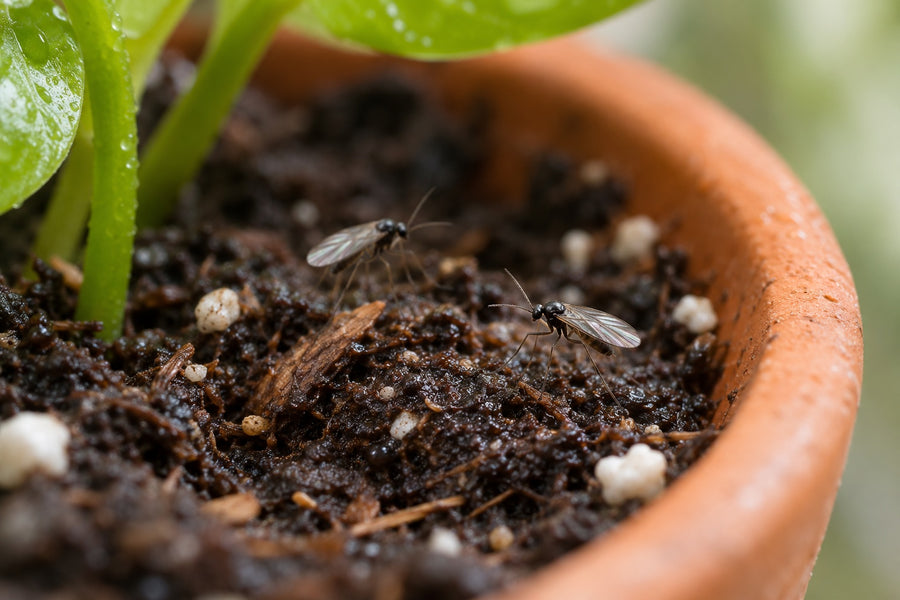
Flying around the soil.
Not on the leaves.

Pest season where you live
Type a ZIP and see what’s active this month, what’s at its worst, and when to get ahead of it.
What’s bugging you?
Most common
Other pests
Every pest we treat →Meet the beneficials
Most asked for
More predators and helpers
Every beneficial →Plant care
Field Notes
Guides
Before you buy
Pest guides

Fungus gnats
Know for sure. Then go after the part you can't see.
Check that it's fungus gnatsIs it fungus gnats?
Not on the leaves.

Like a tiny mosquito.
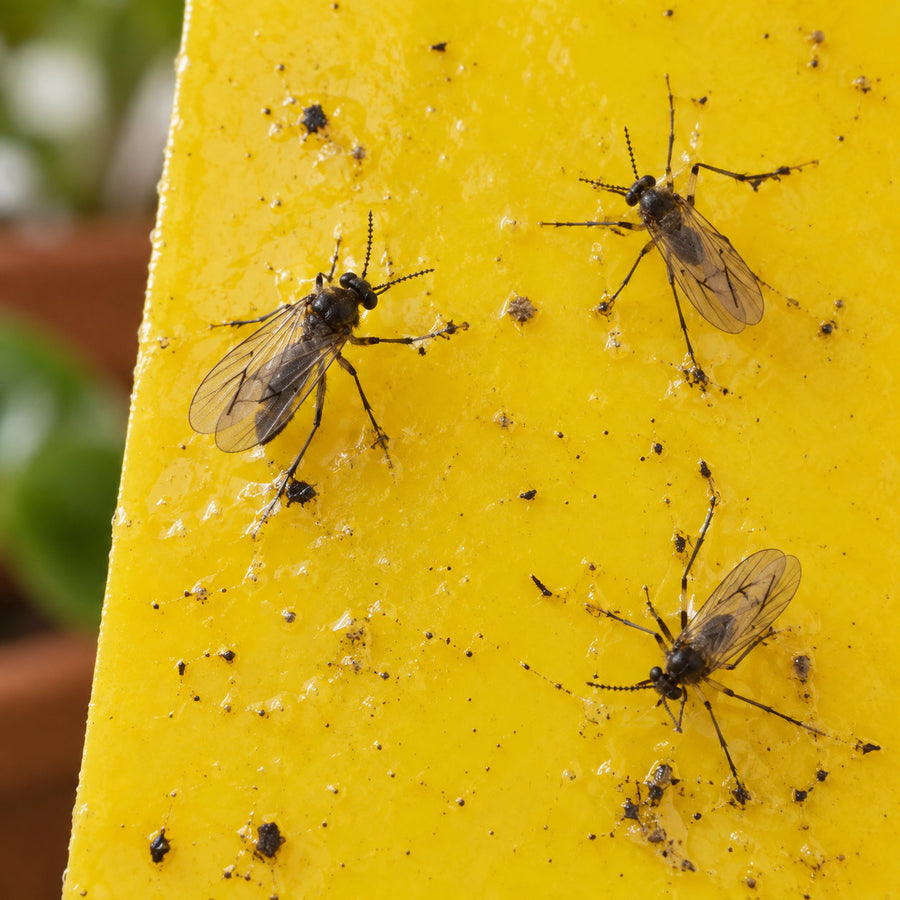
Hang a yellow sticky card at soil level.
Gnats in one pot? Check the shelf. They pot-hop.
Not quite matching?

Tiny, torpedo-shaped insects on the leaves and flowers, with silver streaks.
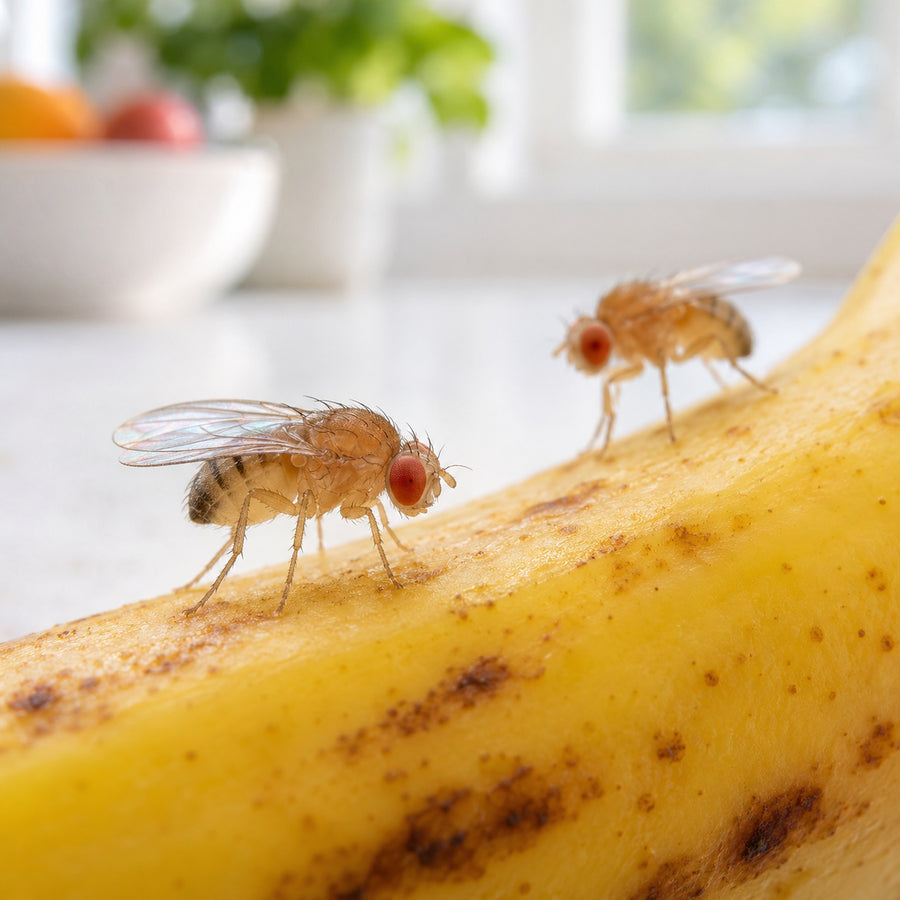
Tan, often with red eyes, around fruit bowls, compost and drains rather than pots.
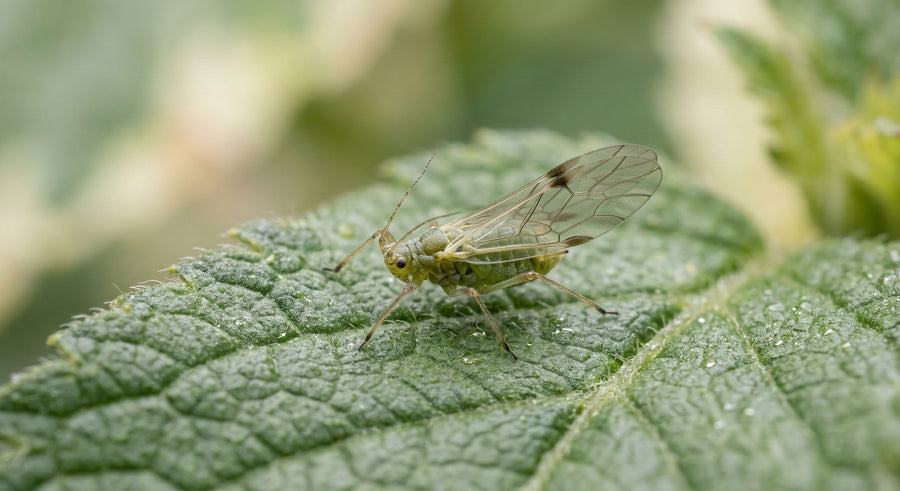
Winged ones stick to the same yellow cards. Look for white wax on the roots.

Meet the fungus gnats
The fly is harmless.
The part you see is the end of the story.
An adult is a small dark fly, about 1/16 to 1/8 inch, on slender legs. It doesn't bite and doesn't eat your plant. In houseplants it's mostly the dark-winged fungus gnat, Bradysia.
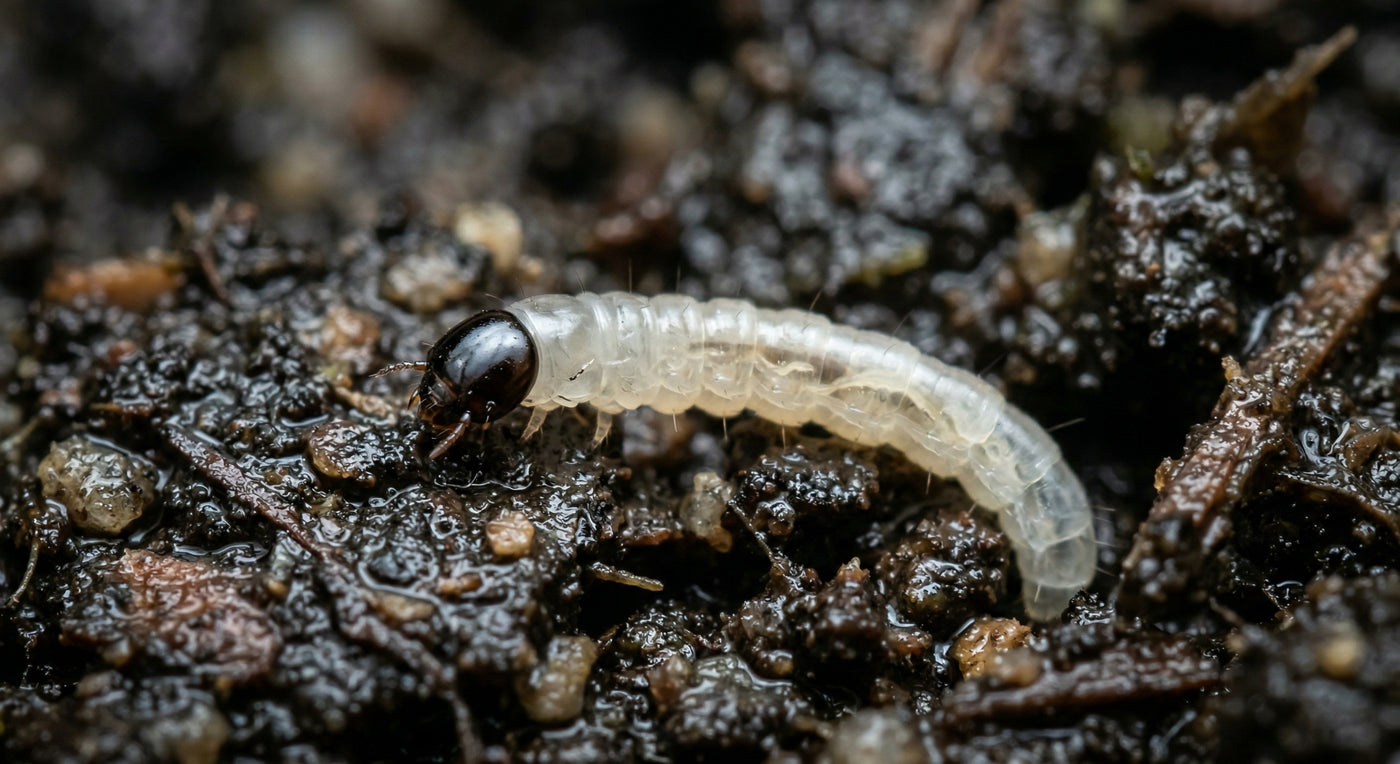
What it eats
Clear body, shiny black head. They eat fungi and rotting bits in the mix, and fine roots when there are a lot of them, so seedlings and cuttings stall first.
Where it lives
Scroll down the pot to see where.

They rest on the surface and fly up when you water.
Eggs go into damp mix, rich in organic matter.
They rest without feeding, then come up as adults.
The life cycle
At 75°F, all in the soil until the last step. A warmer room runs faster.
 Days 0–3
Three days.
 Days 3–13
Ten days of eating.
 Days 13–17
Four days, not feeding.
 Day 17 on
Lives 7 to 10 days.
Swipe for the next stage →
How fast they multiply
100
eggs from one female.
An adult lives just 7 to 10 days, so she doesn't waste any.
Nematodes die off when the larvae run out. The eggs hatch after. Hence round two.
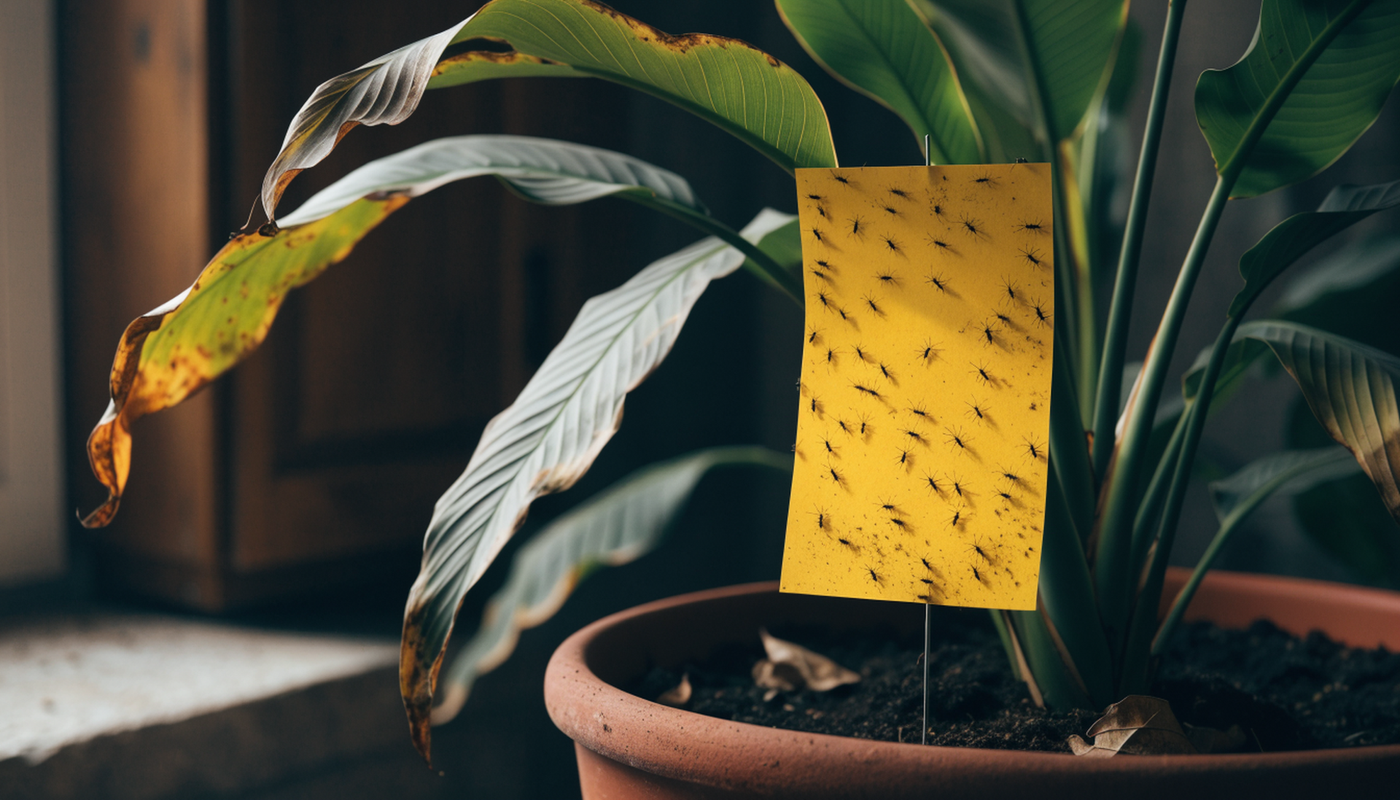
Why sprays and traps miss
Cards catch only the adults. Eggs, larvae and pupae all sit in the mix, where no card or leaf spray reaches.
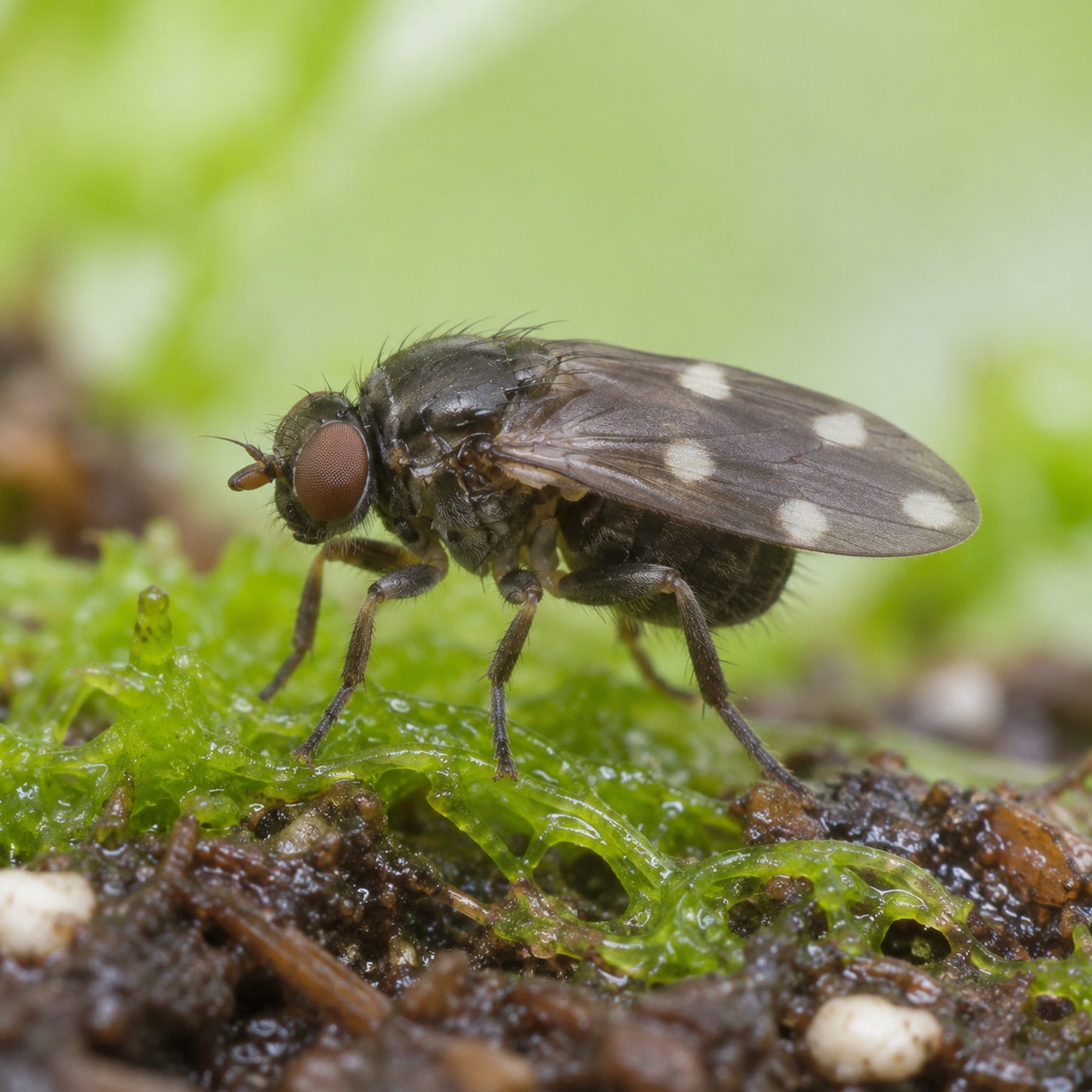
A look-alike
Shore flies are sturdier and darker, with short, bristly antennae and pale spots on the wings, and they hang around algae and wet, rotting matter.
Now, what eats the larvae.
What to get
Our pick for you
Stratiolaelaps scimitus is a soil mite that lives in the top inch of the pot and eats fungus gnat larvae. It lives on debris between outbreaks, so it stays put and keeps working.
See Soil mites (Stratiolaelaps)Our pick for you
Sf nematodes are microscopic roundworms you water in. They find larvae wherever the water goes, and work in soil, coco, leca and hydro. Two or three rounds, 2–4 weeks apart, cover the eggs that hatch behind the first.
See Sf nematodesOur pick for you
Dalotia rove beetles hunt larvae and pupae in the soil, and both adults and larvae are predatory. The adults fly, so they find the pots you didn't know had gnats. They need moist media.
See Rove beetles (Dalotia)Our pick for you
Three nematode species in one pack. If you know it's fungus gnats, Sf nematodes on their own are the better match.
See Triple Blend nematodes| If you see | Our pick | Why |
|---|---|---|
| Just a few gnatsA gnat or two when you water, and only a pot or two |  Soil mites (Stratiolaelaps) |
Stratiolaelaps scimitus is a soil mite that lives in the top inch of the pot and eats fungus gnat larvae. |
| Gnats every time you waterSeveral pots, and cards filling up between checks |  Sf nematodes |
Sf nematodes are microscopic roundworms you water in. |
| A whole room or greenhouseLots of pots across shelves, benches or a grow tent |  Rove beetles (Dalotia) |
Dalotia rove beetles hunt larvae and pupae in the soil, and both adults and larvae are predatory. |
| Not sure what's in the soilSomething's at the roots and you can't tell what |  Triple Blend nematodes |
Three nematode species in one pack. |
A terrarium or bioactive setup? Stratiolaelaps is the one for that. Rove beetles would also eat your springtail cleanup crew.
Rove beetles eat soil mites. Separate pots. Sf nematodes and soil mites share fine.
Our suggested plan
Release day
The usual pairing: nematodes clear the pot, soil mites hold the top layer.
Every 2–4 weeks
Two or three rounds in all, while the cards keep filling.
Every 6–8 weeks
In living soil they stay on by themselves.
Stop
A stray gnat is not a new infestation.
Two or three rounds catch the eggs that hatch behind the first. A heavy one, every 2 weeks at the closest. Let your cards decide, or ask us.
How to release
Confirm it's fungus gnats. Leggy flies at the soil, or black-headed larvae in the top inch.
Count every damp pot. Adults lay in any damp pot, so treat them all.
Put in a yellow card. One per shelf, low over the soil, so you can count week to week. Rove beetles? Leave cards out for 7–10 days, then hang them high.
Wait out any soil drench.
Using something else? Email us the active ingredient and we'll tell you the wait. A longer wait on the label beats ours.
Soil mites and rove beetles go out the day they arrive. Nematodes wait in the fridge, 38–42°F, until you're ready.

Nematodes need damp soil to move.

Dechlorinated water, out of the sun. Use within two hours, swirling between pots.

About a teaspoon at each stem base. Don't water it in.
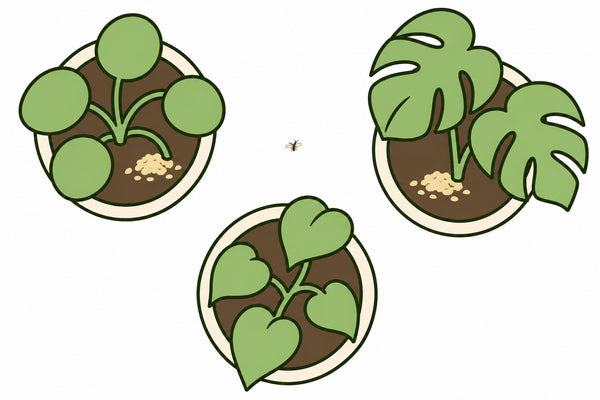
A few piles in the wettest pots, grow lights down. No watering over them for a day.
Keep the mix damp, like a wrung-out sponge, for two weeks after the nematodes. Then let the surface dry a little between waterings.
What to expect
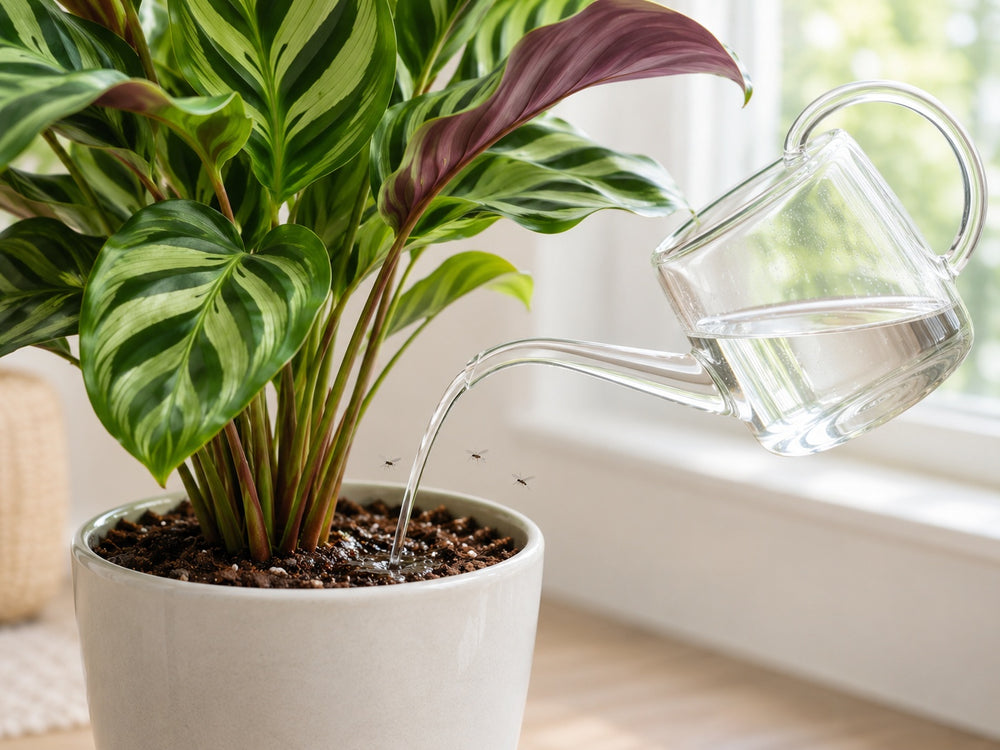
Gnats keep flying for about a week. Those adults were already out of the soil.
Fewer gnats on each new card. The larvae that would replace them aren't coming up.
The card count stays low. A stray gnat isn't a new infestation.
Cards filling up again? Go again.
Date every sticky card. An undated card is just a bug collection.
Why treatment fails
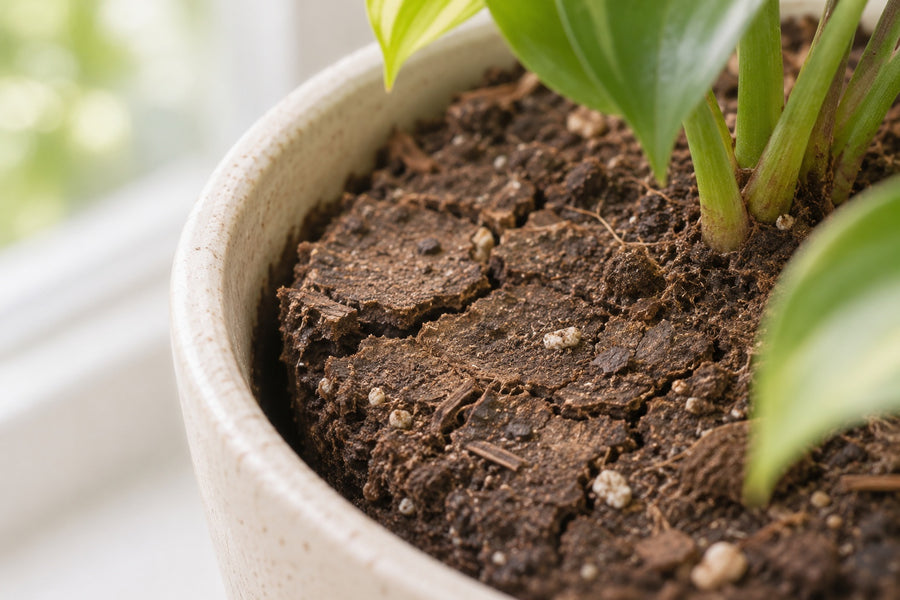
They swim through the water in the mix.
Use dechlorinated water, and apply out of the sun. UV kills nematodes.
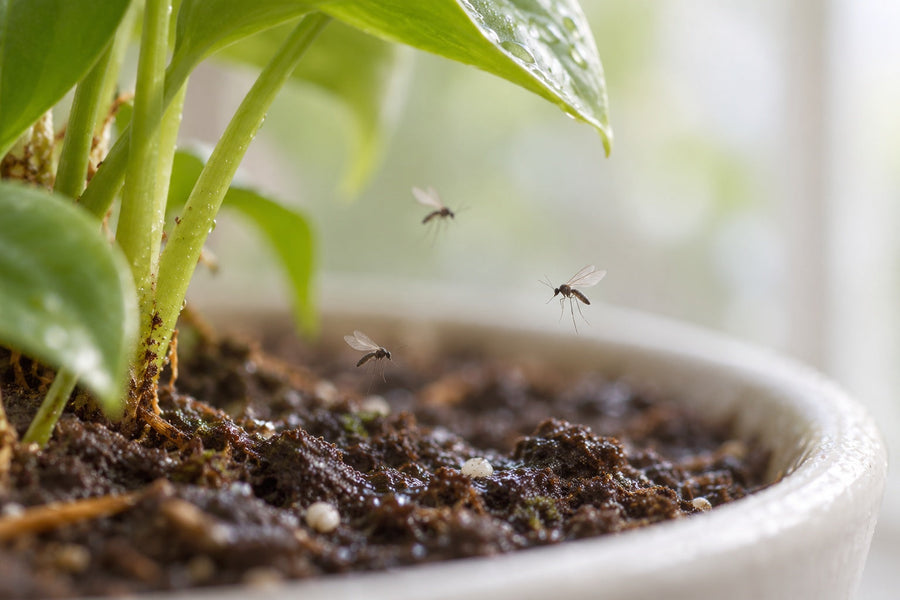
Constantly wet mix is a nursery. After the two damp weeks, let the surface dry a little between waterings.
Prevention
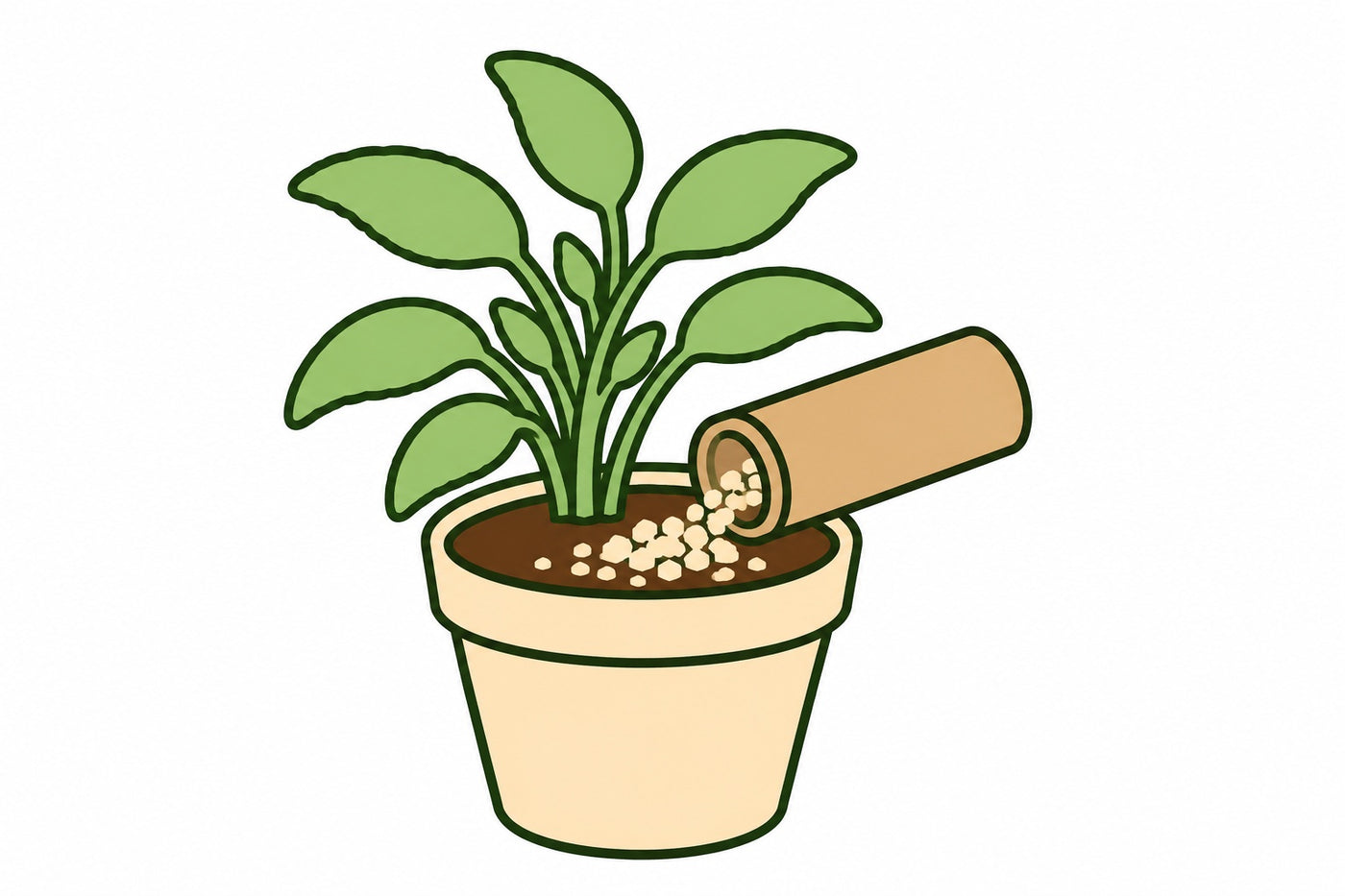
Fungus gnats usually arrive in a bag of potting mix or on a new plant. Top-dress soil mites when you repot, and they're already in the pot when the next gnats show up.
Use pasteurized mix. Half-done compost comes with gnats included.
Often shows up with
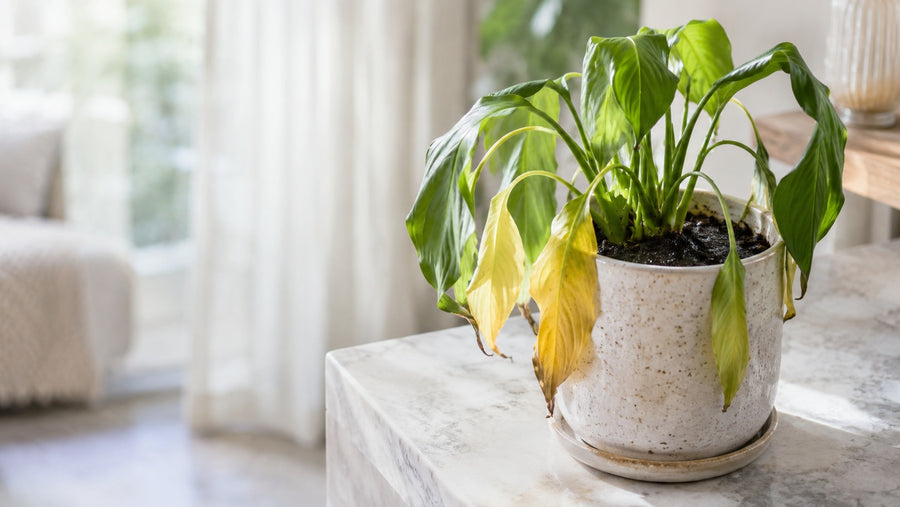
The soggy mix gnats love can rot roots too. Fix the watering and both ease off.
Field Notes
 The Gnats You Can See Are Not the Ones You Treated.
 Fungus Gnat Larvae Live in One Inch of Soil. That's the Whole Game.
 Four Ways to Kill a Fungus Gnat. Two of Them Fight.
 How to Dose Beneficial Nematodes (Without Losing Your Mind)
 You Cannot See Them. You Cannot See Them Working, Either.
 Stratiolaelaps Is Shake, Sprinkle, and Wait. Mostly Wait.
 Put Your Rove Beetles to Work
Questions
Soil treatments reach the larvae, not the adults already flying, and those adults live about 7–10 days. What changes first is that no new ones come up to replace them. Put a dated yellow card at soil level and replace it weekly. A count that falls card after card means it's working.
Yes, and it's the usual pairing. The nematodes clear the larvae through the whole pot, and the soil mites stay in the top layer afterwards to keep the next wave down.
Yes. Sf nematodes travel through the film of water between particles, so they reach larvae in leca, coco, deep pots and hydro setups. Stratiolaelaps needs a substrate to live in and does best in soil and coco.
Yes. Sf nematodes, Stratiolaelaps and rove beetles are safe around people, pets, plants and food crops. There's nothing to spray, no residue and no wait before anyone can be near the plants.
If something’s wrong when it arrives, email info@fgmnnursery.com within 72 hours of delivery for a replacement or store credit.
By continuing to checkout you agree to our Shipping Policy and Live Delivery Guarantee.
If something’s wrong when it arrives, email info@fgmnnursery.com within 72 hours of delivery for a replacement or store credit.
By placing your order you agree to our Shipping Policy and Live Delivery Guarantee.
