














1
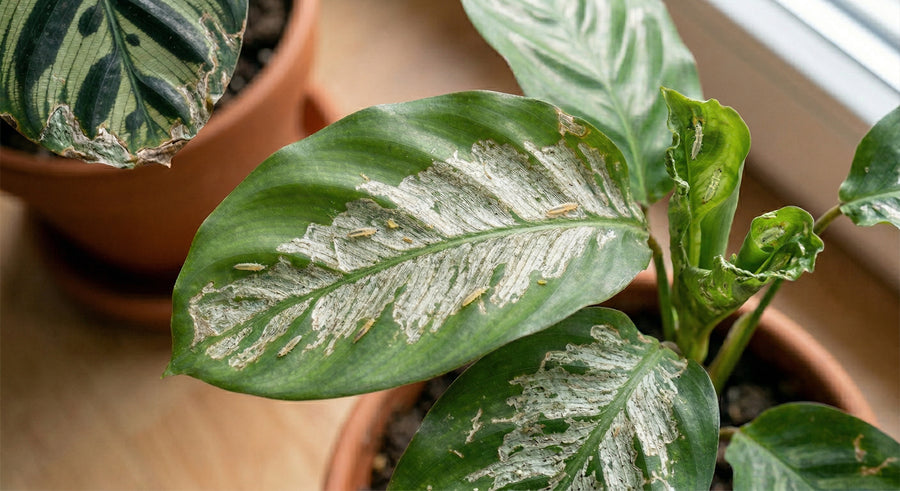
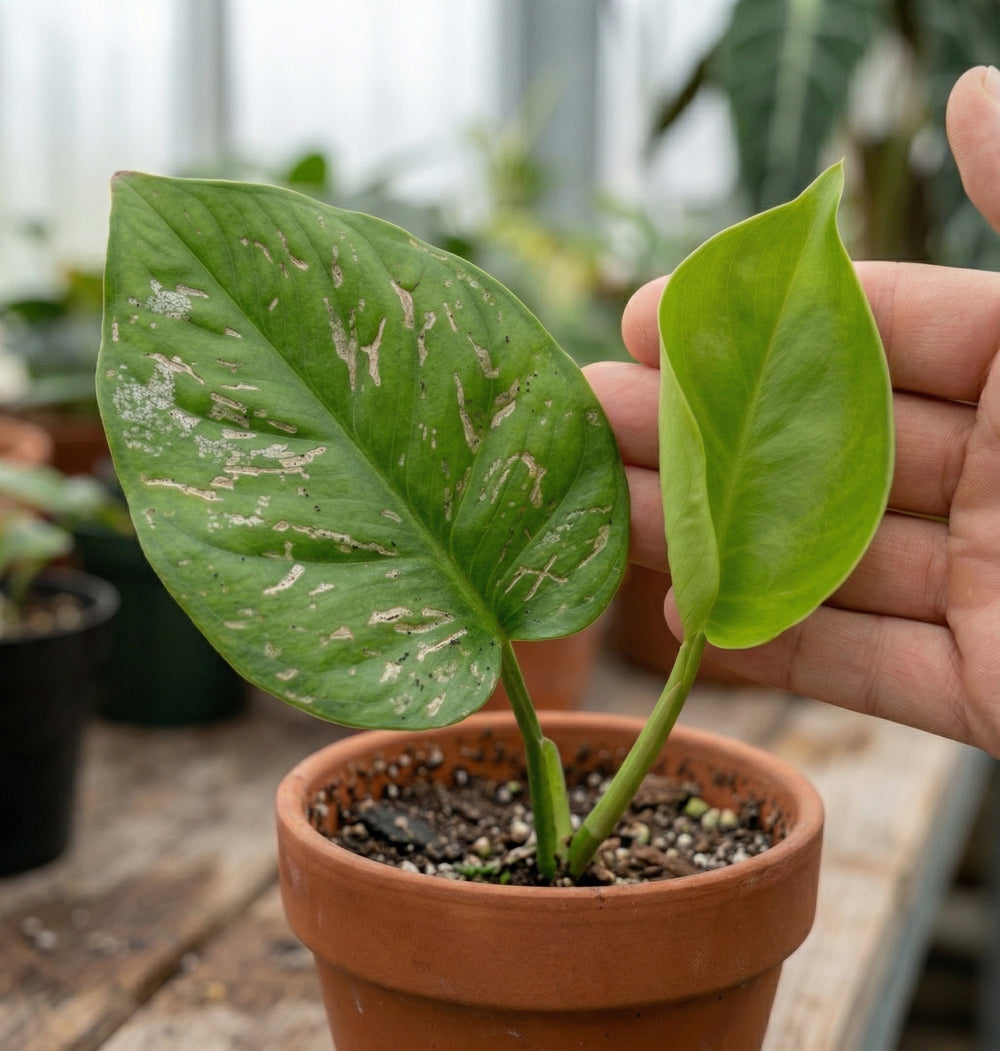
Silver streaks with black specks.
Like color rubbed off in thin lines. The specks are droppings, and they won't wipe off.

Pest season where you live
Type a ZIP and see what’s active this month, what’s at its worst, and when to get ahead of it.
What’s bugging you?
Most common
Other pests
Every pest we treat →Meet the beneficials
Most asked for
More predators and helpers
Every beneficial →Plant care
Field Notes
Guides
Before you buy
Pest guides

Thrips
Let's make sure it's thrips. Then let's outsmart them.
Check that it's thripsIs it thrips?
Like color rubbed off in thin lines. The specks are droppings, and they won't wipe off.

1–2 mm and torpedo-shaped. Ignore the color: pale yellow, brown or nearly black, depending on the kind.
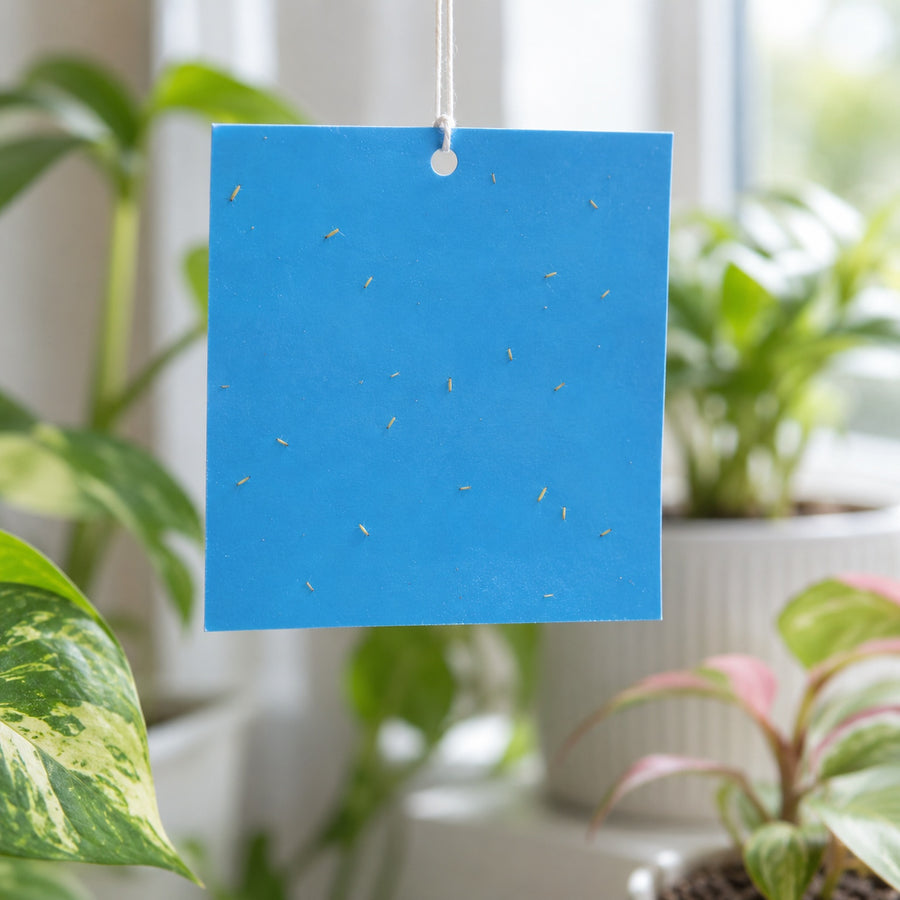
Hang a blue sticky card just above the plant tops. Thrips come to blue. Fungus gnats come to yellow.
Larvae are easy to miss. But if you see black specks, you’ve got ’em. Oh… and those black specks? Yeah, that’s their poop.
Not quite matching?
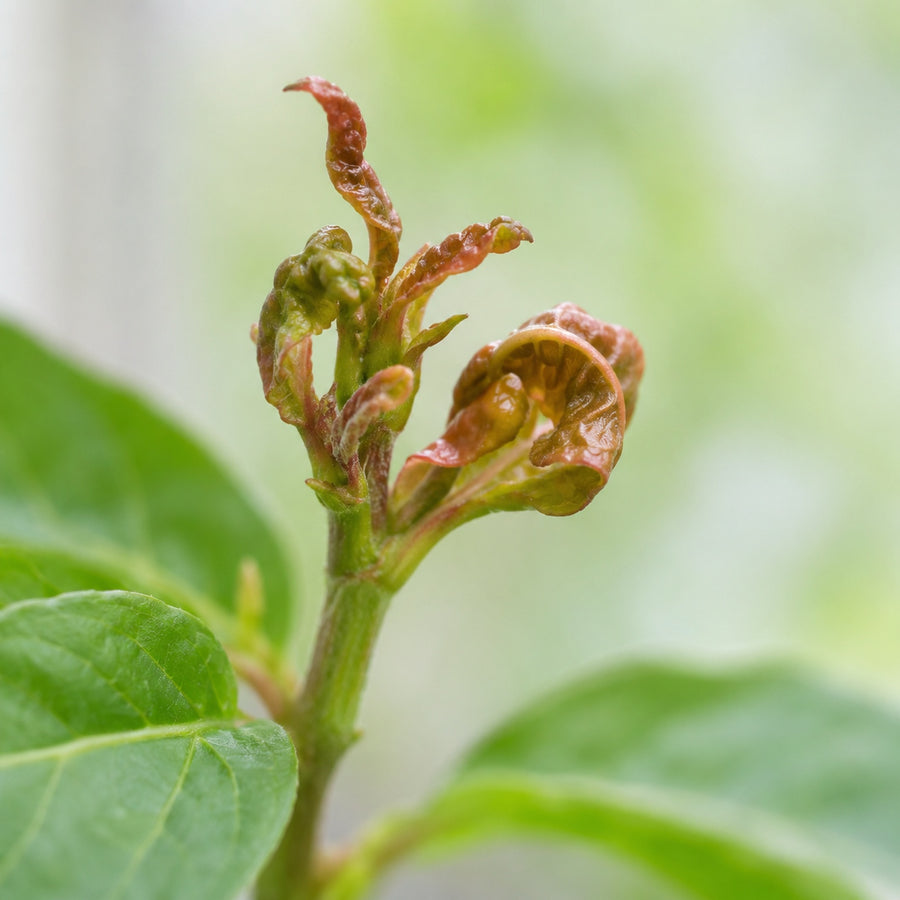
Bronzed, twisted growth on only the newest leaves, and no insects you can see.
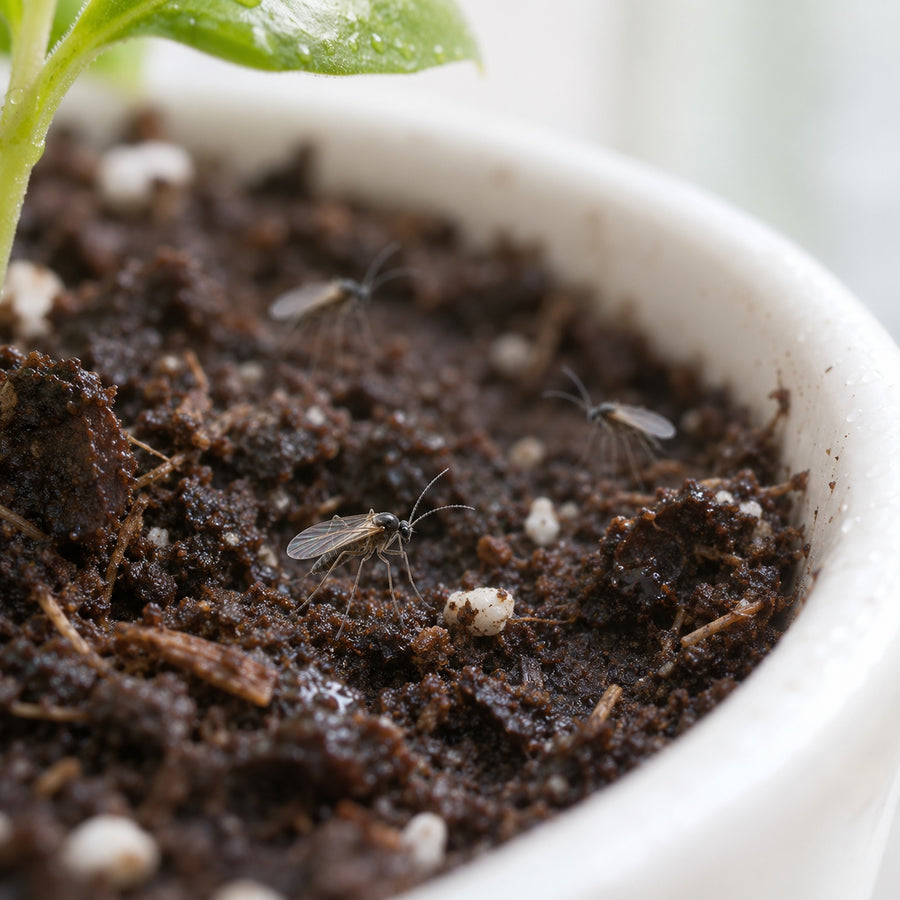
Long-legged fliers around the soil, not on the leaves. Yellow card, not blue.
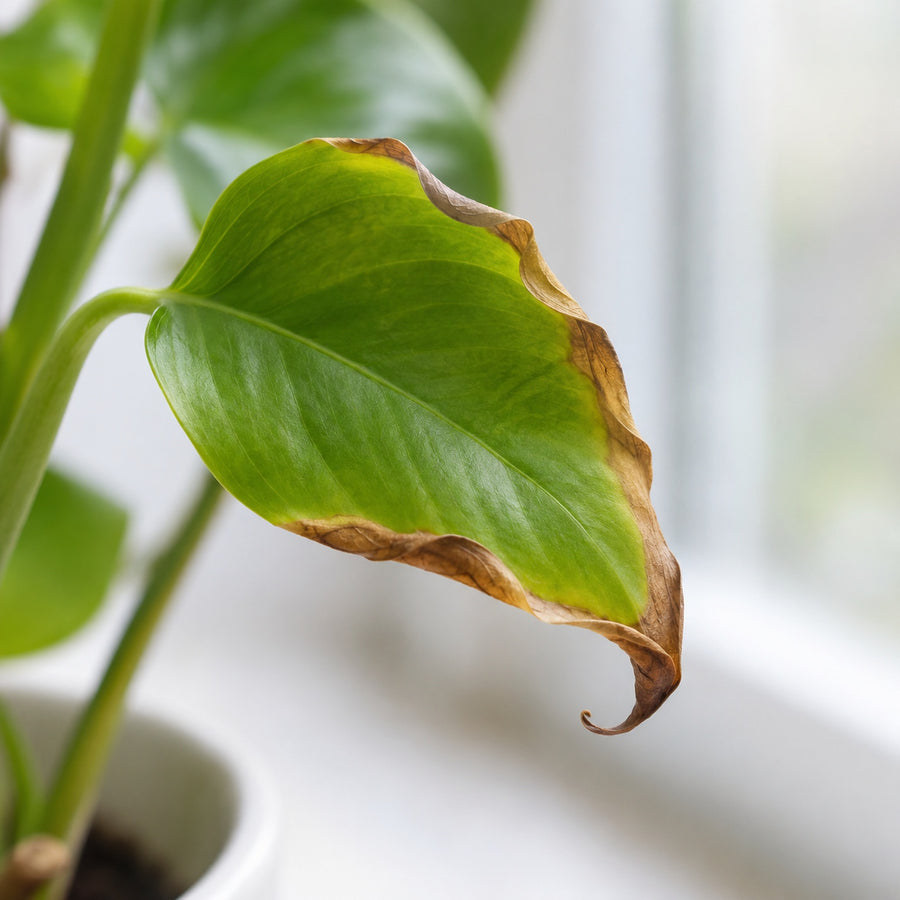
Brown, curled edges and no bugs or specks at all.

Meet the thrips
She doesn't need a mate.
An unmated female still lays eggs. They all hatch male. Efficient, if a little lonely.
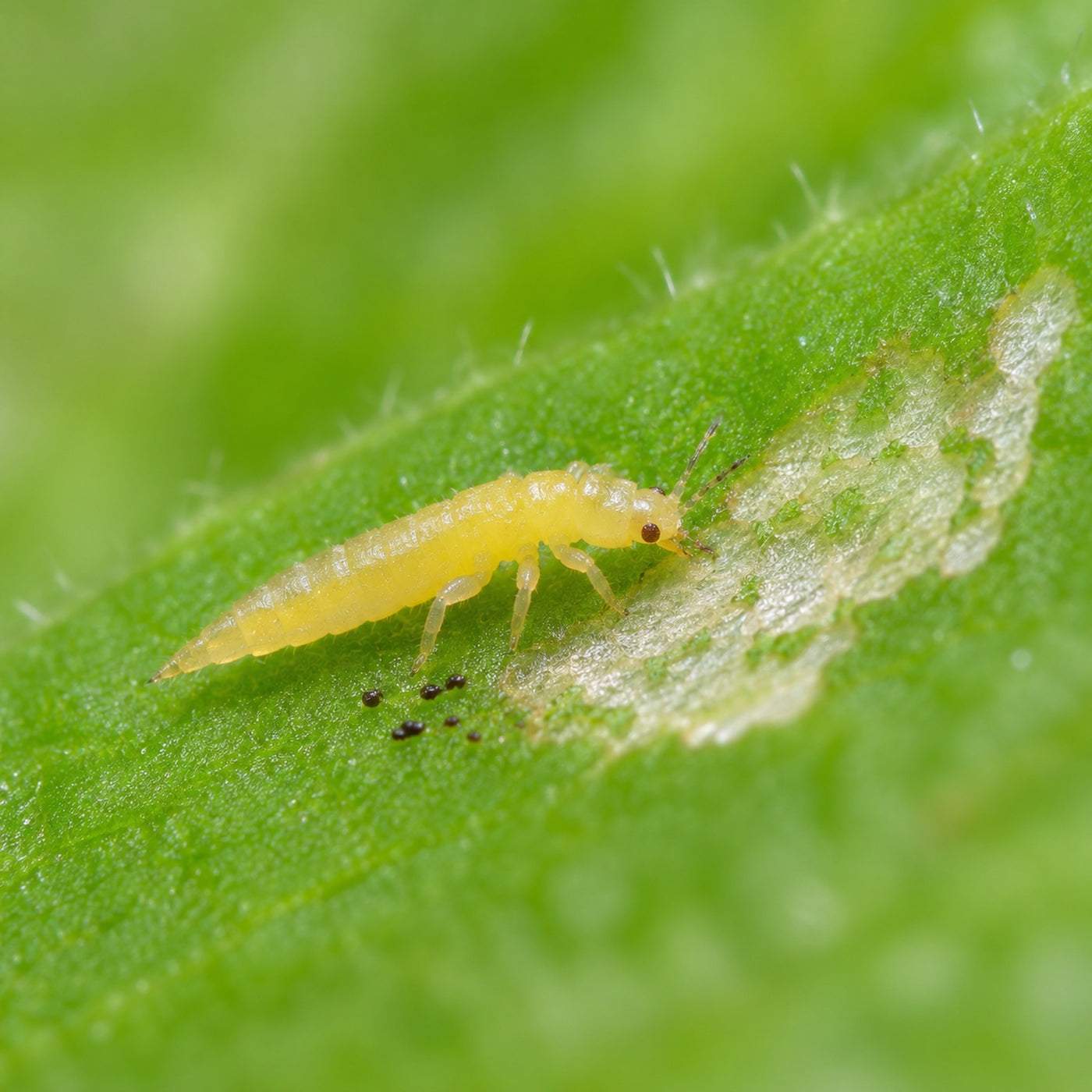
Thrips are insects, 1–2 mm long. Yours is most likely western flower thrips, Frankliniella occidentalis. It feeds on hundreds of kinds of plants and tucks itself into buds, shoot tips and flowers.
What it eats
A thrips punctures the leaf's surface and sucks each cell empty. An empty cell has lost its green, so a trail of them shines silver.
The black specks beside the trail are what comes out the other end.
Side dishes: pollen, and the odd spider mite egg. Not a picky eater.
Where it lives
Scroll down the plant to see where.

They feed on the leaves, in the flowers if it's flowering, and tuck their eggs inside the leaf.
They start the moment they hatch. That's where the silver comes from.
Most larvae drop down to pupate, then climb back out as adults.
That's why one treatment rarely covers it. Something has to work the leaves, and something has to work the soil.
Next: how fast they multiply ↓The life cycle
At about 75°F. Swipe through one thrips' life.
 Days 0–4
Laid inside the leaf, out of reach of sprays and most predators.
 Days 4–6
Tiny, pale, eating already. The easiest catch for predatory mites.
 Days 6–10
Bigger, and fights most predatory mites off. Then most drop to the soil.
 Days 10–14
Doesn't feed. Sprays can't reach it. Nematodes like it best.
 Day 14 on
Flies, feeds, and starts laying within a few days. Lives three to four weeks.
Swipe for the next stage →
What that means for you. A release lands on one moment in this cycle. About two weeks later, a fresh wave hatches bite-sized. That's your release rhythm.
How fast they multiply
×32
in 25 days.
That's how fast numbers double in a warm room.
That speed is why a new pesticide gets about six months before they shrug it off.
Why sprays miss
Western flower thrips is resistant to most insecticide groups used on it. And even a good spray only meets half the family.
What a spray hits
What it can't reach
So a new batch walks out after every spray. Predators keep working between rounds, on the leaf and in the soil.
Next: the one kind that never leaves the leaf ↓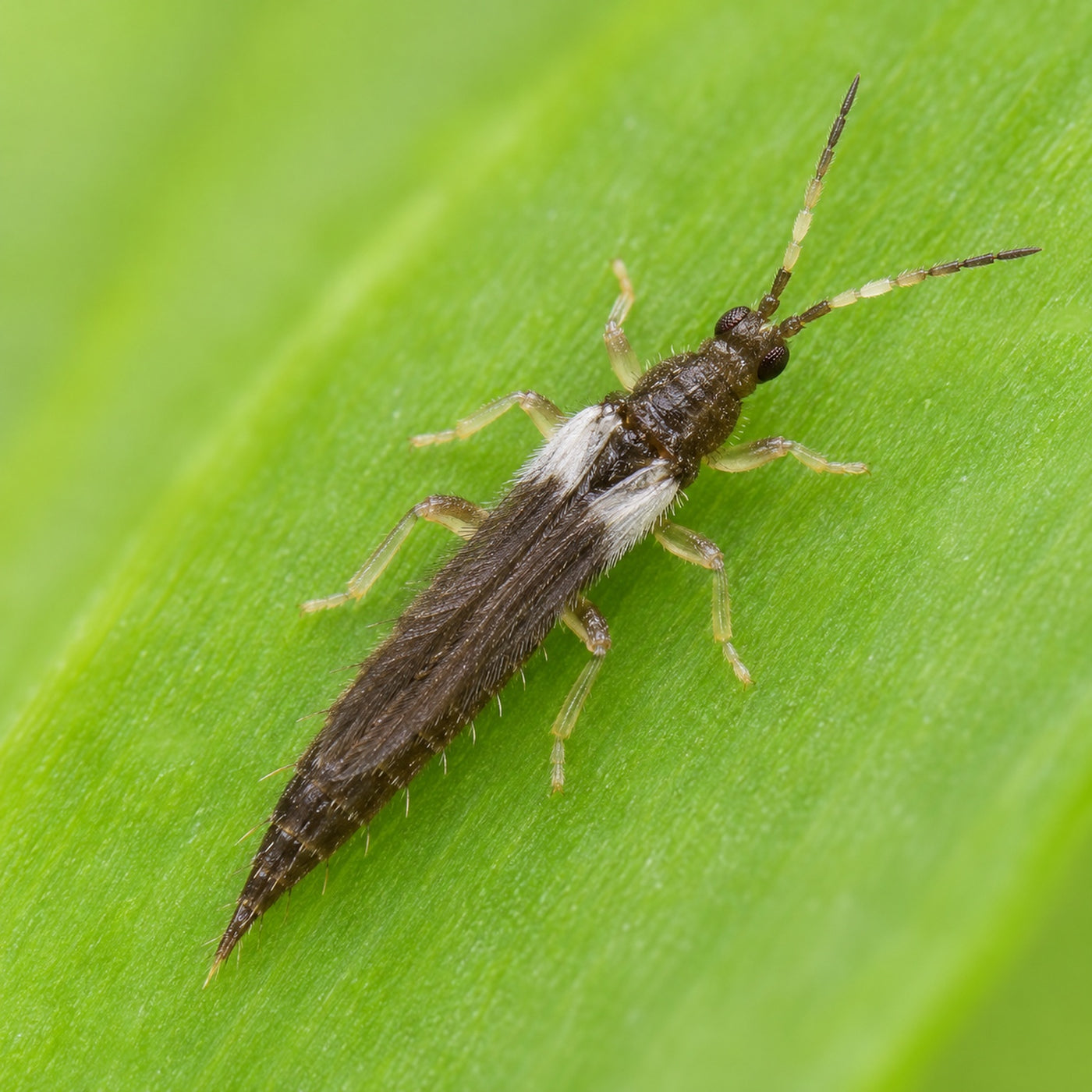
A different kind of thrips
Larger, darker and slower. It doesn't bother hiding.
Every stage stays on the leaf, pupa included. A soil treatment has nothing to find.
Swirskii and limonicus eat every stage but the adults. Orius takes the adults.
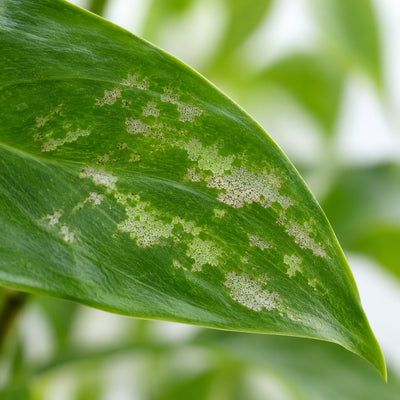
Its feeding sits out on the open blade, not tucked into buds.
What to get
Our pick for you
It doesn't take adults. The ones you see now live out their lives while you stop the generation behind them.
See Thrips Rapid ResponseOur pick for you
All three life stages at once. Orius needs about 14 hours of light a day.
See Thrips Total ControlOur pick for you
Limonicus needs about 60% humidity to build up. Orius needs about 14 hours of light a day.
See Thrips Ultimate Control| If you see | Our pick | Why |
|---|---|---|
| Damage, but no flying adultsStreaks and specks. Pressure still manageable. |  Thrips Rapid Response |
It doesn't take adults. |
| Flying adults tooAdults in the flowers and new growth. |  Thrips Total Control |
All three life stages at once. |
| Heavy damage everywhereOutpacing whatever you've tried. |  Thrips Ultimate Control |
Limonicus needs about 60% humidity to build up. |
Dark, slow thrips sitting on the leaf blade? That may be Echinothrips. Ask us before you order
Our suggested plan
Release day
Leaves, flowers and soil on the same day.
Every 2–4 weeks
Just the bottles. Every other week or monthly is usually fine.
Stop
New growth, no new damage. Then switch to a sachet.
Leaf mites die out once the larvae are gone. The next wave hatches later, so the next bottle meets it.
Kit first. Round two is just the bottles. The soil’s already handled.
How to release
Confirm it's thrips. The slim insects, or the black specks. Already confirmed above.
Cut back. Snip scarred leaves and spent flowers. Flowers hide thrips, and their pollen feeds them.
Hang blue cards just above the plant tops, to watch the count fall.
Wait out any spray.
Something else? Send us its active ingredient. If the label says longer, the label wins.

Water the nematodes into moist soil, or sprinkle soil mites at each stem.
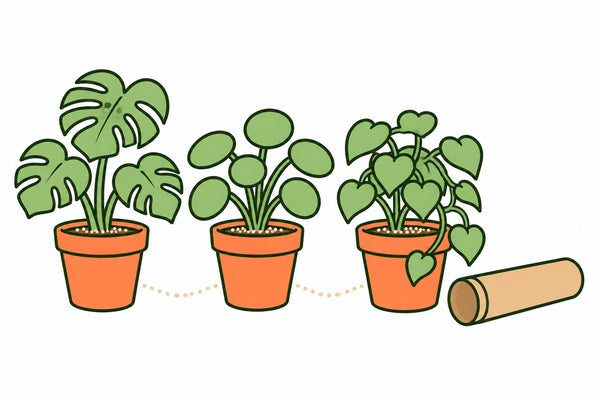
Swirskii or limonicus across the leaves, heaviest on new growth. Cucumeris in small piles.
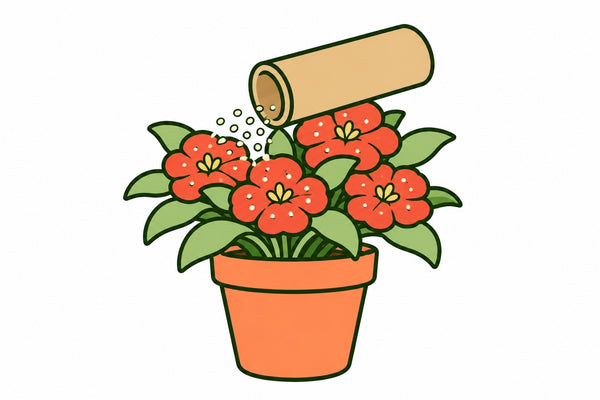
Into flowers and buds. Take the blue cards down for about a week. They catch Orius too.
Keep the soil moist, not soggy, for two weeks after each nematode drench. Dry soil stops them.
Repeat on the plan above, until the new growth stays clean.
Aroids? Tap a few mites into the sheath where the leaf stalk wraps the stem. Back door delivery.
What to expect
Little change, sometimes slightly worse. The predators are building numbers first.
Adults seem to vanish for a few days, then a fresh batch turns up. Expected. Keep going.
New damage slows, then stops. Fewer adults on the cards. Heavy pressure can take about a month to turn.
New growth comes in clean.
Old silver is a scar. It's not coming back. Judge by the new leaves.
Why treatment fails
Pupae in the soil keep supplying new adults. Nematodes or soil mites close the gap.
A quiet plant a few weeks in is a gap, not a win. Hold out.
Spray residue on the leaves. Thrips shrug off most sprays. Predators don't. Check the wait first.
A room cold or dry for days. Cool and humid: limonicus. Dry air: cucumeris. Warm and humid: swirskii.
Orius on short days. Under about 14 hours of light, most female Orius stop breeding. A grow light on a timer fixes it.
Swirskii or limonicus left in piles. Spread them thinly, heaviest on new growth.

Prevention
Indoors there's no winter, so thrips don't take one off. Hang a sachet. It walks predatory mites out for 4–6 weeks, then you hang a fresh one.
A sachet keeps thrips from getting a foothold. It doesn't clear one that's already there.
Often shows up with
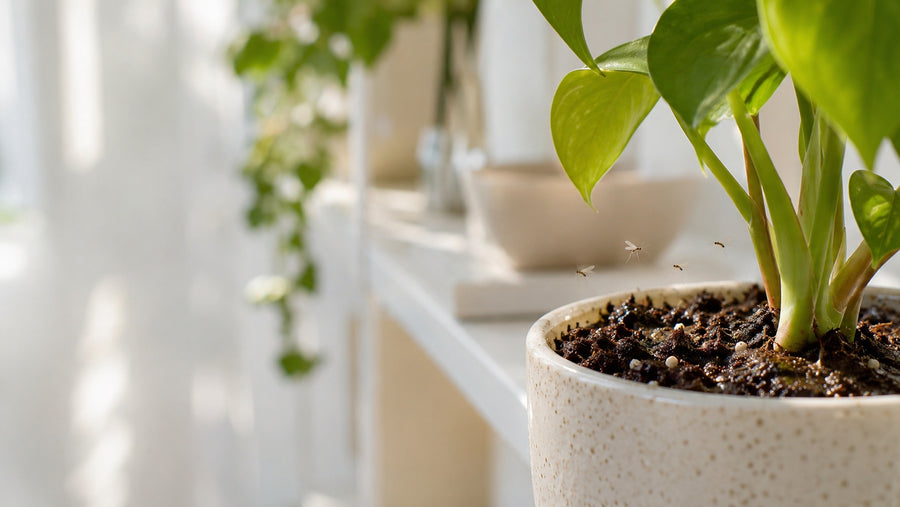
Sf nematodes and soil mites eat gnat larvae too. One soil treatment, two jobs.
Field Notes
 Where to start with thripsThe first decision, and why it decides the rest
 How to treat thrips, and why it's harder than everyone saysWhy it takes more than one release
 How to treat thrips on plants the right wayA biological plan for houseplants, in order
 Most people buy swirskii for the wrong problemFour things that rule it out
 Limonicus: late to market, early to huntThe generalist that keeps going on pollen
Questions
It depends on how heavy it is, the temperature and humidity, and whether you cover the leaves, the flowers and the soil. Heavy pressure can take about a month just to turn.
It isn't strictly required, but it helps a lot. Most larvae drop into the soil to pupate, where no leaf predator follows. Leaves and soil together beat either one alone.
Orius insidiosus, the minute pirate bug. Predatory mites eat the larvae, not adults. Orius needs about 14 hours of light a day.
Yes. Predatory mites eat only small insects and mites, can't bite people, pets or birds, and don't infest homes. Very rarely, an Orius gives a pinprick-sized nip.
Yes. Thrips carry tospoviruses such as tomato spotted wilt and impatiens necrotic spot. An infected plant can't be cured, so it's best removed. Not sure it's a virus? Send us a photo first.
Usually the releases stopped too soon. Eggs in the leaf and pupae in the soil are out of reach of leaf mites, so a quiet week can be followed by a fresh batch.
If something’s wrong when it arrives, email info@fgmnnursery.com within 72 hours of delivery for a replacement or store credit.
By continuing to checkout you agree to our Shipping Policy and Live Delivery Guarantee.
If something’s wrong when it arrives, email info@fgmnnursery.com within 72 hours of delivery for a replacement or store credit.
By placing your order you agree to our Shipping Policy and Live Delivery Guarantee.


