













1

Pest season where you live
Type a ZIP and see what’s active this month, what’s at its worst, and when to get ahead of it.
What’s bugging you?
Most common
Other pests
Every pest we treat →Meet the beneficials
Most asked for
More predators and helpers
Every beneficial →Plant care
Field Notes
Guides
Before you buy
Pest guides

Is it aphids?

That's honeydew, the sugary waste aphids leave.
The easiest check? Look at the newest stems and buds.
It matters, because each predator has its favorites.


Which aphid? Doesn't matter. Aphidoletes takes over 60 kinds.

Meet the aphids
Soft, pear-shaped, two tubes out back.
Born ready.
Aphids are small, soft-bodied insects with long, slender mouthparts. Most don't hurry when disturbed.

What it eats
Their mouthparts pierce stems and leaves and suck out the sap. Some kinds inject a toxin that puckers new leaves, and the sugary waste lands below as honeydew.
Where it lives
Scroll down the plant to see where.

Colonies pack the newest growth.
Many kinds feed underneath.
Ants run up and down to tend them, and guard them from your predators.
Shiny and sticky, sometimes black with sooty mold.
The life cycle
No eggs, no mate. A mother gives birth to live daughters, often already carrying the next generation.
 Day 0
Born live.
 The first week
Sheds a pale skin each time it grows.
 Week two
Gives birth to several young a day.
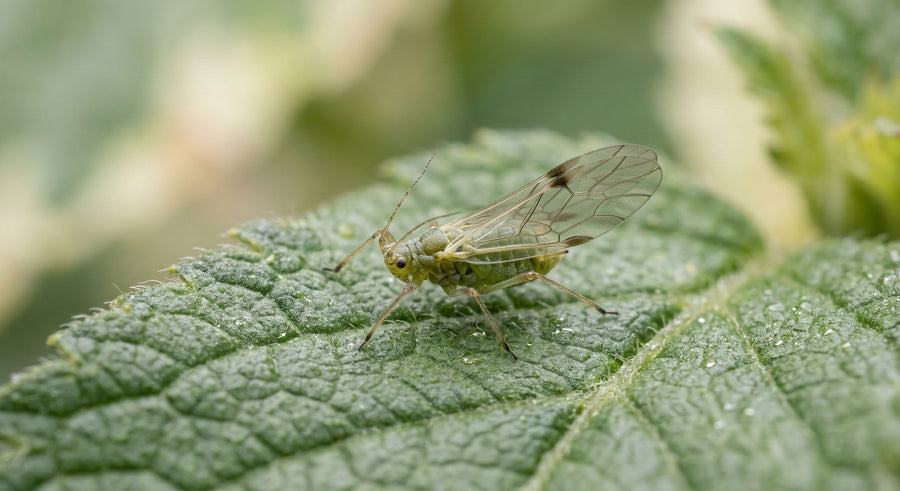 When crowded
Flies off to start new colonies.
Swipe for the next stage →
How fast they multiply
80
young from one aphid in a week.
Up to 12 a day in warm weather, no mate needed.

Why sprays miss
Most insecticides kill the aphids' natural enemies too, and any aphid a spray misses keeps giving birth.

Below the soil
Pale and waxy, often without the two back tubes, they feed on the roots and at the soil line, below anything that hunts on leaves.
Now, who eats them.
What to get
Our pick for you
Aphidius colemani is a tiny, stingless wasp that lays an egg inside each aphid. The aphid turns into a tan, papery mummy and a new wasp hatches out to keep going. Best on green peach and melon aphid caught early.
See Aphidius colemaniOur pick for you
The two aphid specialists in one kit: Aphidius colemani wasps for the small aphids, and Aphidoletes midges, which find colonies by scent and work on over 60 aphid species. The pick for a mixed infestation or an aphid you can't identify.
See Aphid Cleanup CrewOur pick for you
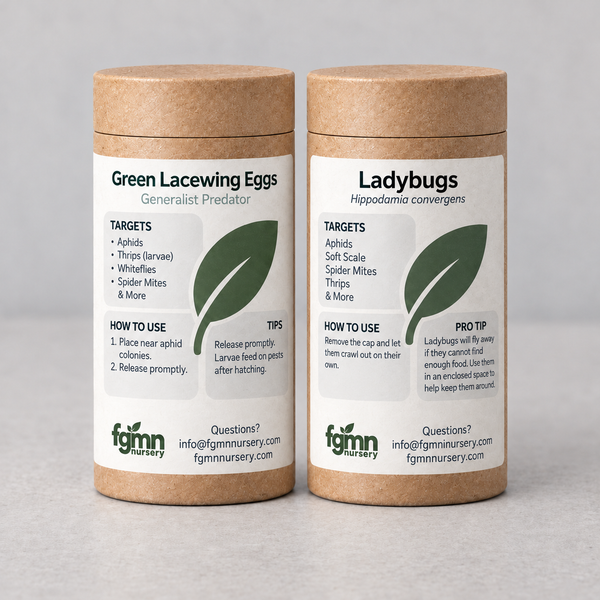
Adds green lacewing eggs to the wasp and midge kit. The larvae that hatch eat most aphid species and are happy in an ordinary room, so all three are working the plant at once.
See Aphid Cleanup Crew, Full ShiftOur pick for you
Ladybugs for the quick knockdown. Most fly off within a day or two, so green lacewing eggs come with them and hatch into larvae that keep hunting after the ladybugs move on.
See Aphid First ResponseOur pick for you
Lacewing larvae eat most aphid species, though not oleander aphid, and handle heat and drier air well. They arrive as eggs that hatch about a day after delivery.
See Green lacewing larvae| If you see | Our pick | Why |
|---|---|---|
| Early, small coloniesA few clusters on new growth, and you know which aphid |  Aphidius colemani |
Aphidius colemani is a tiny, stingless wasp that lays an egg inside each aphid. |
| Colonies spreadingDense clusters on several plants, or you can't tell which aphid |  Aphid Cleanup Crew |
The two aphid specialists in one kit: Aphidius colemani wasps for the small aphids, and Aphidoletes midges, which find colonies by scent and work on over 60 aphid species. |
| Heavy, and everywhereDense colonies across the whole collection |  Aphid Cleanup Crew, Full Shift |
Adds green lacewing eggs to the wasp and midge kit. |
| One big colony to knock back nowA big, visible colony you want gone fast |  Aphid First Response |
Ladybugs for the quick knockdown. |
| A warm or dry roomAphids where it runs hot or the air is dry |  Green lacewing larvae |
Lacewing larvae eat most aphid species, though not oleander aphid, and handle heat and drier air well. |
Not sure which aphid? Send us a photo before you order
Our suggested plan
Release day
Ants off the plant first. Wasps in the morning, midges at dusk.
Every 2–4 weeks
Leave the tan mummies. Each one is a new wasp.
Stop
New growth stays clean.
For a typical infestation. Every other week or monthly is usually fine. A light one may need less. A heavy one may need more, every 2 weeks at the closest. Adjust to what you see, or ask us.
How to release
Confirm it's aphids. Two tiny tubes at the back end. Already ticked off above.
Take down yellow sticky cards. They catch the wasps and midges.
Wait out any spray.
Systemics poison the aphids the wasps grow in. Wasps want about a week after other sprays. Something else? Send us its active ingredient. If the label says longer, the label wins.

Sticky tape or diatomaceous earth around each stem base keeps the ants off. On a tree, wrap the trunk first and put the band on the wrap.
Wasps, midges and lacewings go out the day they arrive. Ladybugs can wait in the fridge for up to a week.

In daylight, close to the colonies. Leave the carrier dry and undisturbed while they hatch.

At dusk, the open bottle upright on damp, shaded soil near the worst colony.

At dusk, spread out, never in one pile.

At dusk, mist the plant first, then set them on the lower stems or soil. They climb to the aphids.
Ladybugs again every 2 to 4 weeks, if you use them. They don't stay long.
Ladybugs leave. Usually within a day or two. It's not you. Their eggs stay.
What to expect

Not much to see. The wasps and midges are small, and aphids keep breeding for a bit.
Tan, papery mummies appear. That's the wasps working.
New growth comes in clean. Curled leaves stay curled, so judge by the new ones.
New aphids on the tips? Go again.
Don't wipe off the mummies. There's a wasp in there, almost done.
Why treatment fails

They guard the aphids and drive predators off. Band the stems before you release.
Colemani can't develop in potato or foxglove aphid. Use ervi, or Aphidoletes if you're not sure.

Aphids breed every week. Keep releasing every 2–4 weeks until new growth stays clean.

Prevention
Keep new plants apart for a couple of weeks, and check the tips and leaf undersides when you water. Spot a few? Release Aphidius while the colonies are small.
And go easy on nitrogen fertilizer. Lots of it helps aphids breed.
Winged aphids come through open windows. That's what the wings are for.
Often shows up with

Same sticky honeydew, same ants. Lacewing larvae and ladybugs take young mealybugs too.

Honeydew and sooty mold on the same plants. Check the undersides for flat, still nymphs.

Winged root aphids land on the same yellow cards. If the cards fill up, check the roots.
Field Notes
 An Aphid Is Carrying Her Granddaughters.
 The Wasp Only Works on the Right Aphid.
 The Ants Are Not Passing Through.
 Four Ways to Ruin an Aphid's Day
 That Aphid Has a Tenant
 The Same Release Works in May and Fails in August.
 If Ladybugs Are Just Going to Fly Away, Why Use Them?
 One Eats Aphids. One Eats Mites. Carry On.
 Root Aphids Sit Below Everything You Bought.
Questions
No. Outdoors, shortening days switch aphids to laying eggs that overwinter. Indoors, warmth cancels that switch, so an indoor colony keeps giving birth all year.
Yes. Aphidius wasps are tiny and can't sting people or pets, and none of the predators we sell damage plants. Ladybugs, lacewing larvae and aphid midges feed on aphids and other small insects, not on you.
Those are ladybug larvae, and they eat even more aphids than the adults. They hatch from eggs your ladybugs laid before leaving. Don't spray them.
Root aphids live on the roots, out of reach of predators that hunt on leaves, and there's little research on treating them. White wax on the roots and winged aphids turning up on sticky cards are the usual signs. Isolate the plant, check the root ball, and isolate new plants before they join the rest.
If something’s wrong when it arrives, email info@fgmnnursery.com within 72 hours of delivery for a replacement or store credit.
By continuing to checkout you agree to our Shipping Policy and Live Delivery Guarantee.
If something’s wrong when it arrives, email info@fgmnnursery.com within 72 hours of delivery for a replacement or store credit.
By placing your order you agree to our Shipping Policy and Live Delivery Guarantee.


