


Beneficials
The Pro Shelf
Single species, by the Latin. For growers who know exactly what they want.
Shop · one at a time

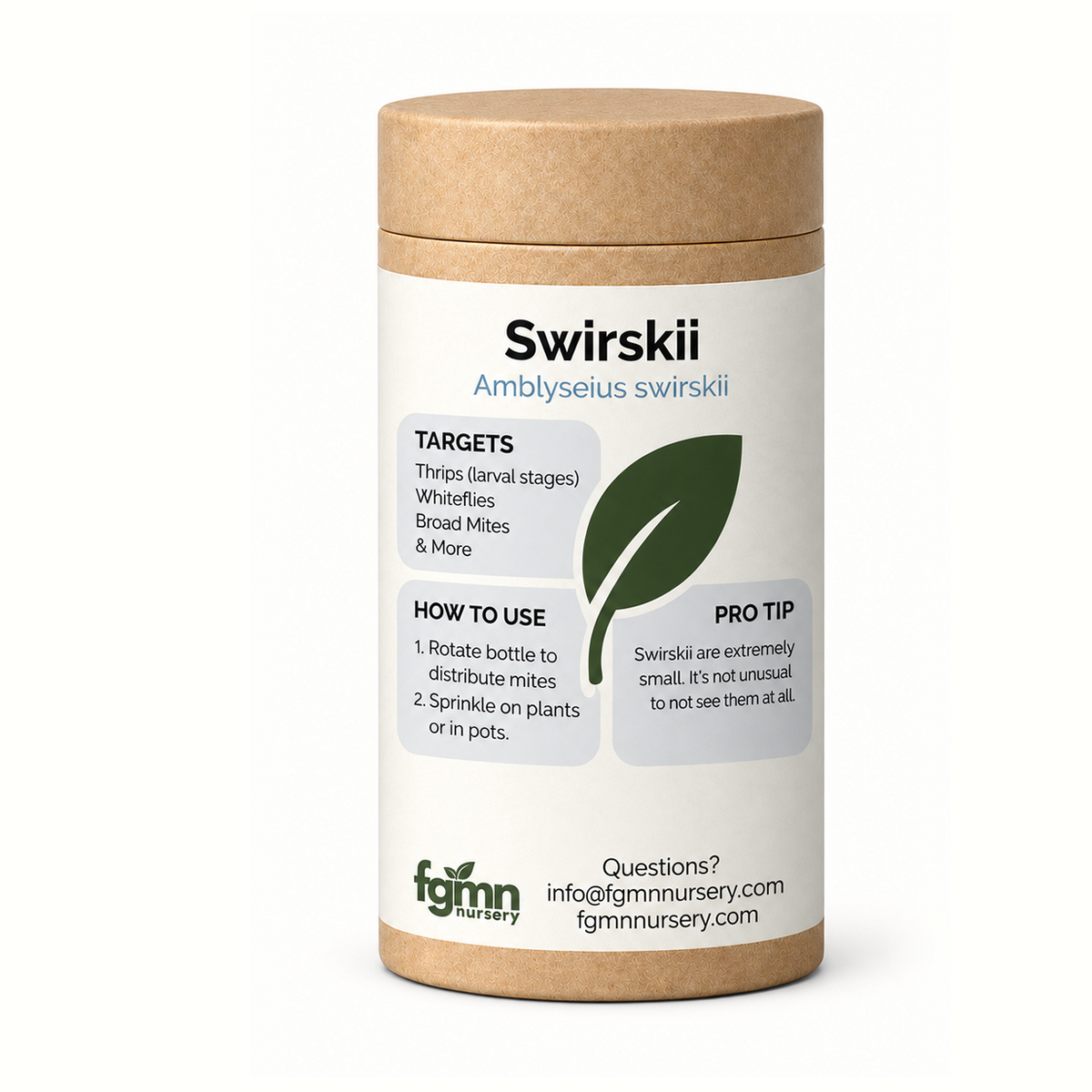
- ✓For: Thrips larvaeWhitefly eggs and young nymphs
Thrips and whitefly, earlier in the year.
Choose size
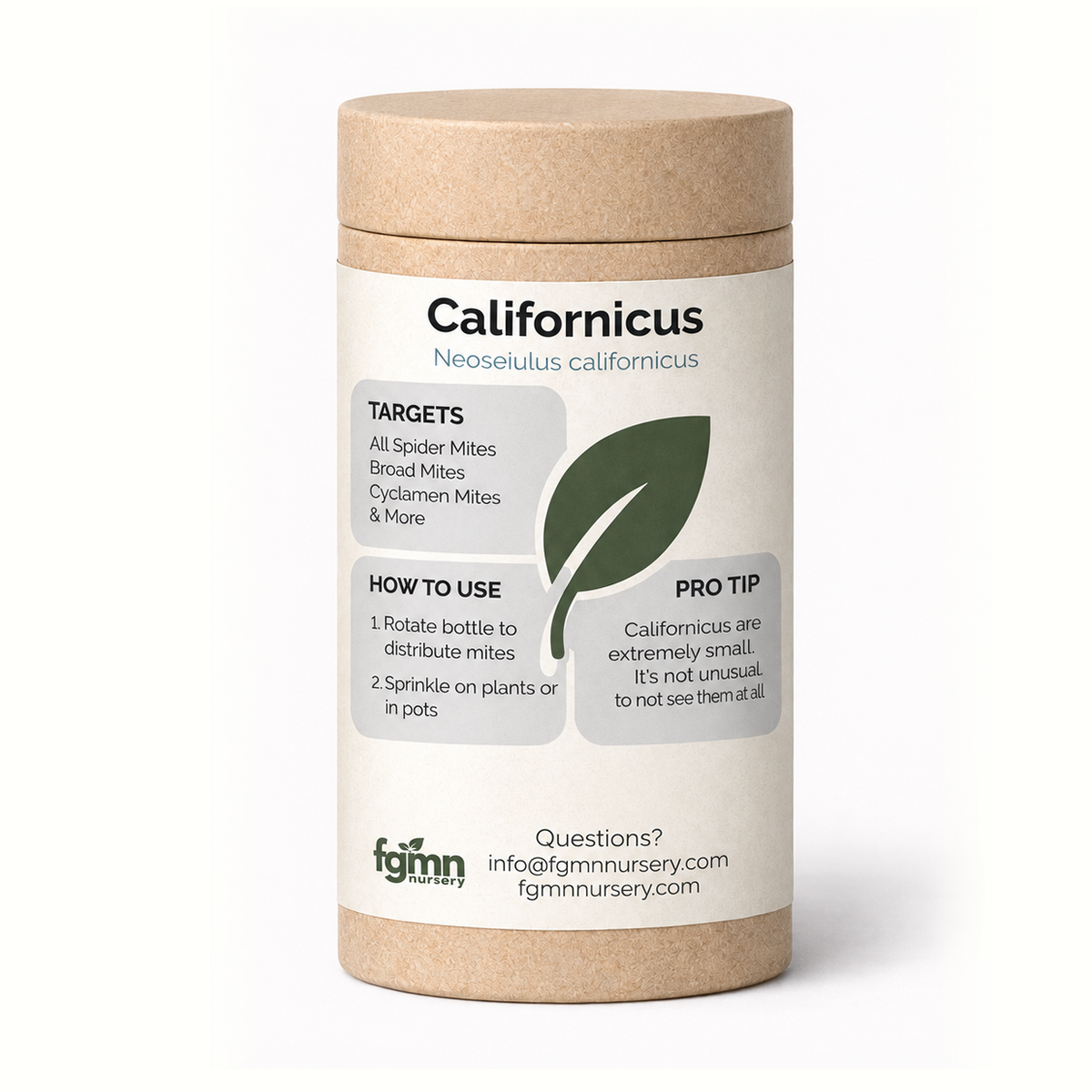
- ✓For: Two-spotted spider mitesRusset mites +1 more
Spider, broad and russet mites. Rooms that swing.
Choose size
- ✓For: Thrips larvaeWhitefly eggs and young nymphs +1 more
Faster when it's hot. Thrips larvae, whitefly eggs.
Choose size
- ✓For: Two-spotted spider mitesFlat mite eggs and young +1 more
Built for hot, dry rooms. Sticks around.
Choose size
- ✓For: Young thrips larvaeBroad mites +1 more
Eats thrips larvae before they reach soil.
Choose size
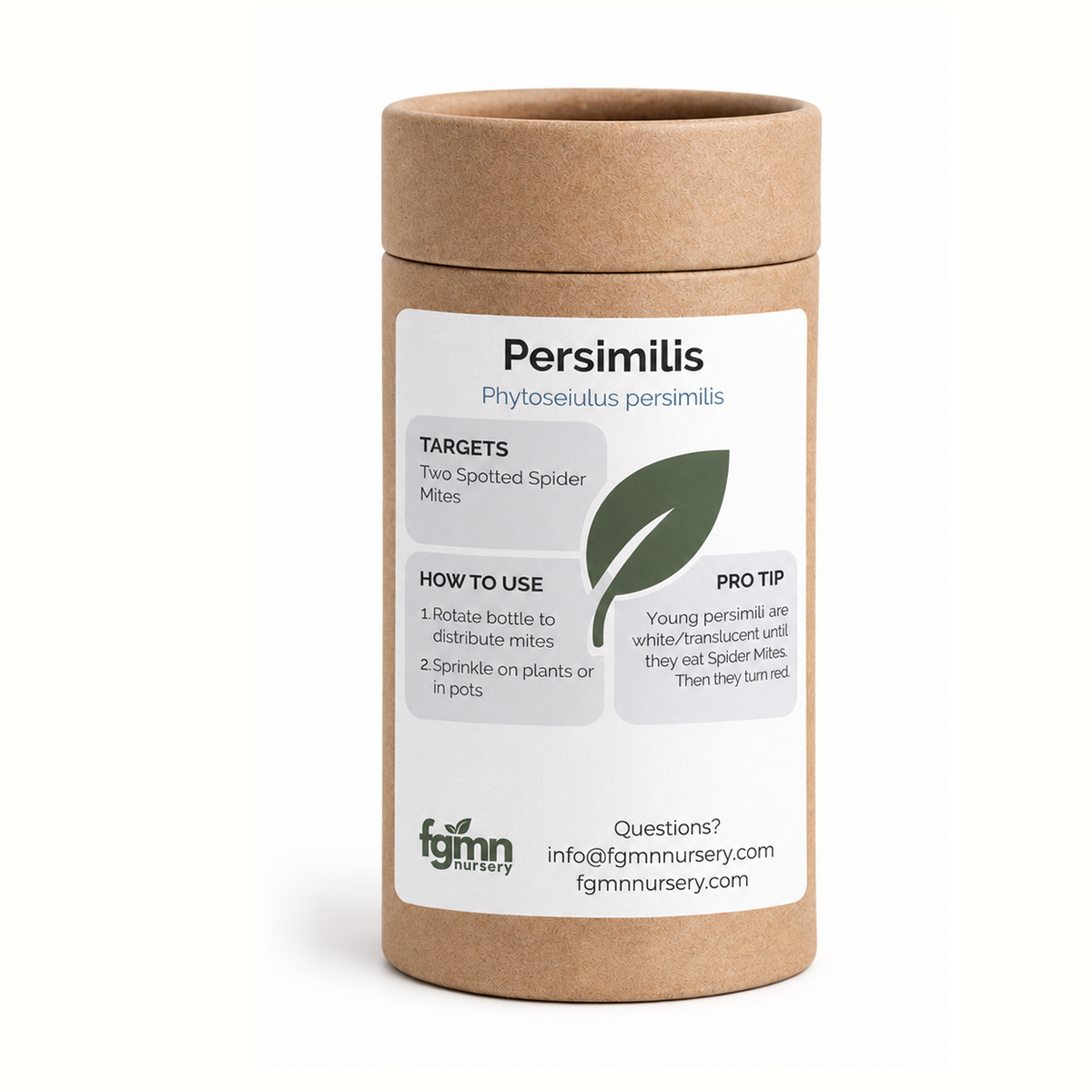
- ✓For: Two-spotted spider mitesCarmine (red) spider mites
Eats spider mites. Only spider mites. Fast.
Choose size
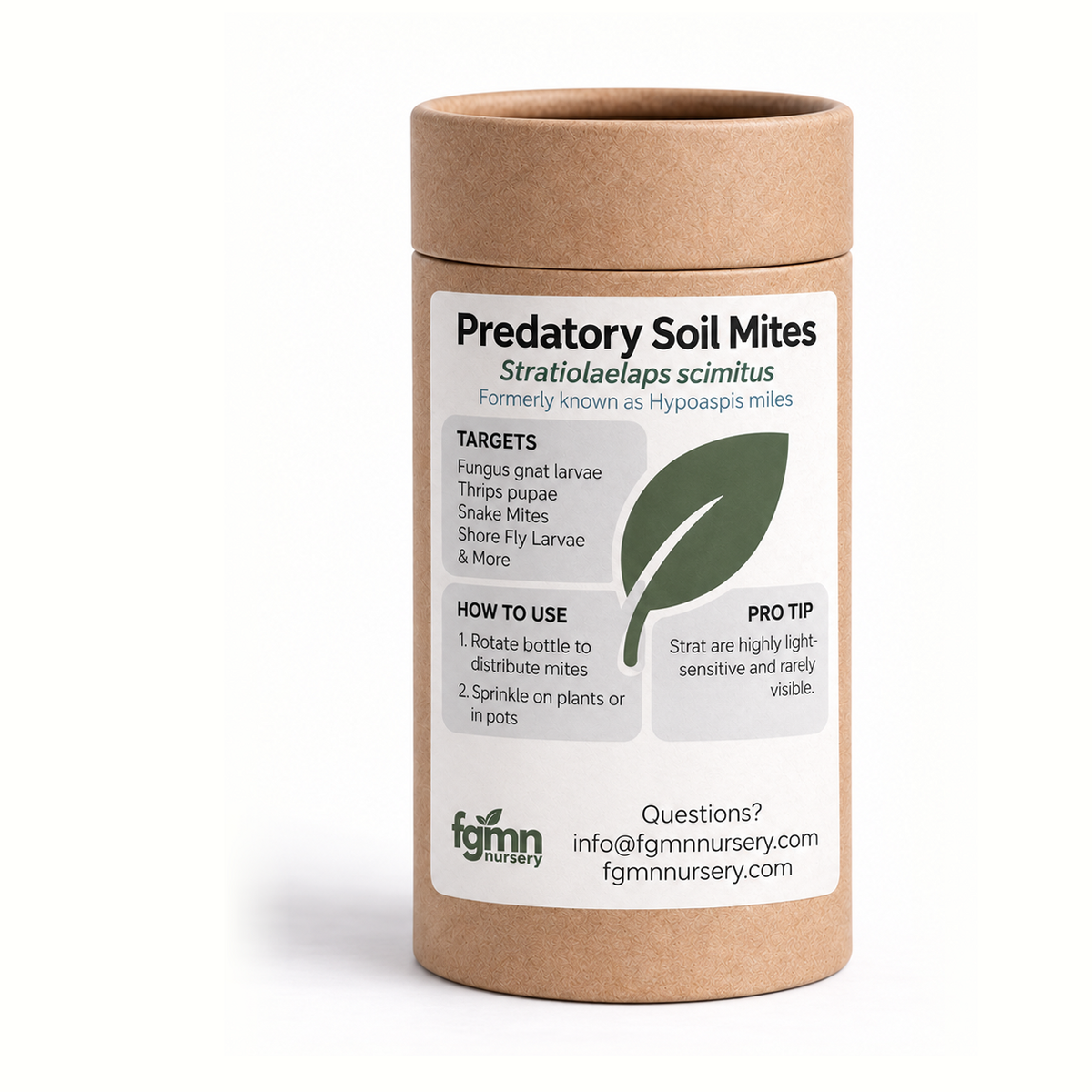
- ✓For: Fungus gnat larvaeThrips pupae +1 more
Soil hunter for gnat larvae and snake mites.
Choose size
- ✓For: Adult thripsThrips larvae
Hunts the flying thrips adults mites can't catch.
Choose size
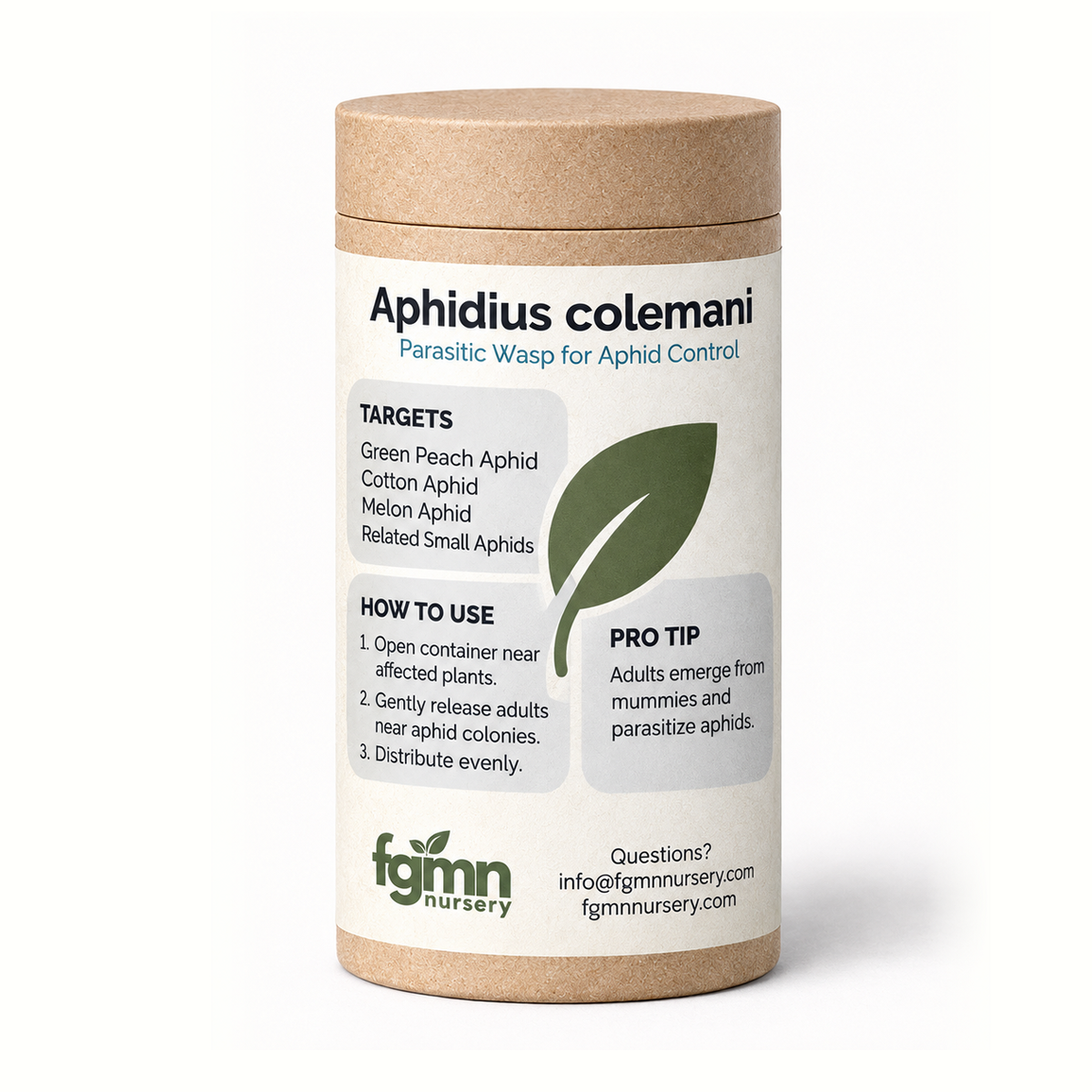
- ✓For: Green peach aphidMelon and cotton aphid +1 more
Small aphids, like green peach and melon. Finds the first colony before you do.
Choose size
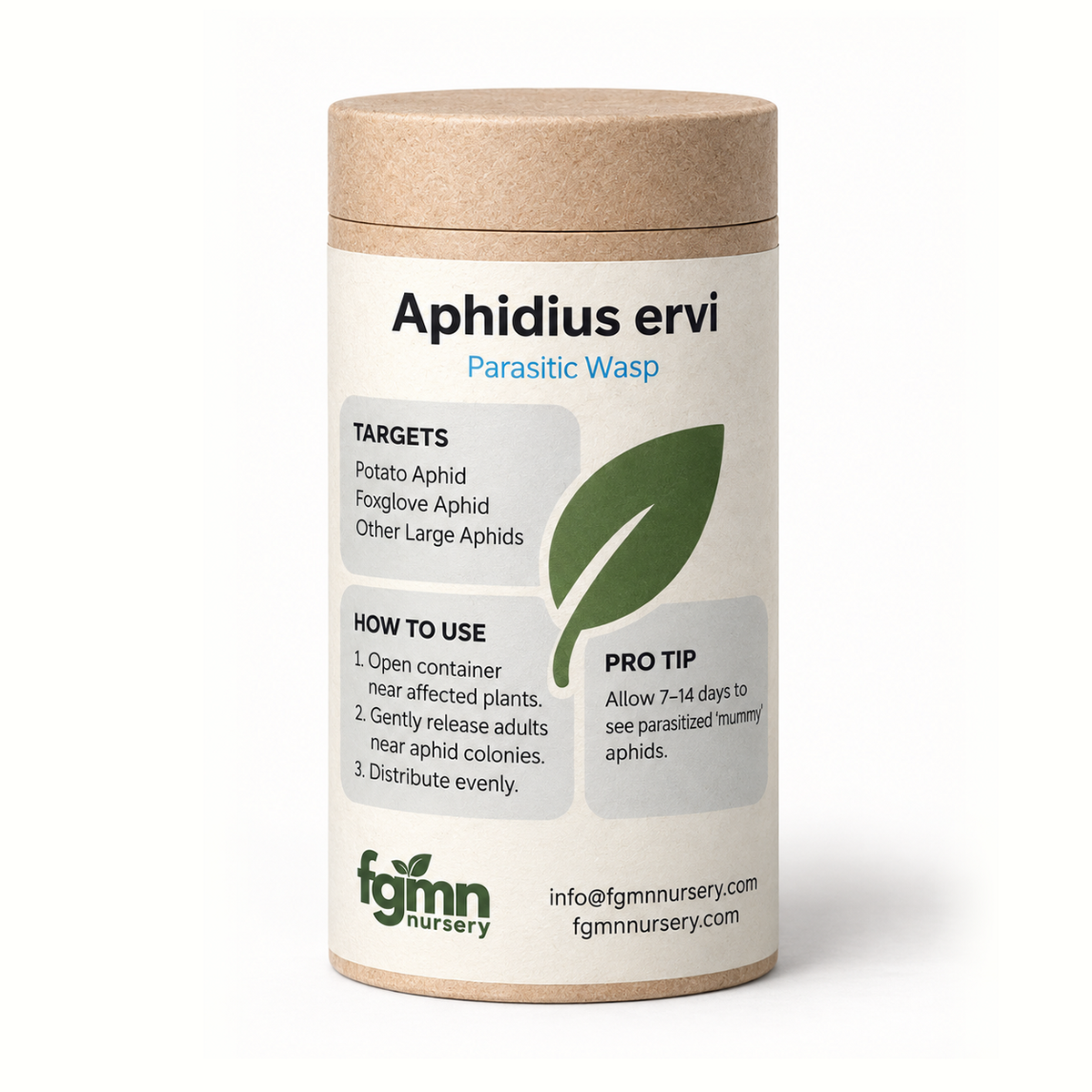
- ✓For: Potato aphidFoxglove aphid +2 more
Big aphids: potato, foxglove, pea. Too big for most aphid wasps.
Choose size
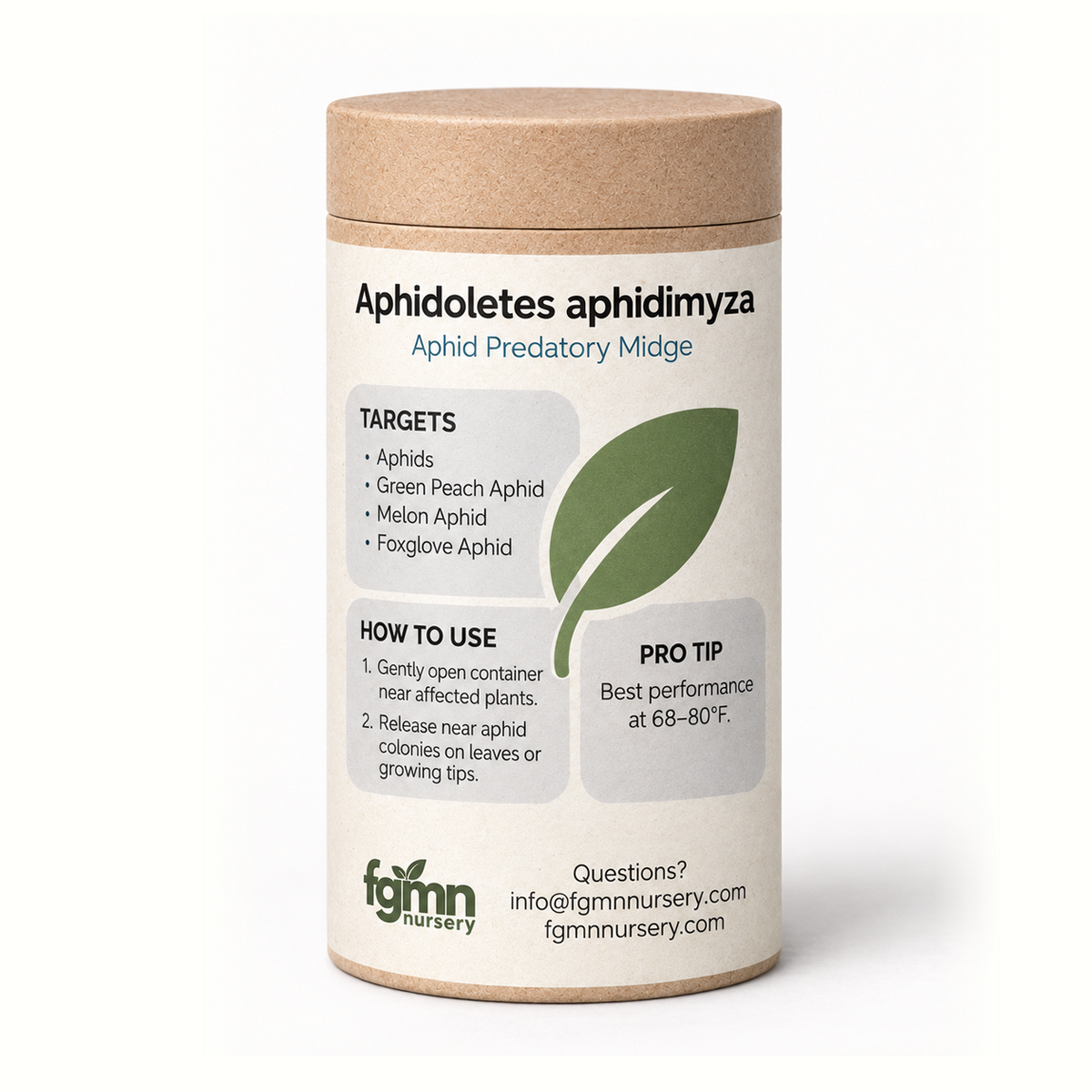
- ✓For: Green peach aphidTobacco aphid +1 more
Green peach aphid in a cool room. Keeps working through a short winter.
Choose size
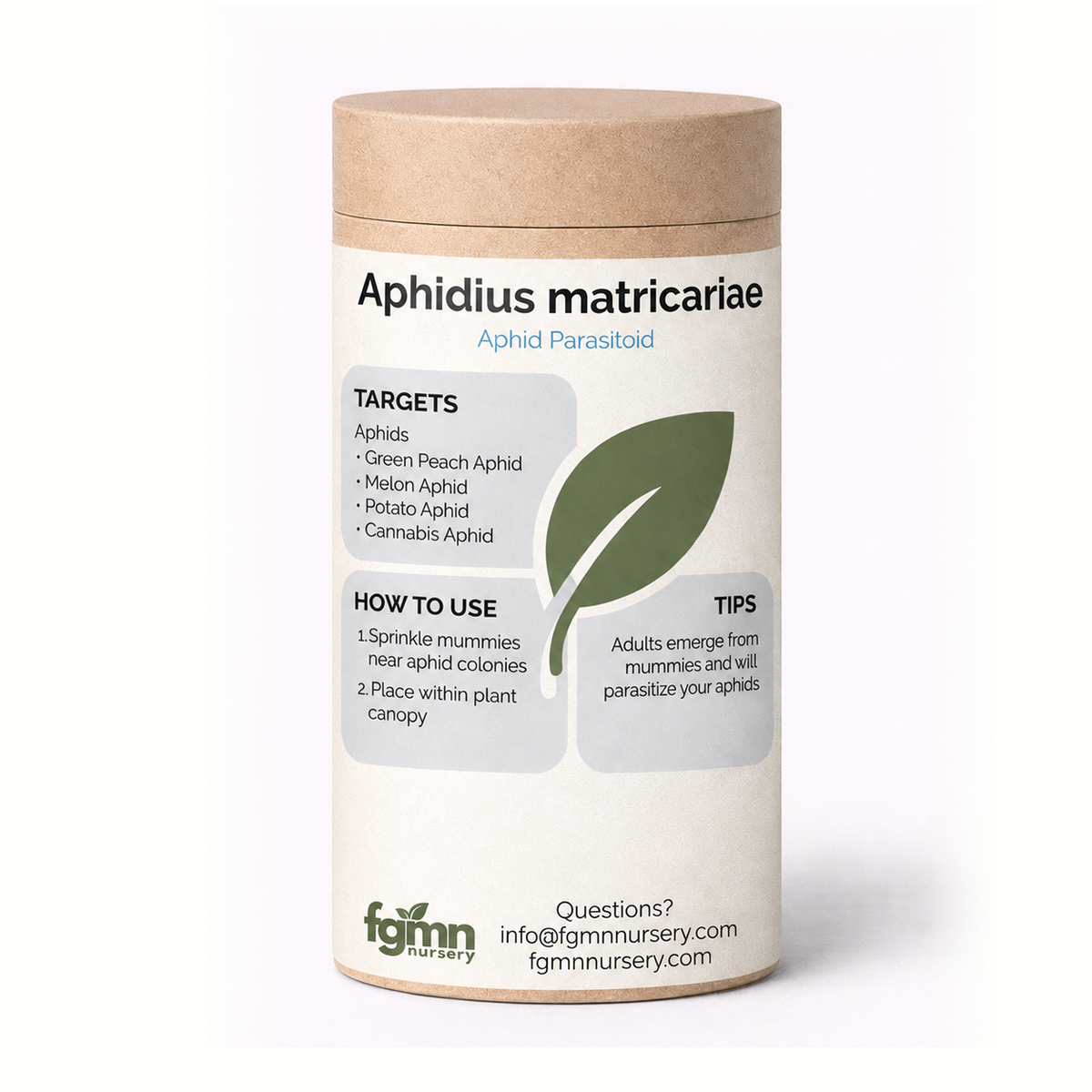
- ✓For: Green peach aphidMelon and cotton aphid +2 more
Crowded colonies of any aphid. No ID needed.
Choose size
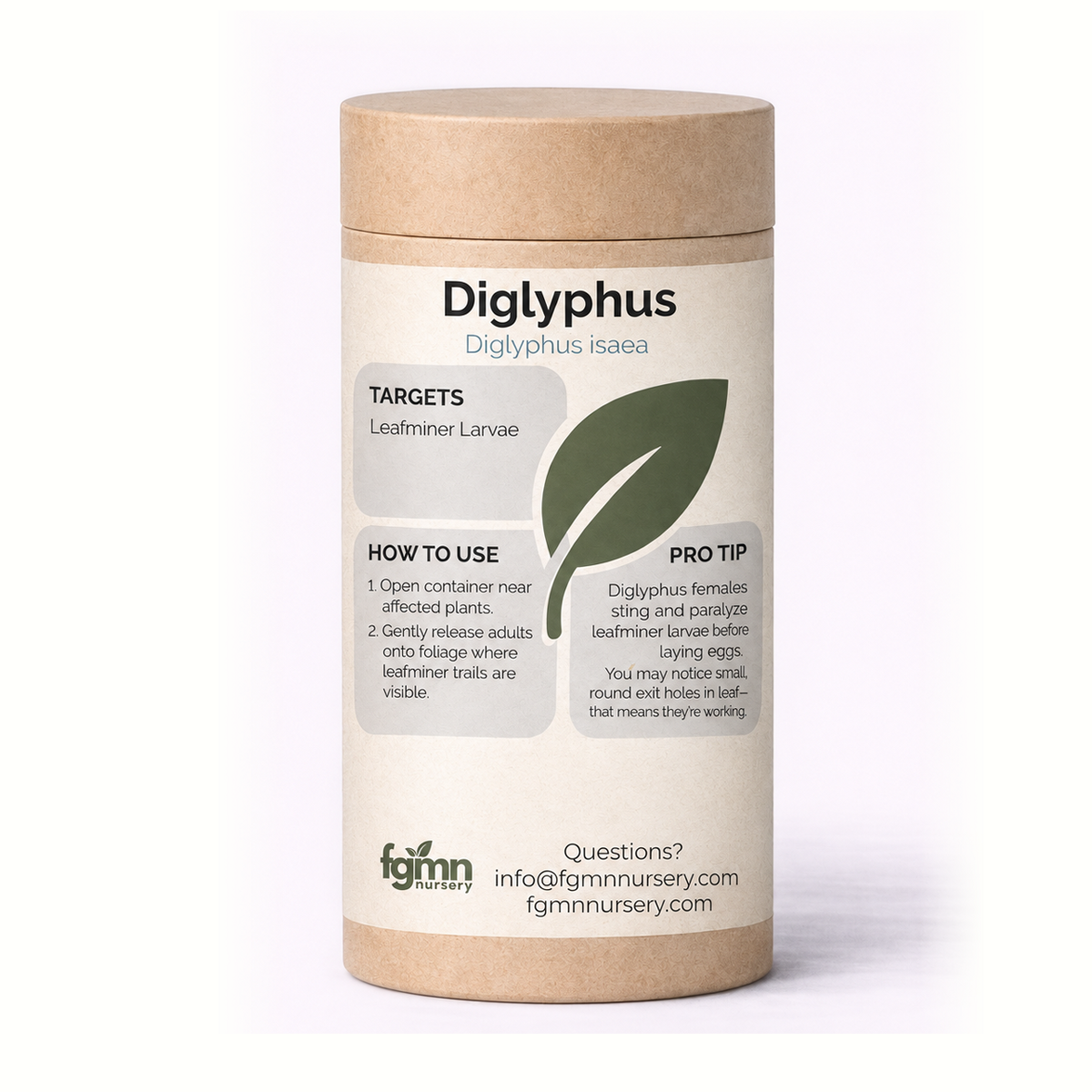
- ✓For: Leafminer larvae in the mine
Finds leafminers inside the mine. Trails stop.
Choose size
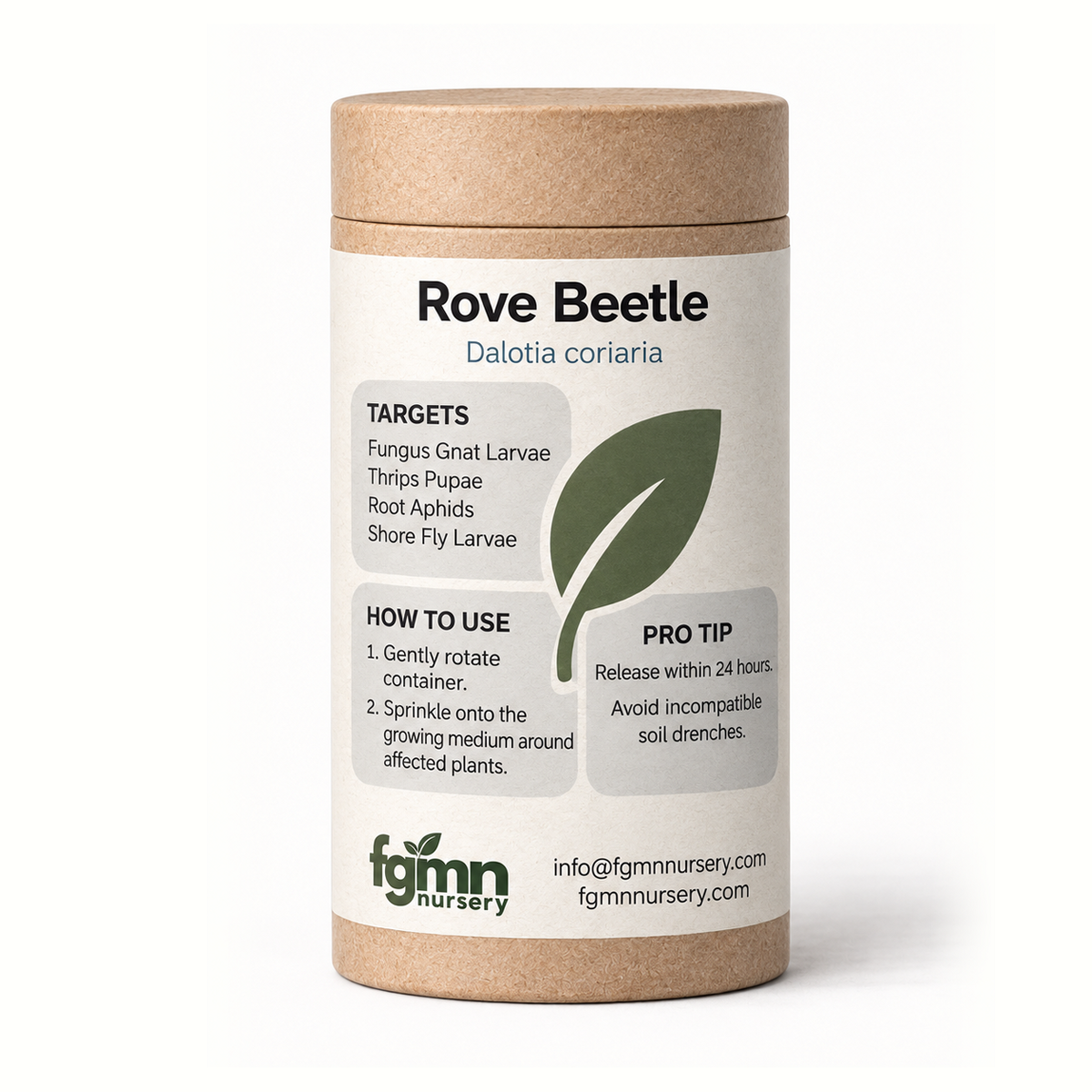
- ✓For: Fungus gnat larvae and pupaeShore fly eggs and larvae +2 more
Rove beetles that hunt inside the potting mix.
Choose size
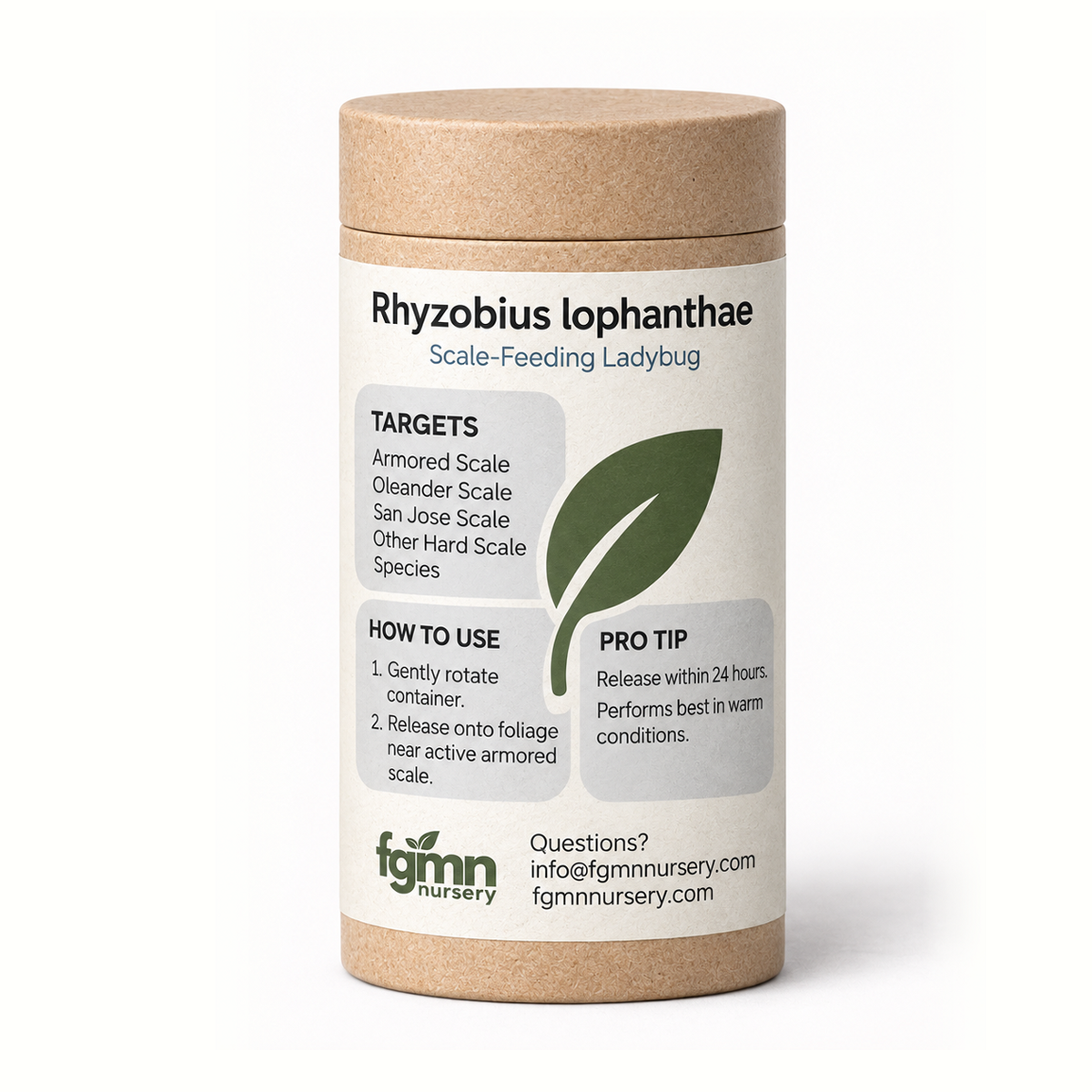
- ✓For: Armored scaleScale eggs and crawlers
Eats armored scale, the kind sprays miss.
Choose size
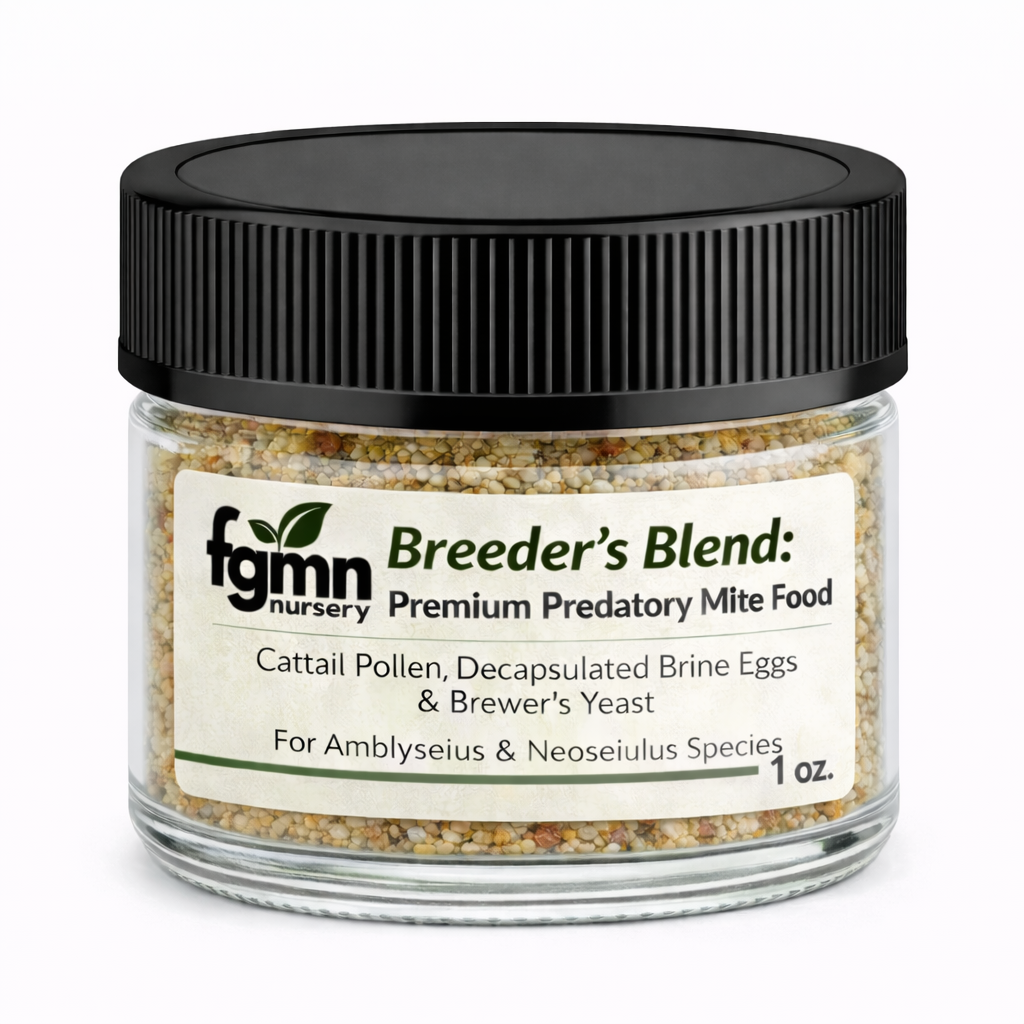
Keeps predatory mites fed after pests are gone.
Choose sizeNothing matches all of those. Drop a filter.
When your box arrives
You probably won't see them. That's normal.
A predatory mite is about half a millimeter long, and it hides where the pests hide.
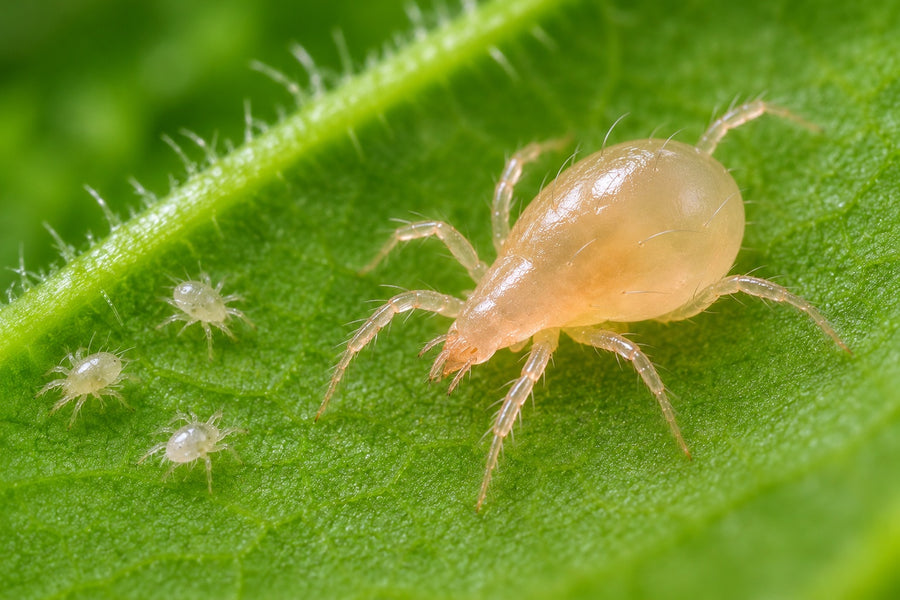
Hard to spot, by design.
About the size of a grain of sand.
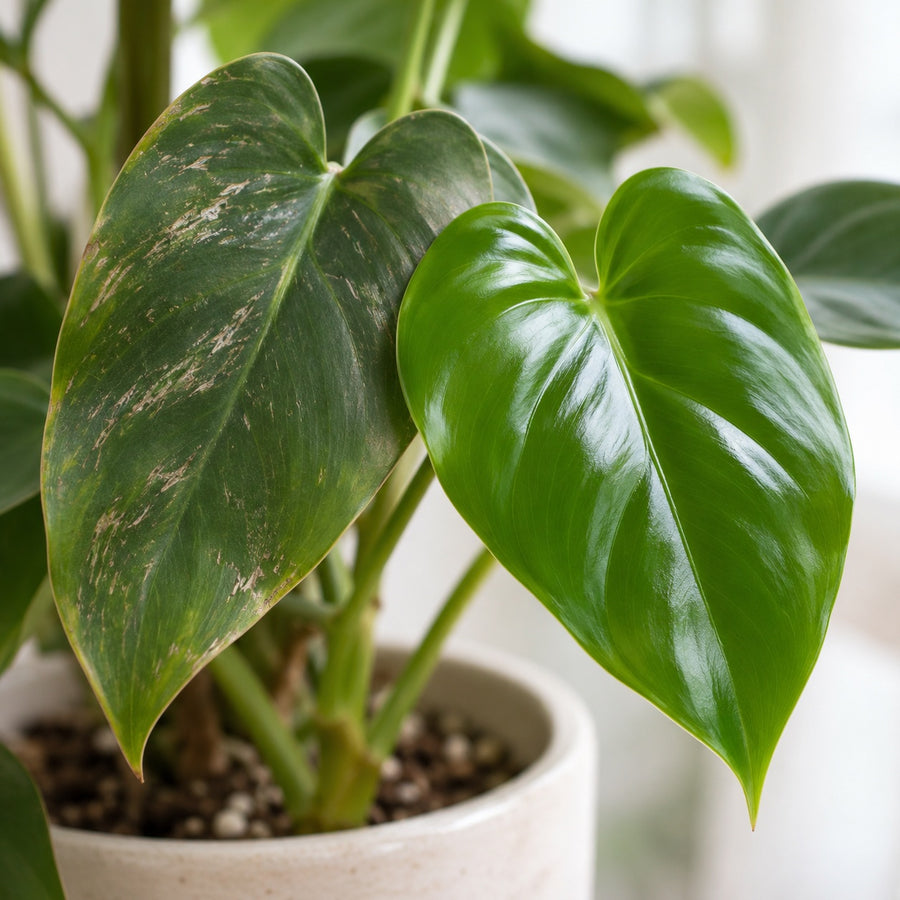
Watch the new growth.
Clean new leaves mean they're working.
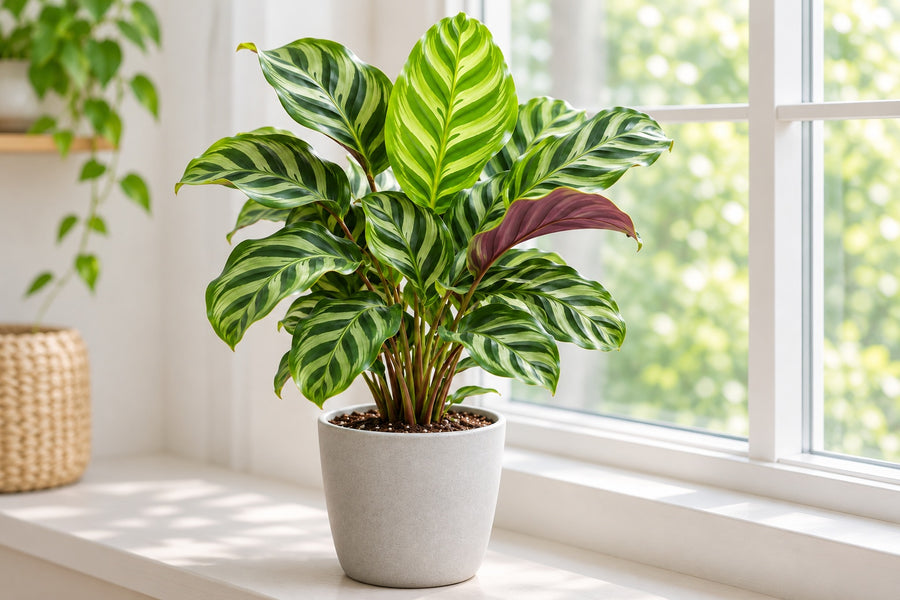
Fewer pests, week by week.
That's your sign, not spotting a mite.


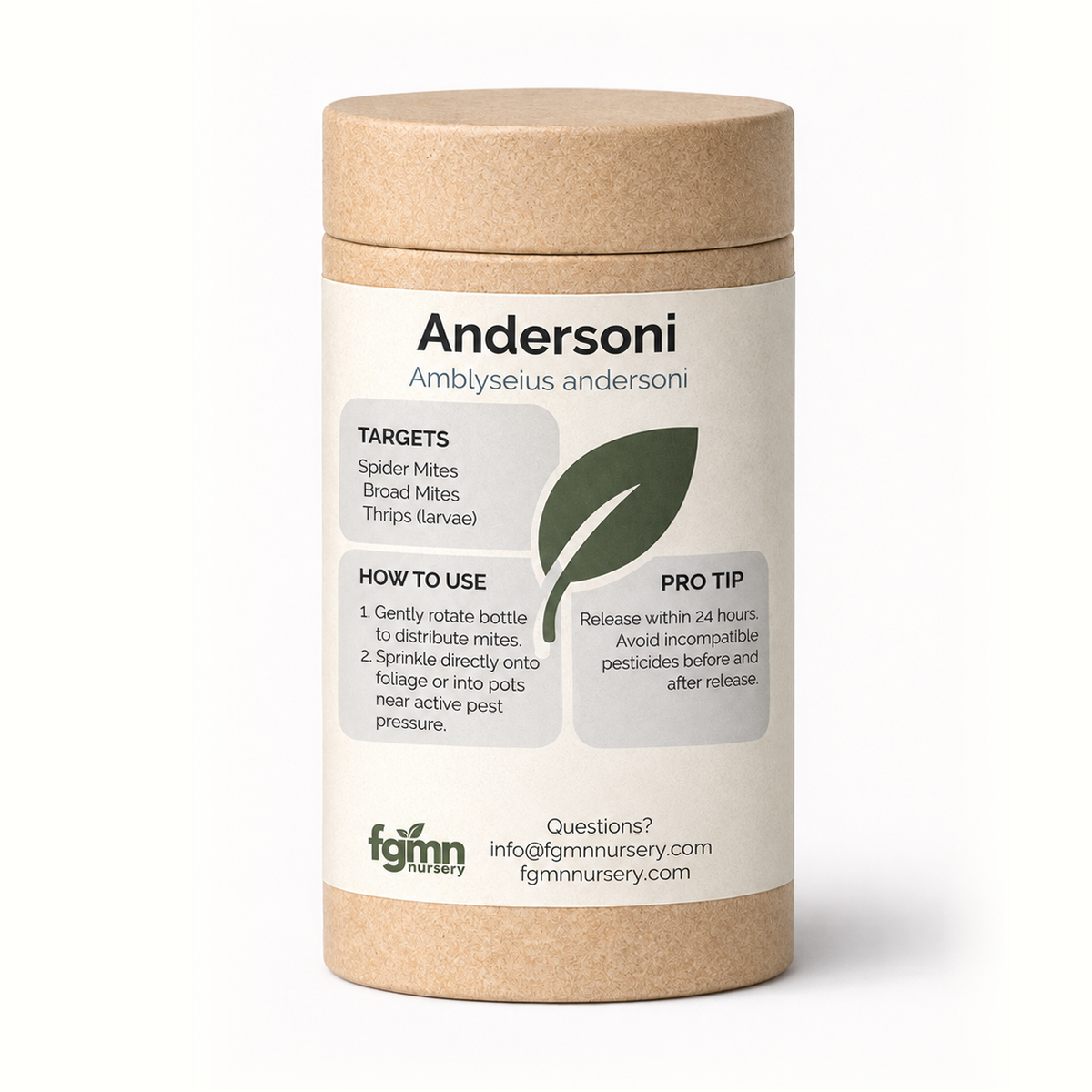










Single species, by the Latin. For growers who know exactly what they want.

