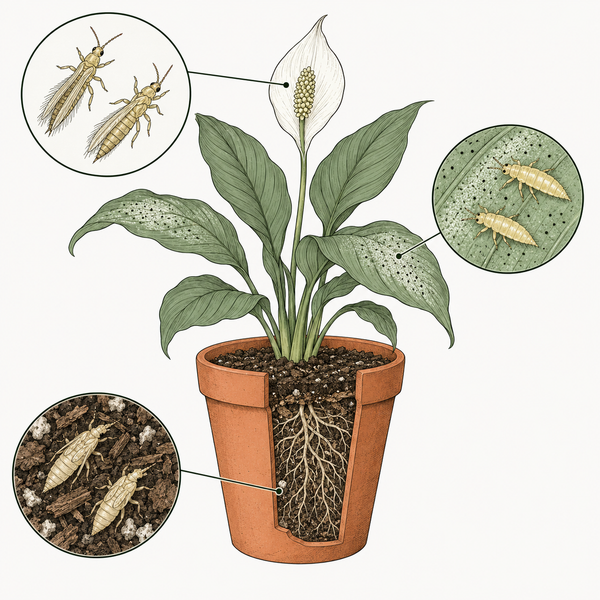
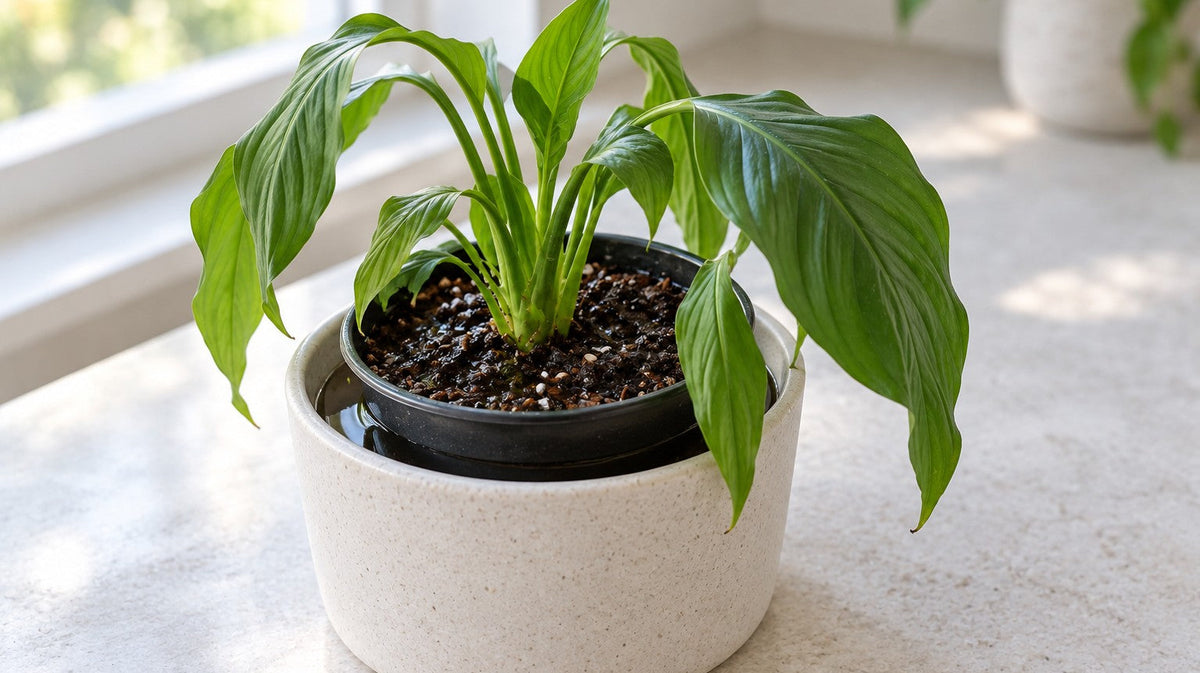
Illustrative scene of a drooping peace lily in a nursery pot nested inside a pale cover pot with standing water.

Wilting in Wet Soil?

— FGMN Nursery
The pot is wet. The leaves are limp. Before you reach for the watering can again, here is how to work out what the roots are actually dealing with.
Read more
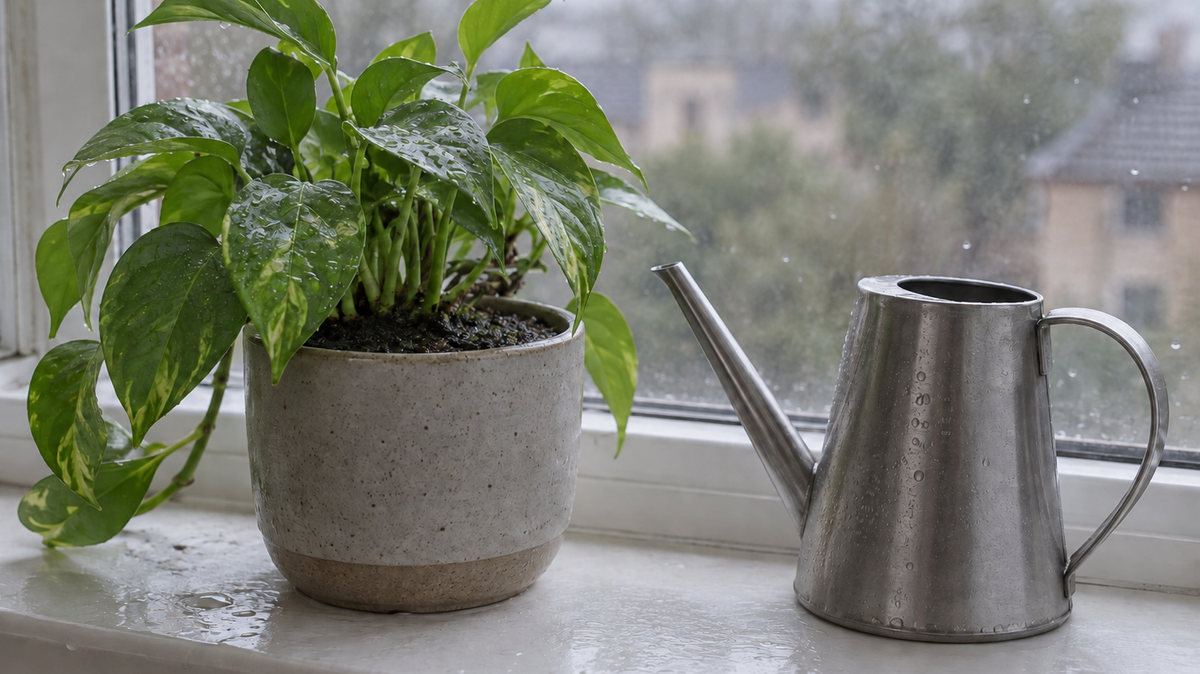
A plain metal watering can standing on a damp windowsill beside a healthy potted houseplant, with rain on the glass behind them and nothing else on the sill.

You Cannot See Them. You Cannot See Them Working, Either.
— FGMN Nursery
You watered in something you could not see, to kill something you could not see, in a part of the pot you cannot look into. There is no way to watch it happen — but there is a measurement that answers the question properly.
Read more
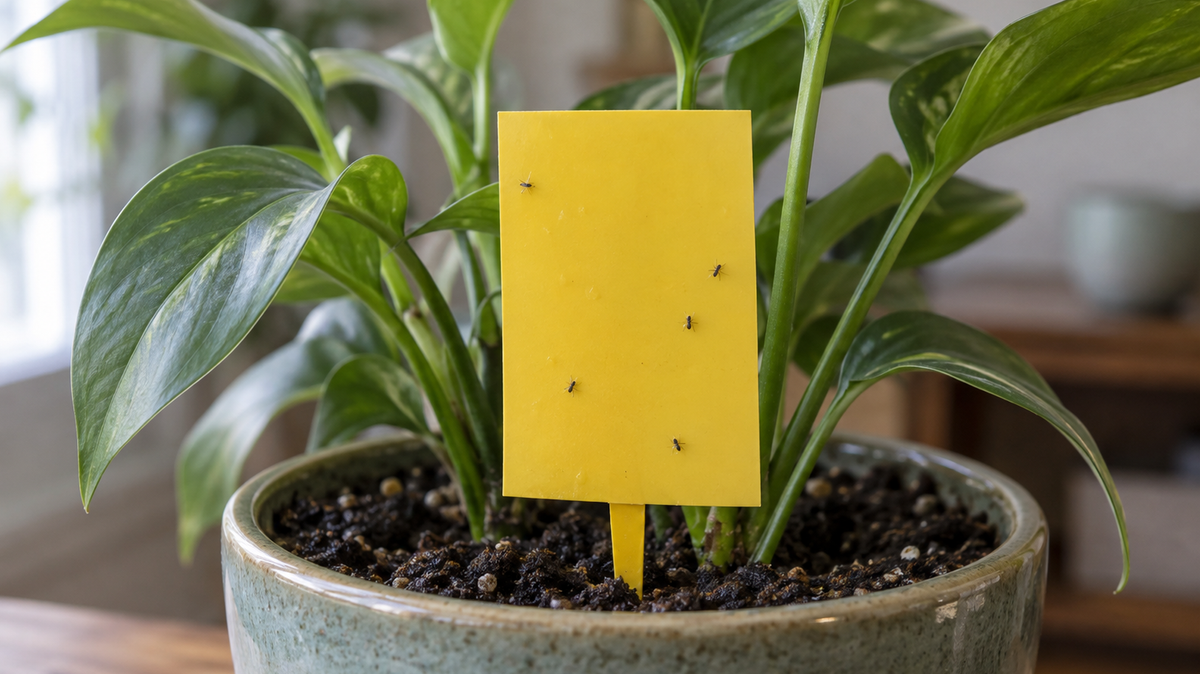
A plain yellow sticky card on a short stake pushed into the soil of a healthy potted houseplant, with five small dark fungus gnats caught on it, lit by soft daylight from a window off to one side.

The Gnats You Can See Are Not the Ones You Treated.
— FGMN Nursery
You treated the soil and there are still gnats in the air. That is what a working treatment looks like in week one — because the thing you treated and the thing you can see are two different stages of the same insect.
Read more
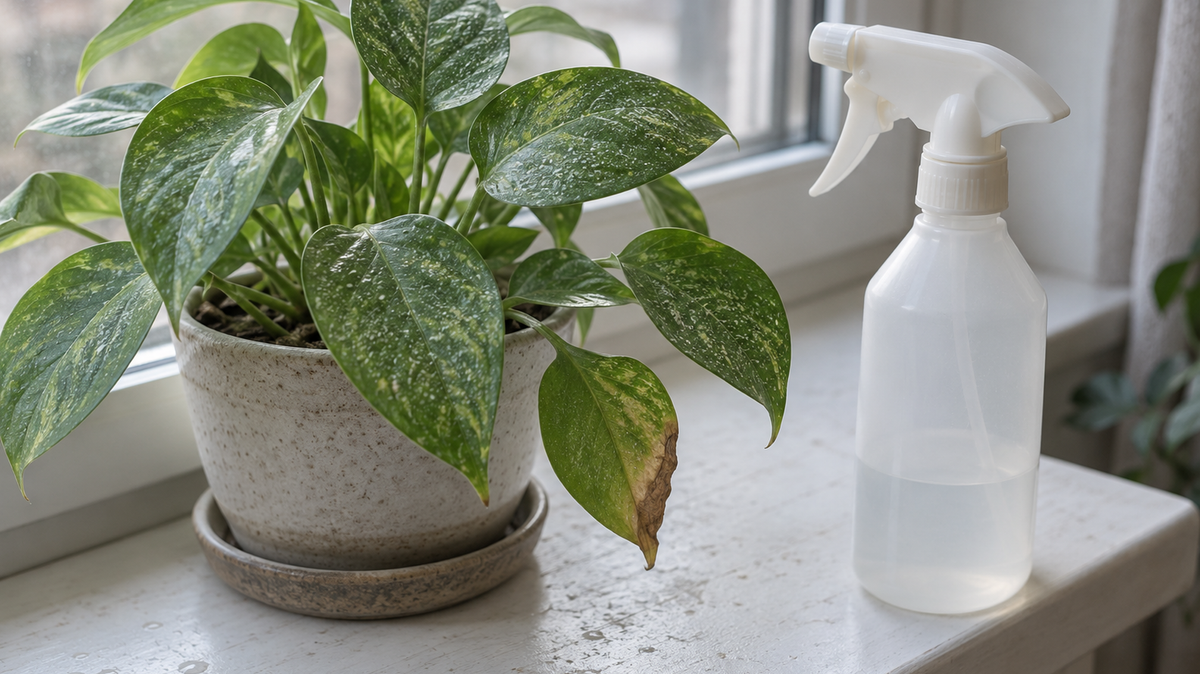
A variegated pothos in a speckled ceramic pot on a white windowsill, its leaves marked with dried spray droplets and pale mottling and one lower leaf yellowing to a brown tip. A plain unlabelled trigger spray bottle, about a third full, stands beside it.

You Did Not Lose to a Spider Mite. You Lost to Ninety-Six of Them.
You sprayed. They went. They came back. That is not a story about you being careless — it is a story about the second most pesticide-resistant arthropod on the planet, and about what a spray does to everything that was eating it.
Read more
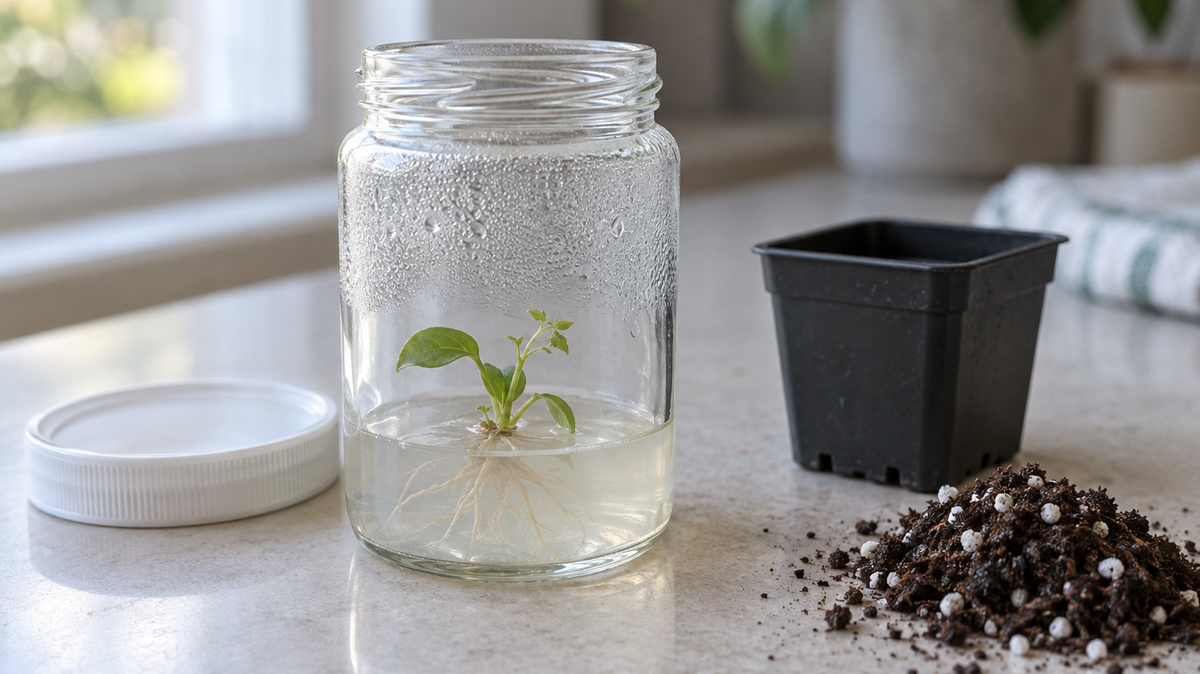
An open glass culture jar on a pale kitchen counter, its lid beside it. A small sparse plantlet sits on pale clear nutrient gel with its roots spread through it, condensation fogging the upper glass. An empty black pot and potting mix alongside.

Tissue Culture Is Easy. Keeping It Alive Is Not.
— FGMN Nursery
A tissue culture plant is a small miracle in a jar. It emerges with roots, leaves, and a total absence of any of the biology it will need to survive outside the jar. Which is where most of them die.
Read more
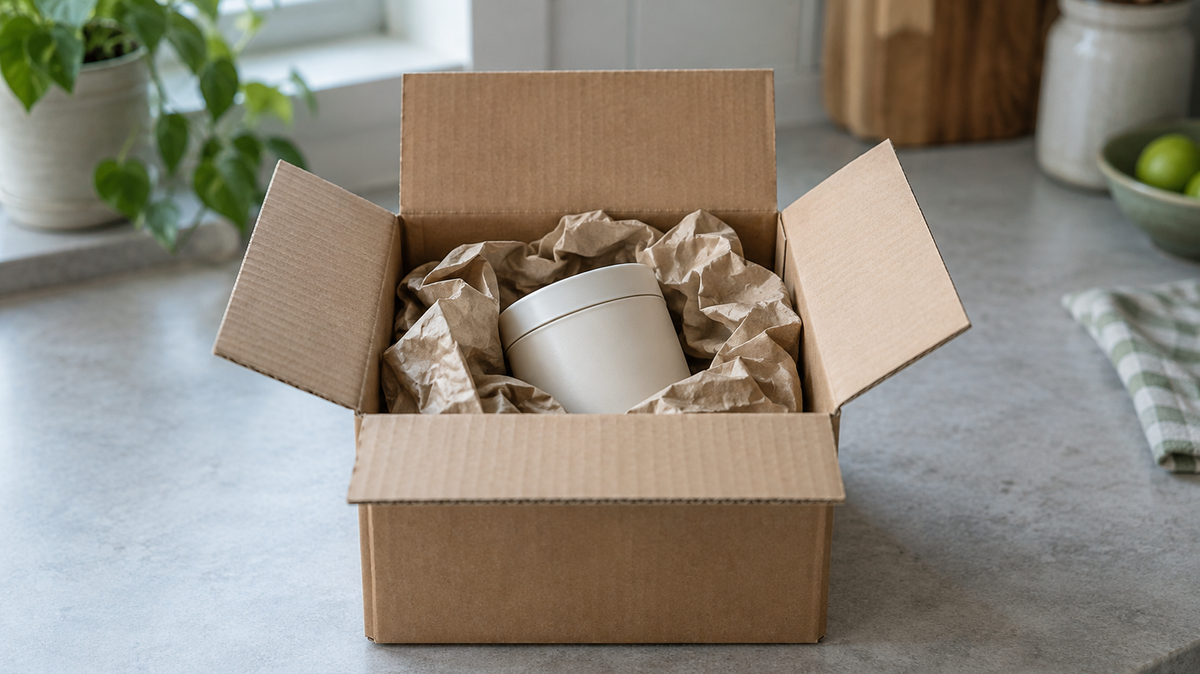
Photograph of a small opened cardboard shipping carton on a kitchen counter, crumpled paper packing inside it and a plain unlabelled container half buried in the packing. The carton carries no printing or labels.

They Are Shipped Cold So They Do Not Move.

— FGMN Nursery

You open the box and the tube is a motionless ball of beetles. Nothing is walking, nothing is flying, and the obvious conclusion is that they died in transit. Almost always they did not, and the reason is that the shipping was designed to do this.
Read more
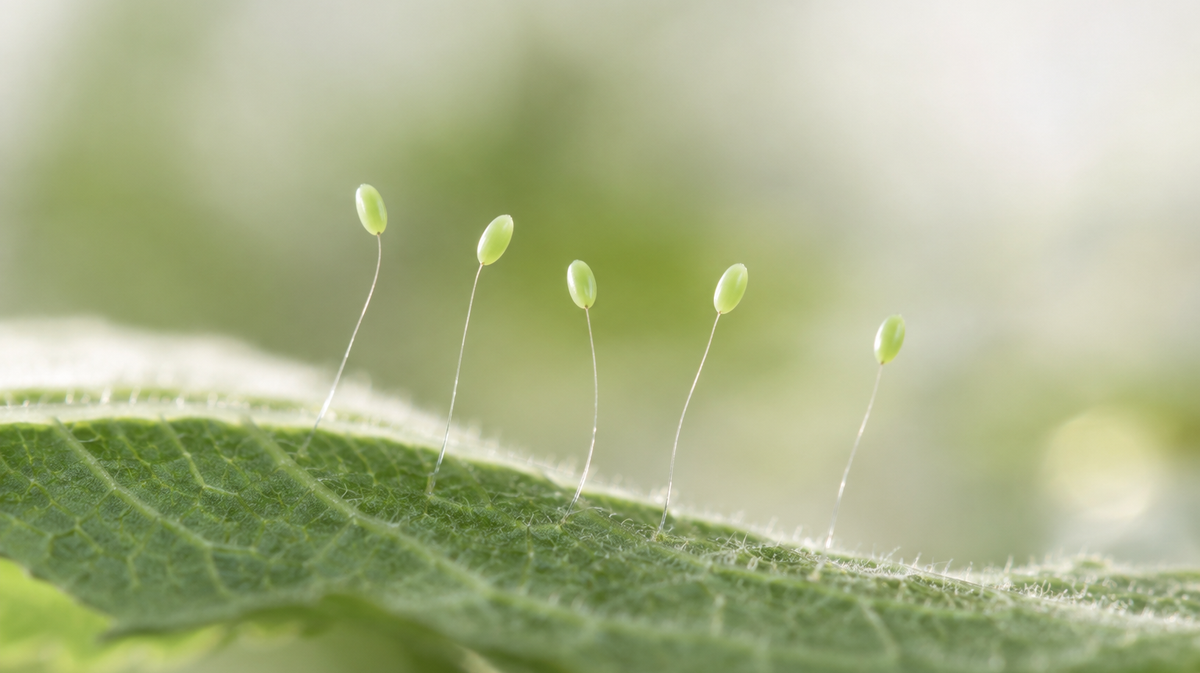
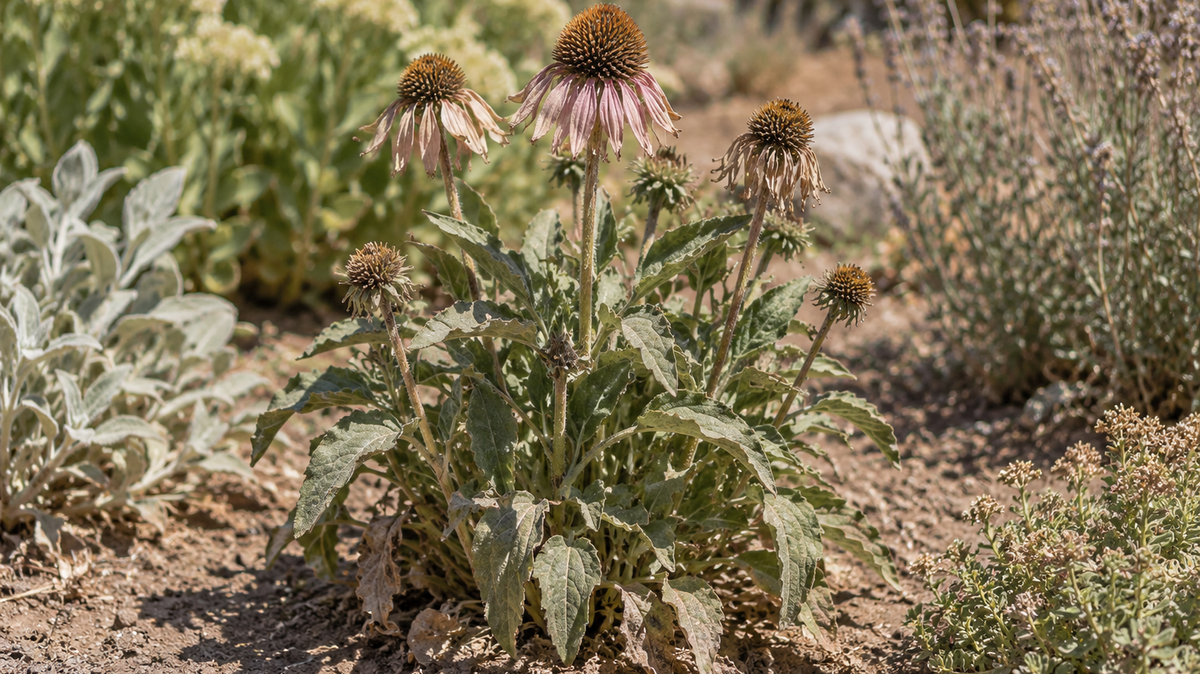
Pale green lacewing eggs on individual slender stalks above a leaf.

Eggs Cost Less. Larvae Are the Ones That Arrive.

— FGMN Nursery

The same insect is sold at two life stages for two very different prices, and the reason is not packaging. Most of the gap is attrition — what happens to an egg between the container and a larva that reaches a pest.
Read more
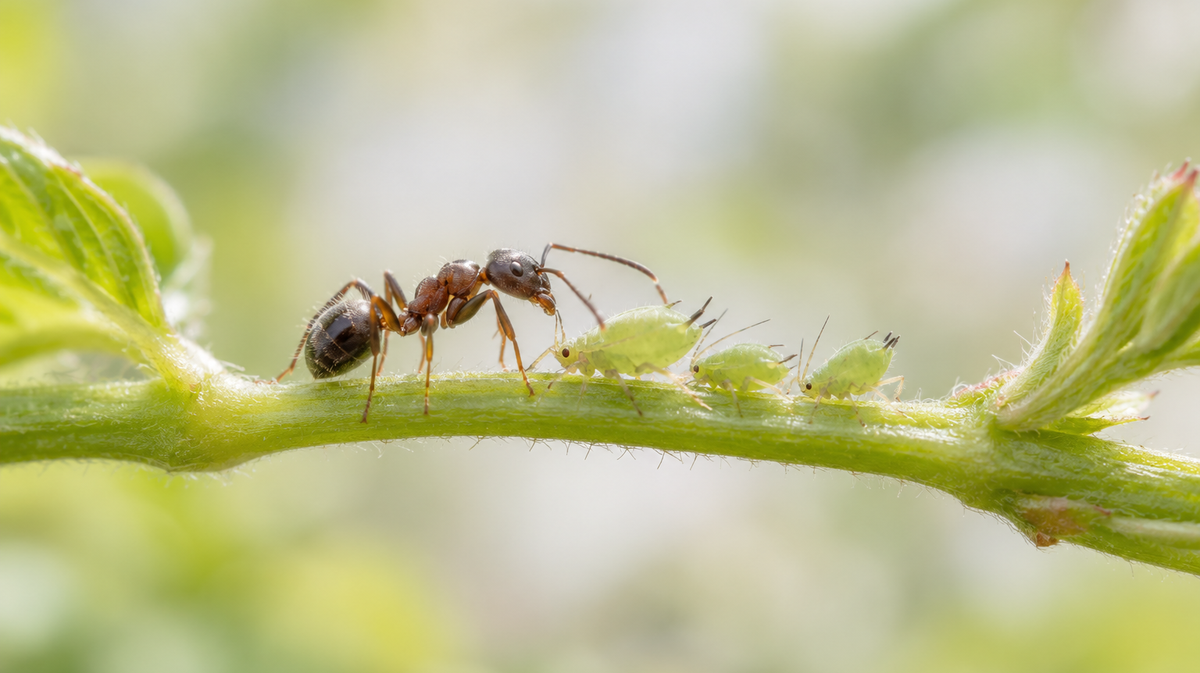
Photograph of a garden bed in high summer under hard overhead light, the foliage dusty and faded, several spent flower heads still standing, dry soil visible between the plants.

The Same Release Works in May and Fails in August.

— FGMN Nursery

The aphids change across the year and so does everything you would release at them. Most seasonal advice covers the first half. The half that decides whether an August release works is what the heat is doing to the predator.
Read more
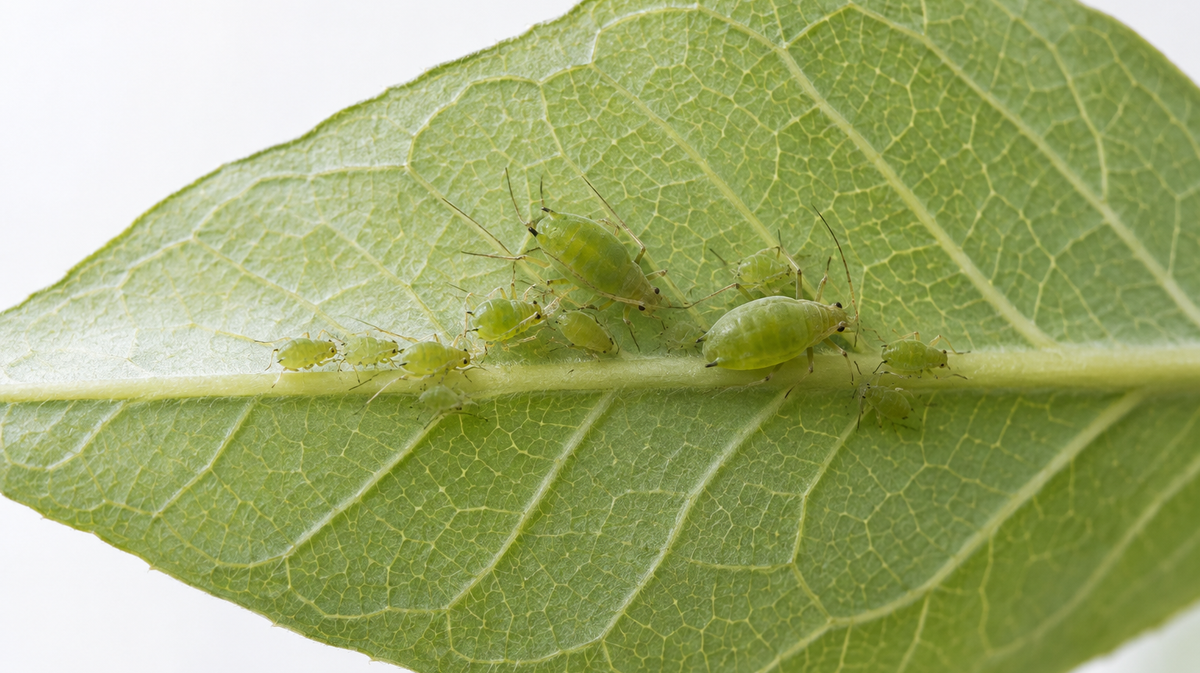
A dark ant beside green aphids on a tender plant stem.

The Ants Are Not Passing Through.

— FGMN Nursery

If there are ants going up and down the stem of a plant with aphids on it, they are not there by coincidence and they are not there for a look. They are farming, and they will defend the herd against anything you release.

Read more
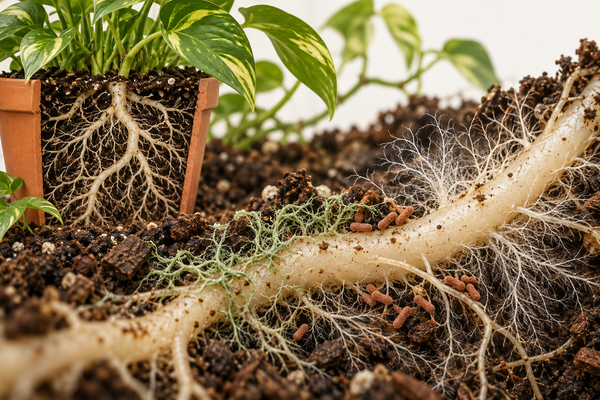
Photograph of a houseplant lifted out of its pot and laid on its side on a weathered wooden bench, the root ball still holding the shape of the pot, with the empty terracotta pot standing beside it and loose potting medium scattered around.

Root Aphids Sit Below Everything You Bought.

— FGMN Nursery

Root aphids are a different pest with a different answer, and the honest version of that answer is thinner than the product labels across this industry suggest. Here is what you are looking at, how to be sure, and what has actually been tested.
Read more
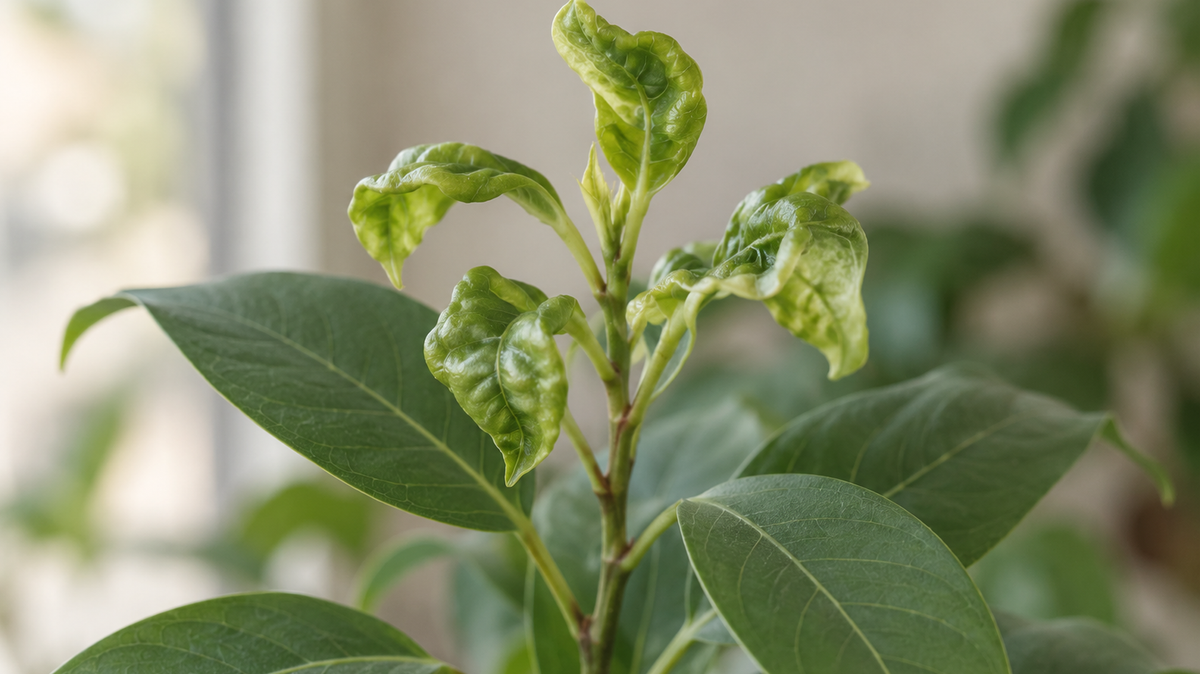
Green aphids along a leaf underside and midrib.

The Wasp Only Works on the Right Aphid.

Most aphid advice treats aphids as one pest. The parasitoid wasps do not. One of them will sting a potato aphid and be unable to develop inside it, which looks exactly like a release that did nothing. Here is how to tell which one you have.
Read more
Close photograph of the growing tip of a leafy houseplant in which the newest leaves are curled and puckered while the older leaves further down the stem are flat and undistorted. No insects are visible.

An Aphid Is Carrying Her Granddaughters.

— FGMN Nursery

Aphid numbers do not behave like insect numbers. A female gives birth to live daughters without mating, and those daughters already contain their own daughters before they are born. Everything else about aphids follows from that one fact.

Read more